A few months before the Quebec Mega Trail last year, I began working with Laurence Laplante. Laurence was an incredibly talented athlete who had multiple podium finishes at Harricana, and a staunch marathon time. She had two small children at home and needed to find a way to train sustainably.
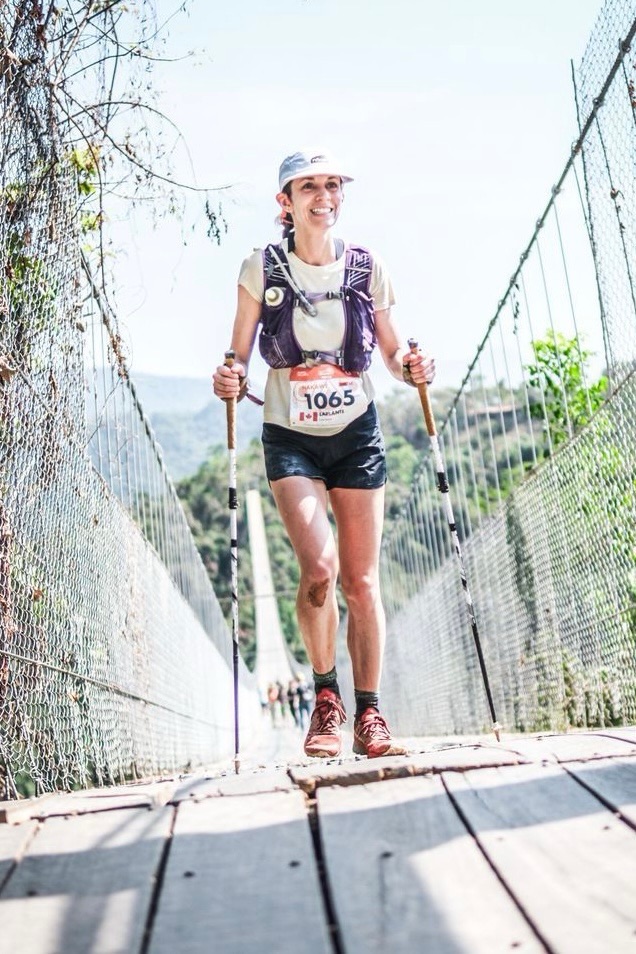
Laurence’s maximum potential is extremely high. She ran 3:15 at the St. Lawrence Marathon last year, just a few months post-partum.
But it takes time to safely build toward maximum potential. Or, to even scrape the surface of it.
So after we started working together, my goal has always been to help her hit enough consistent weeks of training stacked on top of each other in close proximity, without succubming to the susceptibility for injury.
As we built toward Ottawa, Laurence absolutely nailed this part. She was the definition of consistency despite her life demands, putting together a string of successive weeks at the beginning of the year between 70-85K, all the way into April.
By the time life got harder and random pains crept in, we’d already built enough momentum to hold steady toward a few more peak weeks before the race.
From a coaching perspective, my approximation is that the consistency in training has been down to Laurence’s own dedication to recovery and looking after herself; and three training tweaks within the last year.
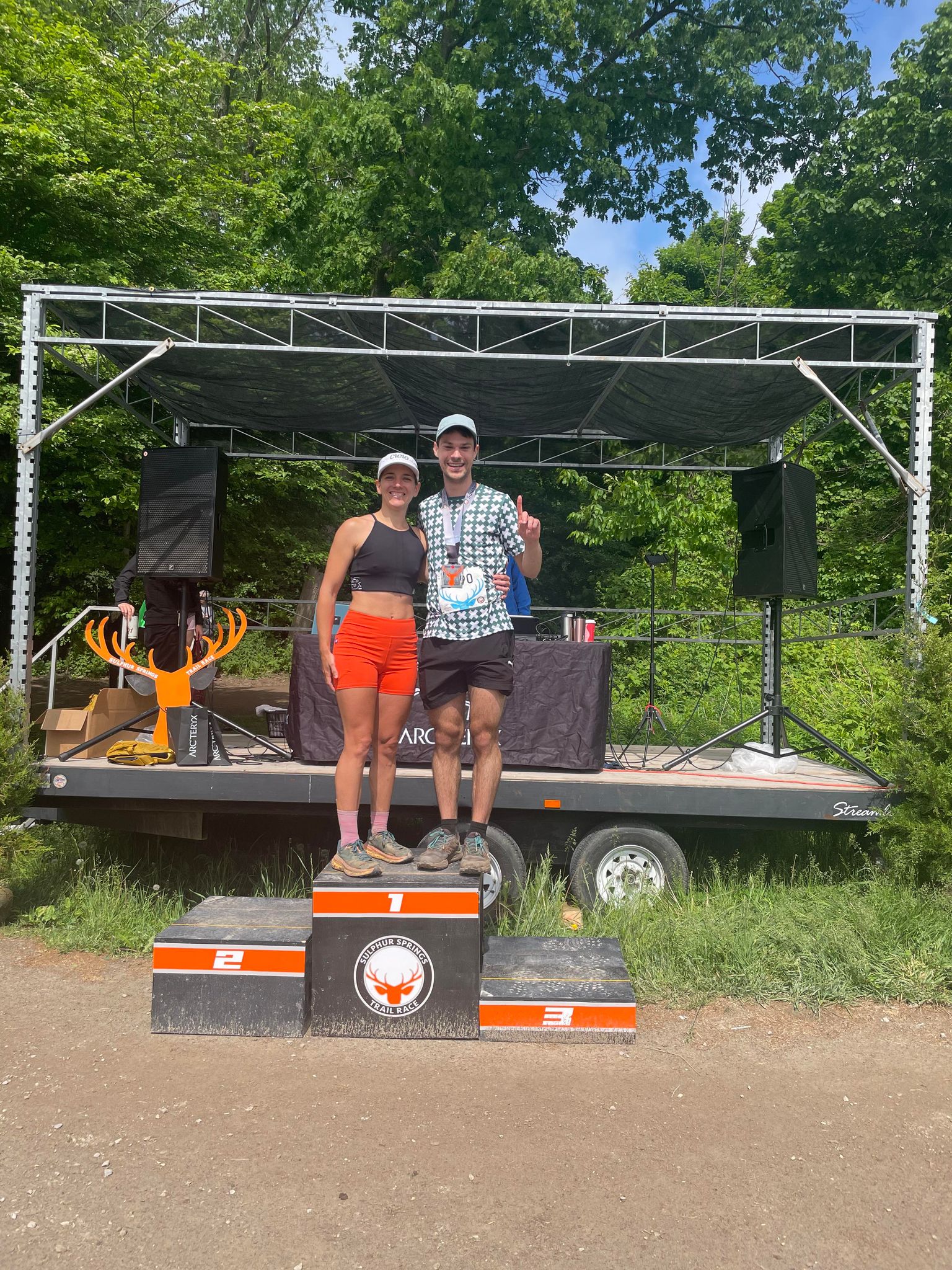
1) Prior to her 🥈 at the Bromont 55K in October last year, we switched her training days around to have long runs during the week, and more time with family and for her own adventures on the weekend.
Switching around the days of the week from what might be seen as a “typical” week was key in making the training work for Laurence in a way that amplified her consistency.
2) At the beginning of the year, Laurence started fuelling her workouts with 60-80g of carbs per hour. Taking care of the fuelling before, during, and after workouts allowed her to better adapt to each session, and hit higher mileage markers than ever before.
3) Around New Year’s, with the coldest Quebec winter in recent memory looming, Laurence and I discussed how we could safely do long runs in the frigid temperatures.
We came up with the idea of turning them into treadmill workouts instead. We tweaked her schedule to Monday and Friday workout days, rather than a workout + dedicated long run.
The treadmill isn’t everyone’s favourite, but Laurence is great with it, and it allowed her to be at home with her kids and away from the winter storms. She was so good at utilizing it for her training that she even asked for her workouts to be longer(!!).
One time I gave her a classic descending ladder hill workout, and after completing it, she went back up the ladder.
From then on (knowing we weren’t doing long runs outdoors and that the uphill treadmill worked well for her) I boosted all of her Monday workouts.
Keeping in mind a risk-adverse approach where we could balance the line between minimum and maximum, Mondays we would do an uphill treadmill workout, and Fridays we would do her more race-specific workout (even in January), something usually flatter and faster. Tuesday or Wednesday she would also double up on a run to and from work, giving her another equivalent long run stimulus.
Keeping most of these harder days to about 90 minutes to 2 hours, we were able to successfully string together more weeks of higher mileage than any other block, including when we were doing more 2+ hour long run days.
As the weather warmed and the race neared, we then got more specific toward race specific long runs on Fridays, incorporating outdoor speed work. During this time, Laurence comfortably established her marathon threshold of around 4:15/km.
She did several successive long runs of around 26K to 32K, including a monster 3 x 5K @ marathon pace a month out from race day; plus “change of pace” workouts where we alternated in and out of marathon threshold. The goal was to allow the body to get as accustomed as possible to running around 4:15/km, until it became something that could be comfortable enough to sustain not just for 30K, but for 42K.
The Monday after Laurence did the monstrous 32K in 2.5 hours (our longest run before a 3-hour marathon attempt), we started to fine-tune half-marathon pace. This could then allow the body to feel more comfortable running at paces faster than marathon day, raising the cieling of what could be possible without over-reaching too far. On the first of these workouts, she got up to 4:03/km splits.
A couple weeks later, on the final big workout before the race, she did 3:59/km, running a Strava 10K PR mid workout…with rest factored in.
From a training perspective, I surmised that a really good marathon day would likely be approximately 15s/km slower than that, around 4:14/km. This was grounded in data (self-reported RPE, heart-rate, rest interval comfortability, etc.), and guesswork.
We intentionally did not go beyond 35K in training since Bromont, to make sure she stayed fit and healthy (and because it’s genuinely not needed).
The post 35K mark would then be left an unknown that Laurence would need to discover, by getting fuelling and pacing right early in her race. If she could do that, I didn’t want to tell her this necessarily, but I thought she would go under 3 hours.
On the day, she executed perfectly, without letting herself drift off the pace. She held steady at 70g of carbs per hour, carrying a handheld bottle with her throughout, and taking a 40g gel every 45 minutes.
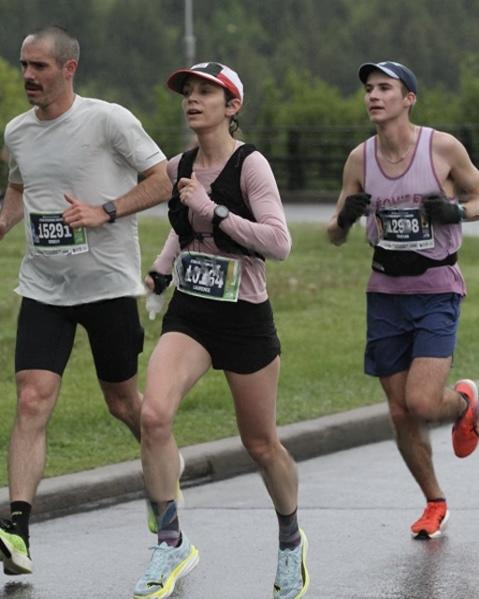
With steady fuelling and strong pacing, a slightly slower second half was counter-acted by a slightly faster first half.
This is something that we talked about in our pre-race call, entering around that 30K mark with optimism about whether she could go faster, or drop off to hold 5-15s/km slower if it got tough.
A negative split would be wonderful, but slightly more unrealistic than a positive one, with the style of long run workouts we did leading into race day.
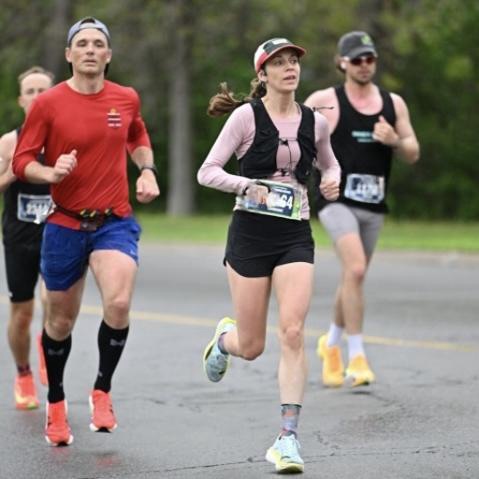
Laurence intuitively managed that on race day, crossing the 42K in 2:58, and finishing the slightly long Ottawa course in a 3:02. It was a 13-minute PR in the marathon, for a runner with 2 small kids at home and more than enough life demands to go around.
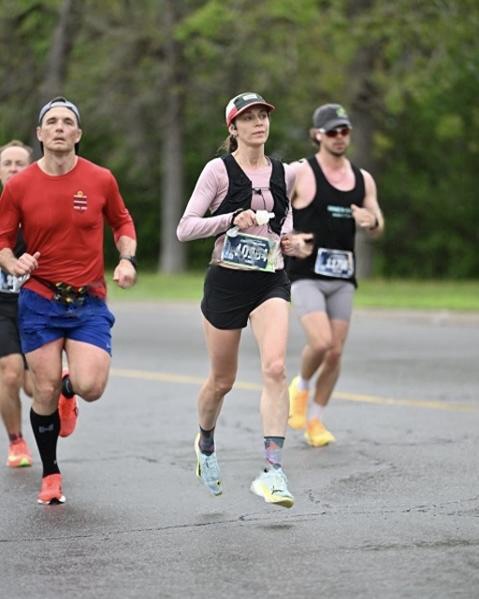
Ahead of her next marathon effort, we could aim for a few more progression workouts, running the second half or finishing touches of long runs and workouts faster. Most athletes tend to do this anyway, but programmed progressions are more intentional about it.
Other than that, we would tweak minor things here and there, but Laurence’s training in this block was everything she needed to have a great day. It was six months of grinding gears and enjoying the journey toward race day, staying confident all the way that she could comfortably break her own PR.
We could have gotten close with less of a build-up had that been the plan, but it was really her dedication toward training solely for this race since December that really made the moment.
Kudos to you Laurence; and looking forward to getting back on the trails this summer!