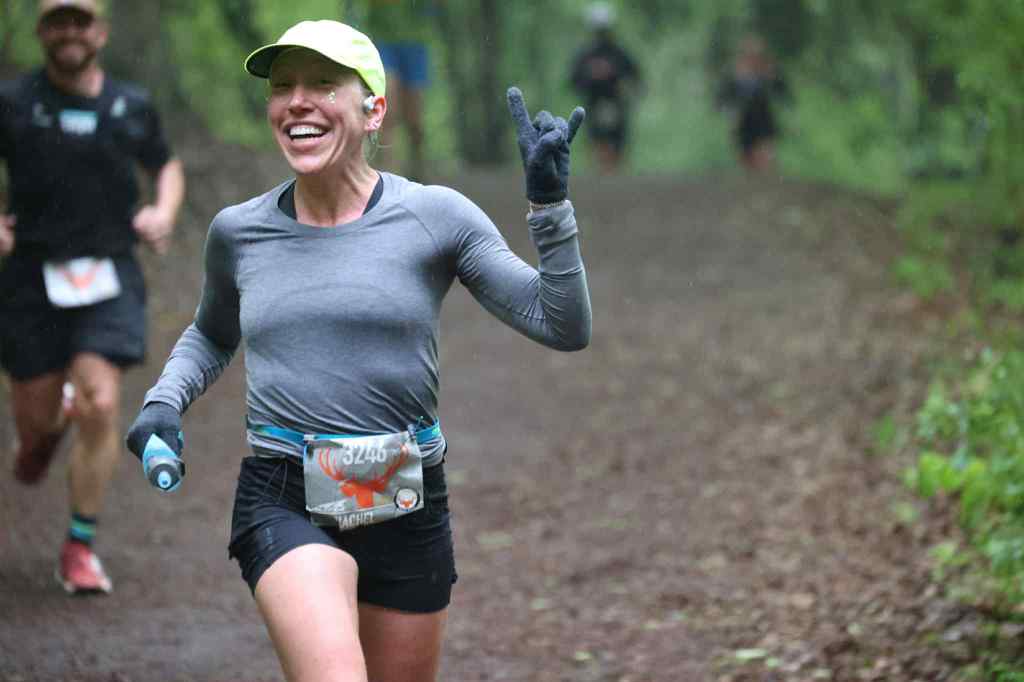
A little over a year ago, I started working with Rachel, a high-achieving mom in her early 40’s. She had just run 3 hours and 41 minutes at the Gorge Waterfalls 30K, and expressed her love for chicken sandwiches as we had lunch with another athlete I coach (who happens to be her amazing partner).
Rachel had expressed being unable to run multiple days in a row, and high heart rates on easy runs. Within a few months, all of that changed, as she seemlessly stringed together days of running, and lowered her heart-rate on easy days to the 140’s.
In the first few months, she finished just outside the top ten in her first 50K. Later, she achieved a 35-minute marathon PR, and a Boston qualifying time of 3:33.
Rachel had serious talent, but often underestimated her own capabilities. For much of the past year, one of my main goals has been getting Rachel to realize her immense talent.
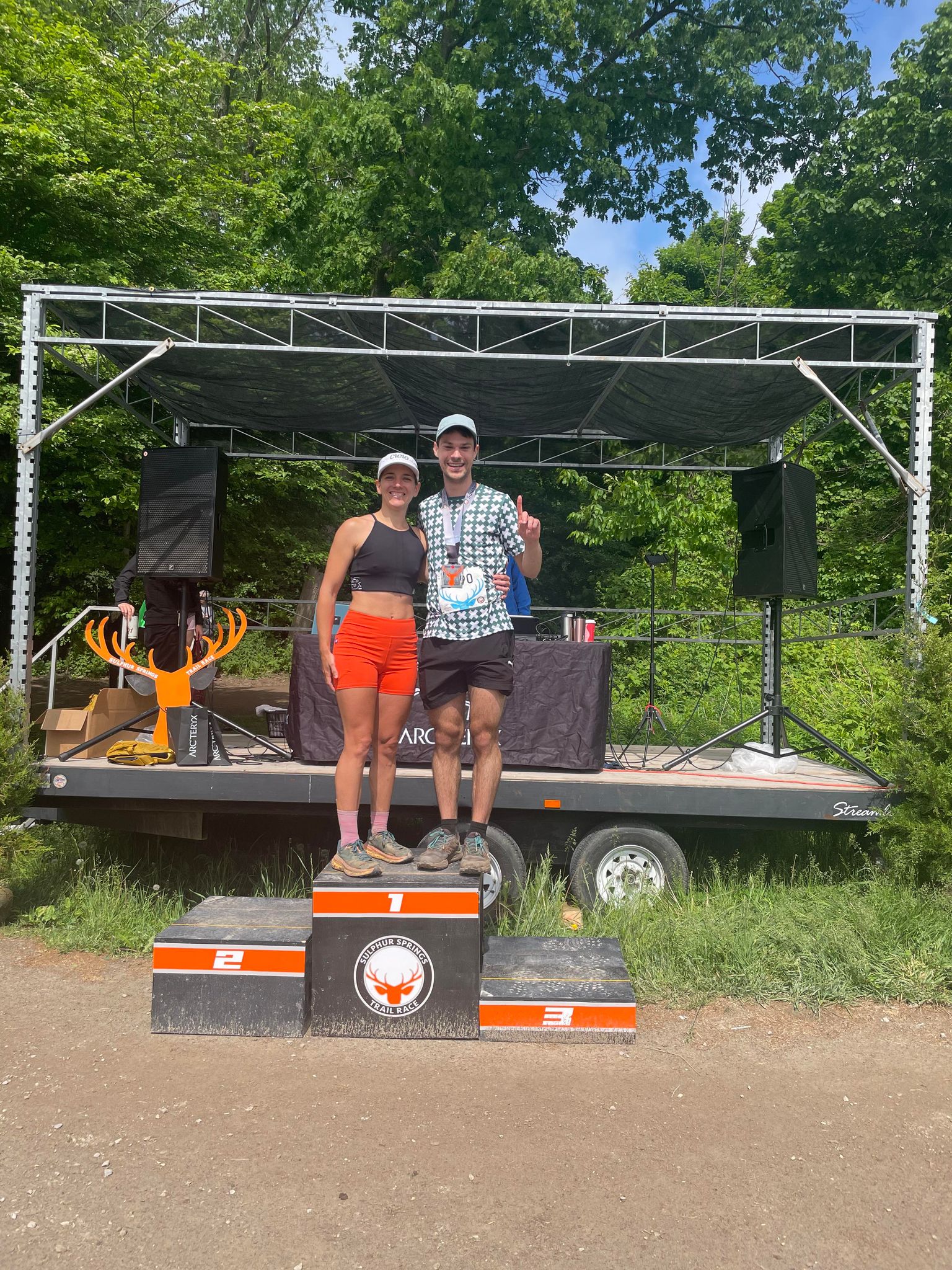
Sulphur Springs 50K would be her first big goal race of 2026. It’s a race I know well having finished third in 2023, and having trained on the course all the time when I lived in Ontario.
The goal was to have Rachel enjoy training (which isn’t hard for her); whilst managing the complexities of high-quality work within already being a high-performer in other areas of life. Any kind of podium potential building would only be a bonus.
As life goes, Rachel wasn’t able to get in all the training her heart may have desired this Winter due to the complexities of life. But we had a few incredible weeks leading into the Gorge Waterfalls 30K in April, where she tackled the distance and her previous race time on easy long runs.
We had three successive weekends with a 25K – 30K long run leading into the taper for the Gorge 30K. 2.5 hours, 3.5 hours, and 3 hours. This emphasized race-specific work (even on course) close to her event; fast-forwarding some of the work that may have been missed earlier in the winter.
You can do this for shorter races more sustainably than longer ones, so we really went for it in getting time on course and a bit of race-specific speed and effort in March and April. She went into Gorge hoping for around 3:20, and I predicted 3:10. We met halfway in the middle at 3:15.
Rachel ran super strongly that day, finishing second in a stacked F40-49 age group. But the biggest takeaway was that her perceived exertion sat too high for her level of fitness.
Going into Sulphur Springs, we talked about how she could focus on enjoying the day and getting less bogged down in her own thoughts – staying more relaxed. It was the Kevin approach, after her partner Kevin ran a super zen race en route to his own PR at Gorge.
Rachel’s always been great at that in training and racing, loving every moment (especially every workout!) in her busy schedule. She just needed to get back to that on race day for Sulphur.
But before that, we had some sharpening to do in the five weeks between Gorge and Sulphur. Rachel had already done several training days amounting to 3+ hours, including the stimulus at Gorge. With only five weeks between, we didn’t need to get up to anything close to the 5-hours she would experience on race day. Those three long runs in March and April would be enough already.
So we focused on quality and intentionality over the next few weeks, training specifically for the up-down transitional nature of Sulphur. She managed to fly out from Portland at the beginning of this month to get one single lap on the course in Hamilton, before we topped that run off with 7 x 3-mins up and down Martin Rd. at about 50K effort.
The goal was to visualize how it would feel on race day (in a non-muddy world), especially those final climbs on tired legs. And, of course, the added bonus of that up-down stimulus.
Off the back of that, she continued to hit impressive markers in workouts, and her own occasional hill pushes on easy runs. I knew she was ready for a wildly fast day when she smashed a Strava CR away from a pretty well-known Ontario FKT record holder. That was two days after her 27K long run on course.
We sprinkled in a bit of quality and extra emphasis on climbing in her next long run, and voila, she was ready.
Going into the race, Rachel wondered if she needed to hit the four-hour marker in training before the 50K, knowing that we had done that prior to her first lap around the 50K sun.
What she overlooked was that she strung together several successive days of running around her long runs, amounting to around that 50K distance. In the four weeks before race week, her graph looked like this:
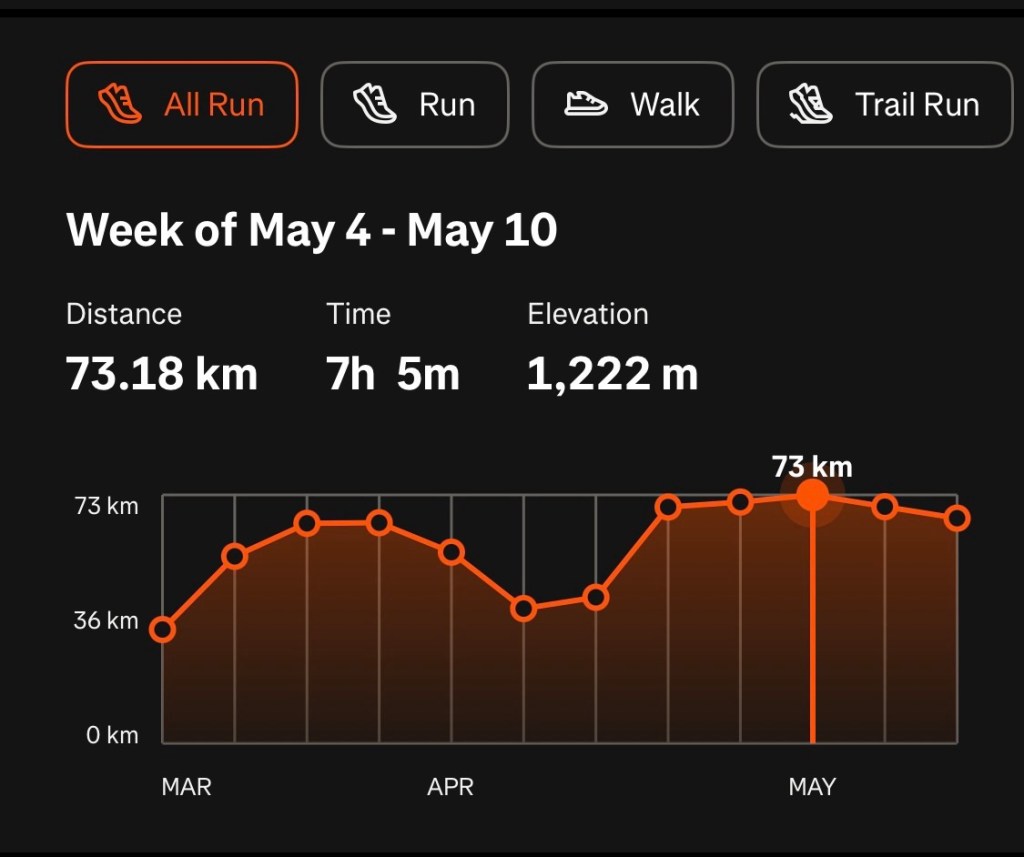
She hit peak weeks of 69K, 71K, 73K, and 69K in the four weeks before her taper. It was a jump after Gorge, but a safe one as we stayed on the slackline rather than continuing to climb.
Previously, she may have feared this kind of five week spell. But this was a different Rachel, and one that had now stacked more than enough bricks toward running a super strong race.
So when I answered her doubt about needing that four-hour run, I said exactly that. The work she had done to hit 3+ hour runs surrounded by other days of easy running was more than enough, and this wouldn’t be a six-hour day like the last 50K. This one, I said confidently, would be a five-hour day.
She believed me on the first point, but had her reservations on the second. Initially, Rachel’s goal was to run under 6 hours for a 50K PB. She planned on running around 10:00/mile (6:10/km), which would be well under 6 hours. But without much hesitation or math, I told her she could be closer to 9:00/mile (a huge jump). My point was basically to tell her that she could do more than she thought, and that the upper limit sat closer to 5:45/km, well below 5 hours (not six).
Rachel agreed to run more based off what felt right, using data to supplement her efforts rather than as something to scrutinize over. She didn’t think about where she was in the field. She didn’t think about who was behind or who was ahead. She even changed her watch face so that pace data would be reduced to just overall pace.
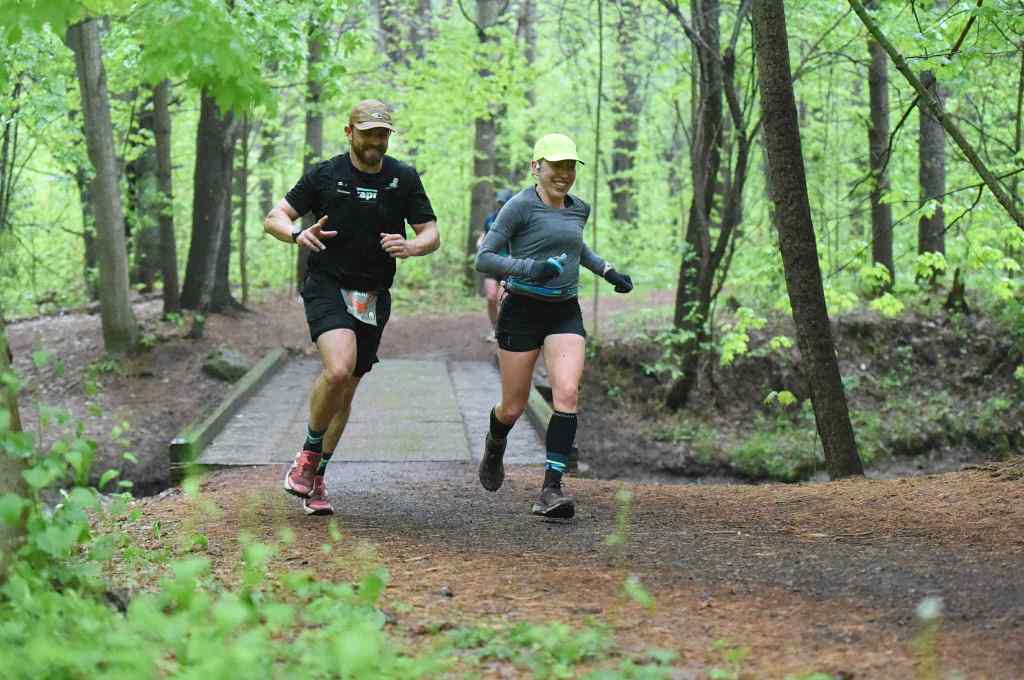
Course conditions ended up being insane, with every athlete I’ve spoken to suffering from falls and some serious chills.
Despite that, and some pain the day before, she ran 4:58, about an hour faster than her baseline goal.
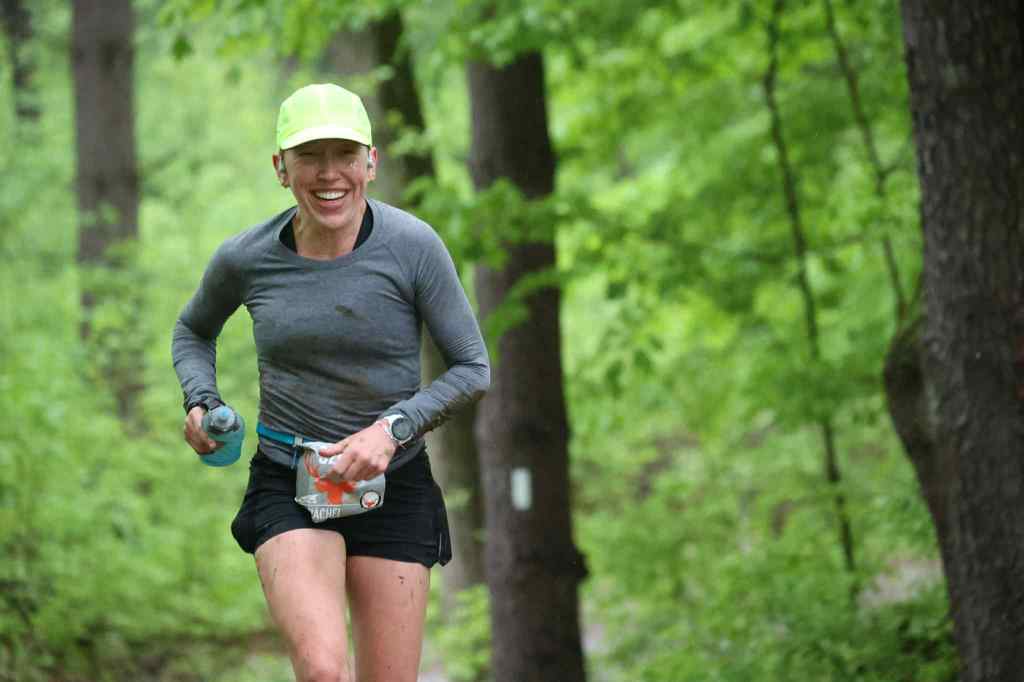
Rachel’s impressive second place finish and fast time in crazy conditions was highlighted by both a level of quality and quantity in training.
Quality in key, race-specific speed sessions; and quantity (time on feet, hours run) to get exactly what she needed to last 5 hours in the cold, without ever doing more than 3.5 hours in training. In better conditions, those 9-minute miles are looking pretty good too.
Rachel’s training over the past six months has been all about working hard and enjoying the process. Everyone can take lessons by just how much she loves to run and how much joy she brings to her races, even in massive piles of mud.
Everyone can also take lessons from Rachel’s trust in herself and those around her. If you aim for the optimistic option off the back of solid training, there’s nothing stopping you from doing it.
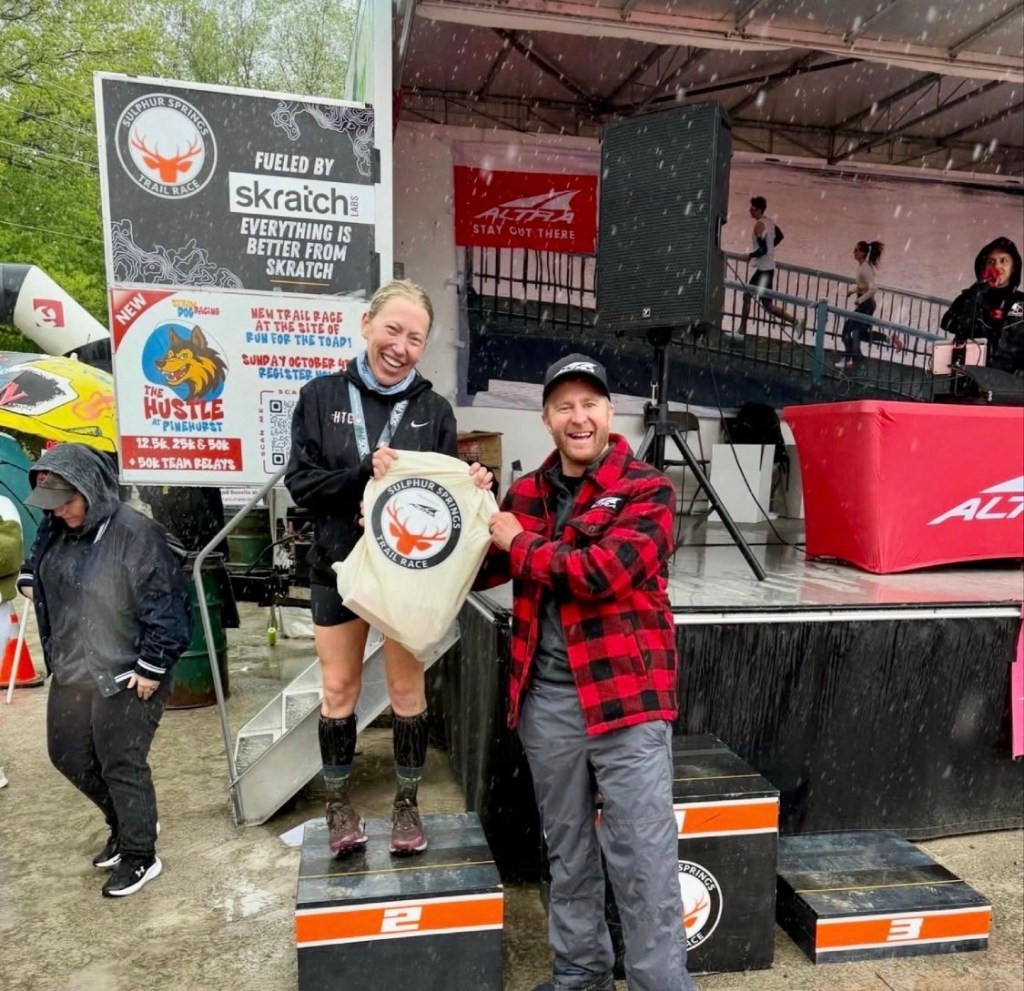
Kudos to Rachel for her incredible podium finish and strong race at the Sulphur Springs 50K! Excited to look forward to the next one in Squamish.