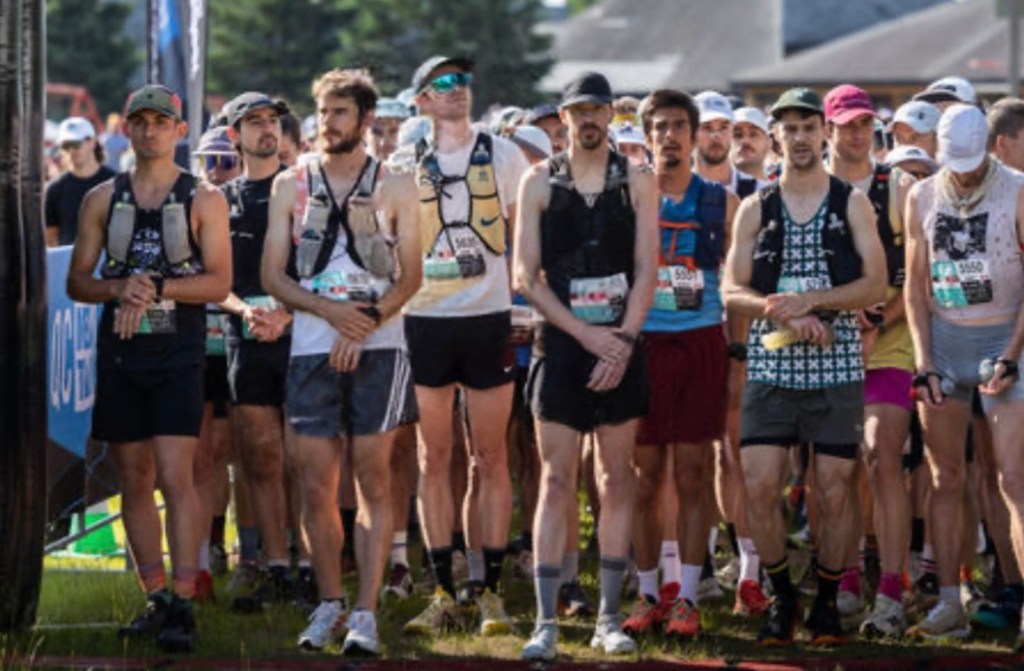
While we all love training, races often mean so much more to us. Whether right or wrong, they serve as a chance for us to prove our fitness, to test ourselves against others, and to explore somewhere new.
And after the high of a race, it’s inevitable that you may experience a low.
For one, all the hard work you’ve done in training, peaking toward this moment, has just come to an end.
With or without an immediate next goal, it can sometimes be difficult to pick yourself back up and go again.
Many of the runners bouncing between the UTMB World Series Finals and the World Championships three weeks later this year massively struggled. Some had big-time success. Most struggled.
And most that struggled put it down to the mental fatigue as much as the physical.
Part of that is as much a hormonal response as a muscular one.
After races, particularly long-distance ultras, it’s normal for your hormones to be out of whack.
Several studies have shown that following ultra-trail races, cortisol (stress responses) are elevated for days, whereas many hormones like testosterone take a hit or become suppressed for days following the event.
Beyond hormones, you’re also coming back from a major calorie deficit. Even fuelling with 100g of carbohydrates an hour, you can’t make up for the calorie loss happening inside your body within one of these races.
So following a race, it’s imperative to continously check-in on your body and reflect upon how you’re feeling.
It’s even more imperative to eat.

A recent study from the Wasatch 100 found that athletes needed 1.5 to 2x their caloric needs for close to 7 days after the race than their normal baseline.
You’re not only fuelling the day to day after a race. You’re also catching up for your body having just gone into survival mode.

So after a big race, make sure to give your body plenty of time to recover, paying special attention to all the things that go into recovery (like eating).
Resting and taking time off running isn’t enough on its own to make sure your body is functioning effectively.
You need all the vitamins, some sunlight, all the sleep, and a full-on nervous system down-regulation routine.
After a race, it’s easy to get caught up in a cycle of falling deeper into the web of our sport. Thinking about the race every minute of every day, consuming even more content, and moving onto whatever’s next.
But it’s also important to use your period of downtime to take care of other things. Maybe things that were previously neglected in the weeks leading up to your race. Maybe things that you don’t get to do when putting five hours of training into a weekend.
Combine that with a few extra calories at each meal and making sure you get enough protein and variety, and you’ll be on your way toward returning your body back to baseline sooner than the studies would suggest.
It might not feel like training, but this really is the first essential step as you build toward whatever’s next!
So as all the athletes I work with race this month, I encourage you to come back to this one following your race, and to make sure you’re checking all the recovery boxes following your big day.
Thanks for reading and see you soon!