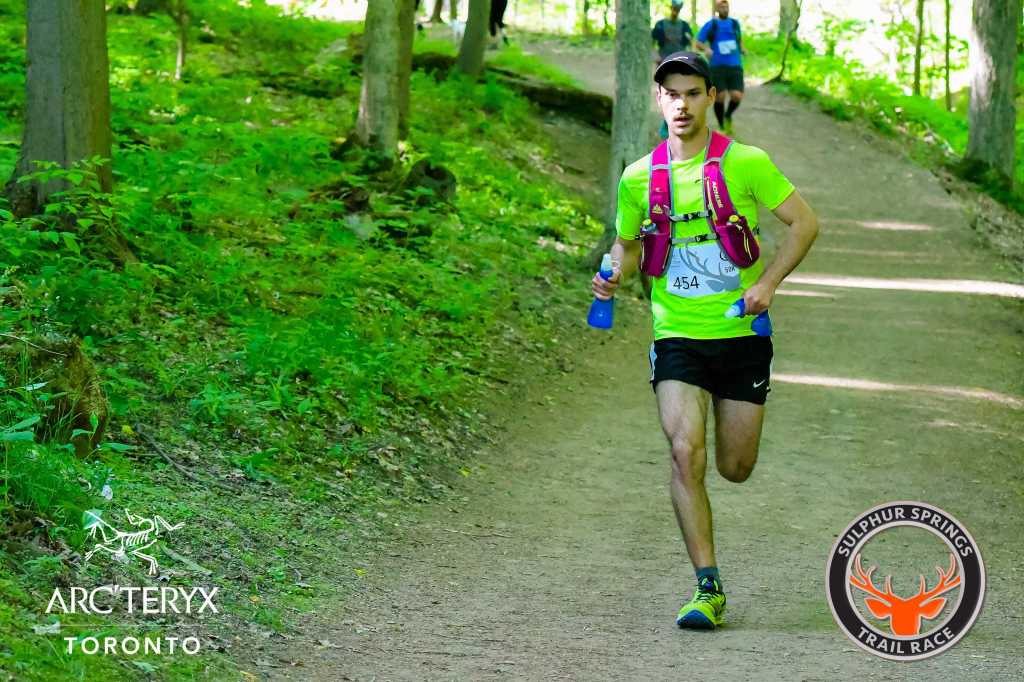
Downhills often make the difference between wins and losses in trail and ultra running events. Yet the best downhill runners in the world can rarely seem to explain what it is that they do so effectively when running downhill.
Much of the advice comes down to training with someone else that is good and watching their lines of travel, doing downhill intervals, or the very true facet of confidence. But you rarely here an elite runner discuss what they do from a technical perspective to run better at downhills.
The first thing to note is that the arguments around confidence are all so true. Downhill running is the only type of running that is so much less about raw running speed and VO2 Max. While having a powerful aerobic engine will always help, if you simply let yourself go and tell yourself that you’re a downhill monster, you’ve already won half the battle.
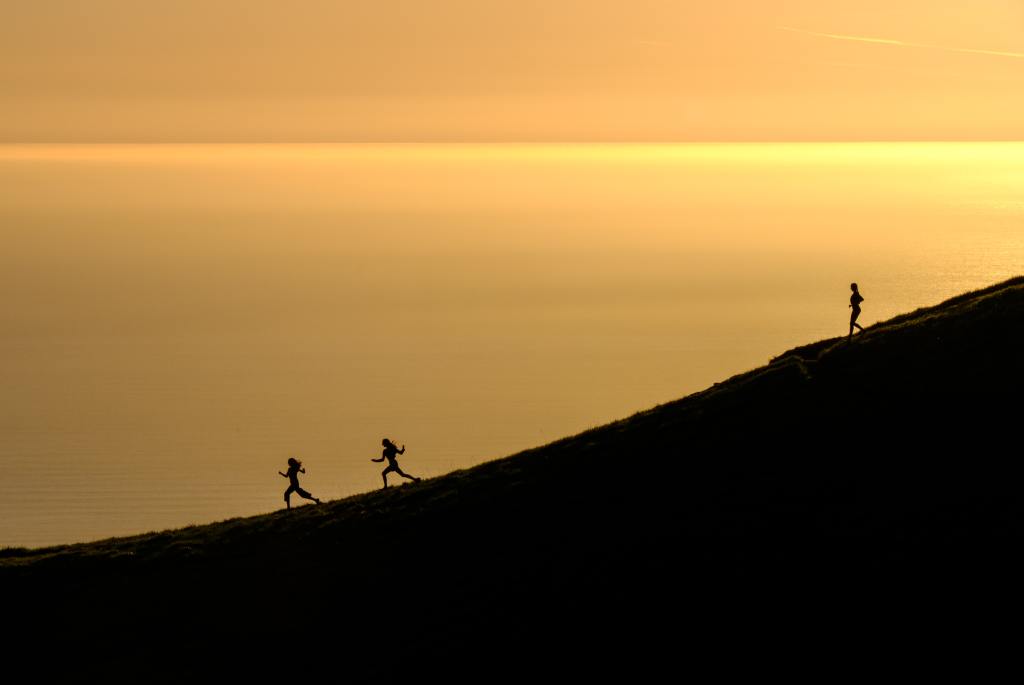
It becomes impossible to run downhills effectively when you’re tiptoeing down the hill, afraid to get hurt. In fact, being so meticulous with your steps might only increase the risk of injury. For one, you’re having to increase the number of steps and the amount of time you’re spending on the hill. For another, it’s very easy to overthink what you’re doing and end up tripping up when you would have stood tall had you just let your mind and body do the work.

But the technical aspects to downhill running are so imperative. I come from a background playing hockey and soccer, both of which are often played in a low stance, and rely heavily on leg strength. In both sports, you are required to quickly change direction via pushing off one leg. You’re also required to quickly change direction while going at full speed the complete other way. Anyone who knows trail running will know that most of the scary moments when flying downhill come from tight turns or sudden drops where you quickly have to slow and shift your momentum.
For soccer and hockey players, I think this often comes so much more naturally. You know to lead with a drop of the hip and shoulder, which will inherently turn your knee to the outside all on its own. But you’re also so comfortable being in that low body stance to quickly shuffle from one direction to the other.
When it comes to the technical perspectives of these maneuvers, the art of downhill running really comes down to the awareness of when to take small and quick steps vs. when to leap and take larger/fewer steps. On straightaways, it’s easy to let yourself fly with a slight forward lean, running with a relatively similar cadence to your flat ground running style.
But when those twists and turns start to come, that’s when you immediately need to be ready to take more quick steps, lowering your body, and then turning with the trail by leading with the side of the body closest to the turn. The hips/abductors are often the first to lead the move, but the knee is going to take the brunt of the weight on that turn. That makes those lower stance steps as you turn all the more imperative, taking that pressure off the knee.
Smaller steps are also required on some of the more technical sections of downhills – ones that are covered with roots, rocks or stairsteps. In those cases, steps might be smaller and slower for lengthy periods. But many of the downhills that are covered in roots have spot where you can completely avoid everything just by doing slight little leaps.
Sometimes I’m doing the cross country ski back and forth’s to recentre myself, and other times I’m meticulously leaping with the aim of landing just in front of each root before leaping to the next with the other foot. The more you do the downhills in your area, the more confidence you’ll gain, but also the more muscle memory you’ll acquire on knowing exactly where to step & leap.
But I can’t produce an article on downhill running without talking about the use of the arms! If you’ve ever seen a downhill runner at full speed, chances are, you’ve seen their arms going absolutely bananas. There’s Grayson Murphy’s ‘airplane arms’, and then there’s Kilian Jornet’s rendition of swatting all the flies everywhere in site.
On just about every downhill, it’s true that I’m making myself larger than normal by lifting my elbows and arms away from my body in an abnormal running stance. On technical downhills, you have no choice but to lift your arm every time you leap (arm adjacent to the leaping leg). But the use of the arms is often done when you are simply running too fast for your own good. When hammering a technical downhill, you best have those arms up to maintain balance and re-centre yourself. But when flying down a road, you can pretty much hang onto your normal running stance without necessarily needing that extra arm support.
I think in all the advice, it often gets lost that the reason why Grayson’s airplane arms or Kilian’s crazy arms exist is because the lower half of the bodies have essentially lost control (particularly in fast running examples like Grasyon). Once you start flying, there’s no slowing down except via the use of the arms. Without the arms, I’d guess that elite trail runners would be smacking right on their face Sara Alonso styled far more than they do.
Downhill running is the essential piece to the puzzle to doing well at trail races. The more you tackle the specific downhills of your next race or replicate those demands in training, the more you’ll be ready to take on the world and make up those crucial seconds.
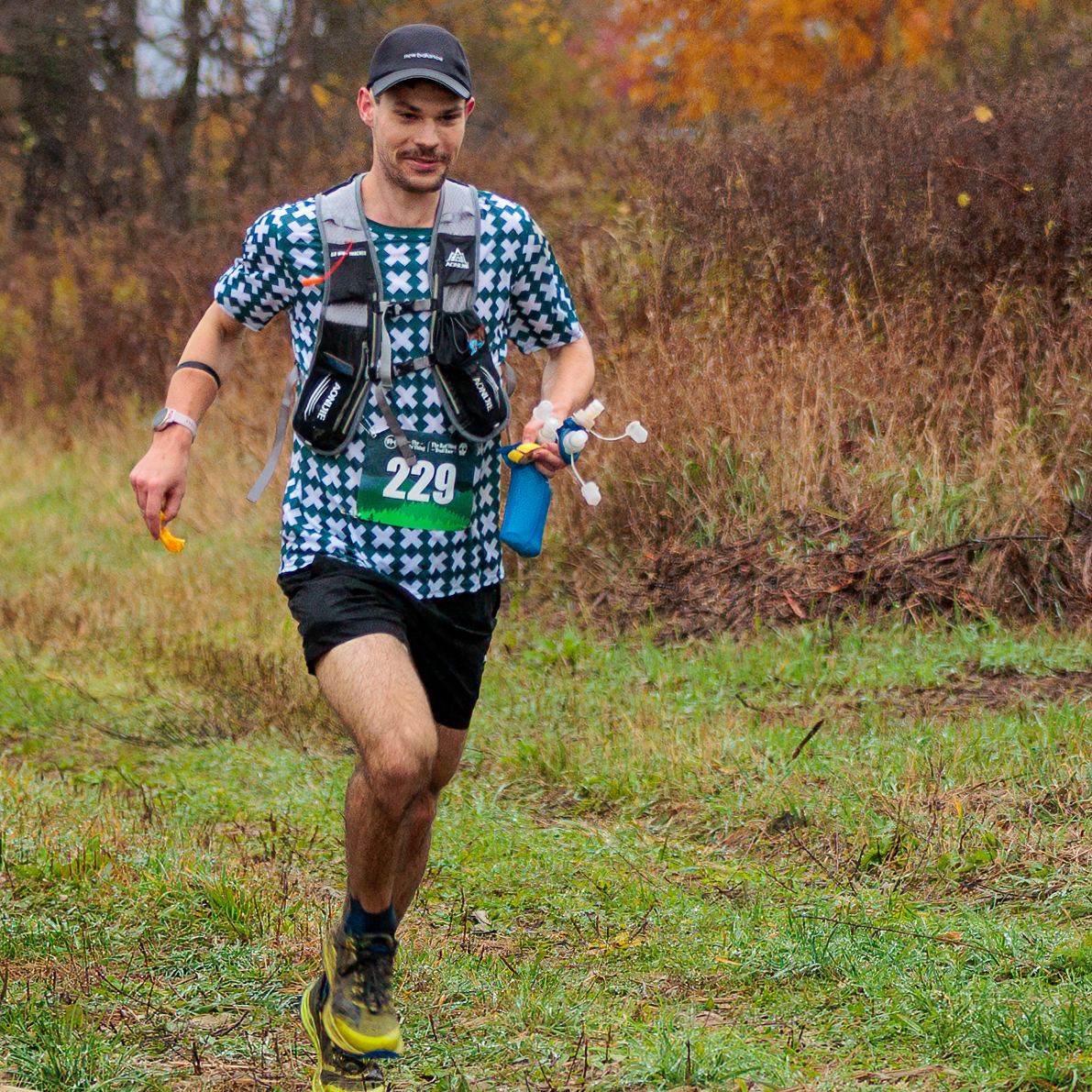
Thanks for reading & see you soon!
Strava Profile | Rhys Desmond
YOU MIGHT ALSO ENJOY…

Newsletter: How much trail time do you really need for trail races?
In any sport, I’ve long been a proponent of “game-realistic training”. The notion is that you need to prepare for the specific demands of what the game actually looks like. When it comes to endurance sports, this becomes more complex. What we need to develop as athletes is a well-rounded skillset.

Run Ridge Run 25K – Recap
I’ve never been so close to not starting a race. Had it been the day earlier, or the two or three prior, I might not have. But I’m so glad I started this race, as it was one of my best in years.

Newsletter – Making the treadmill more fun!
The treadmill simply can’t compare to the thrill of running outdoors, enjoying nature, and the fun challenge of varying terrain. I enjoy treadmill workouts, but I don’t think I’d be alone in saying that I enjoy an outdoor workout ten times more in ideal conditions. With that, here are some of my top tips to…






 Rhys Desmond