
As the self-conscious individuals that we are, it’s impossible to go an entire day with zero negative thoughts entering the mind. Despite the difficulty of that task, I used to subscribe to a ‘no-negativity’ mindset.
It’s incredibly important to always think on the bright side and come up with the positives in any situation, but the negative thoughts don’t always have to be diminished. In fact, it’s the negative thoughts that can spur on positive thoughts if treated correctly.
In creating training plans for other runners, I’ve often asked my athletes to subscribe to the same ‘no negative thoughts’ policy. I’ve since realized that the negative thoughts are not the problem. It’s how long we let those negative mindsets fester, and what we do about them.

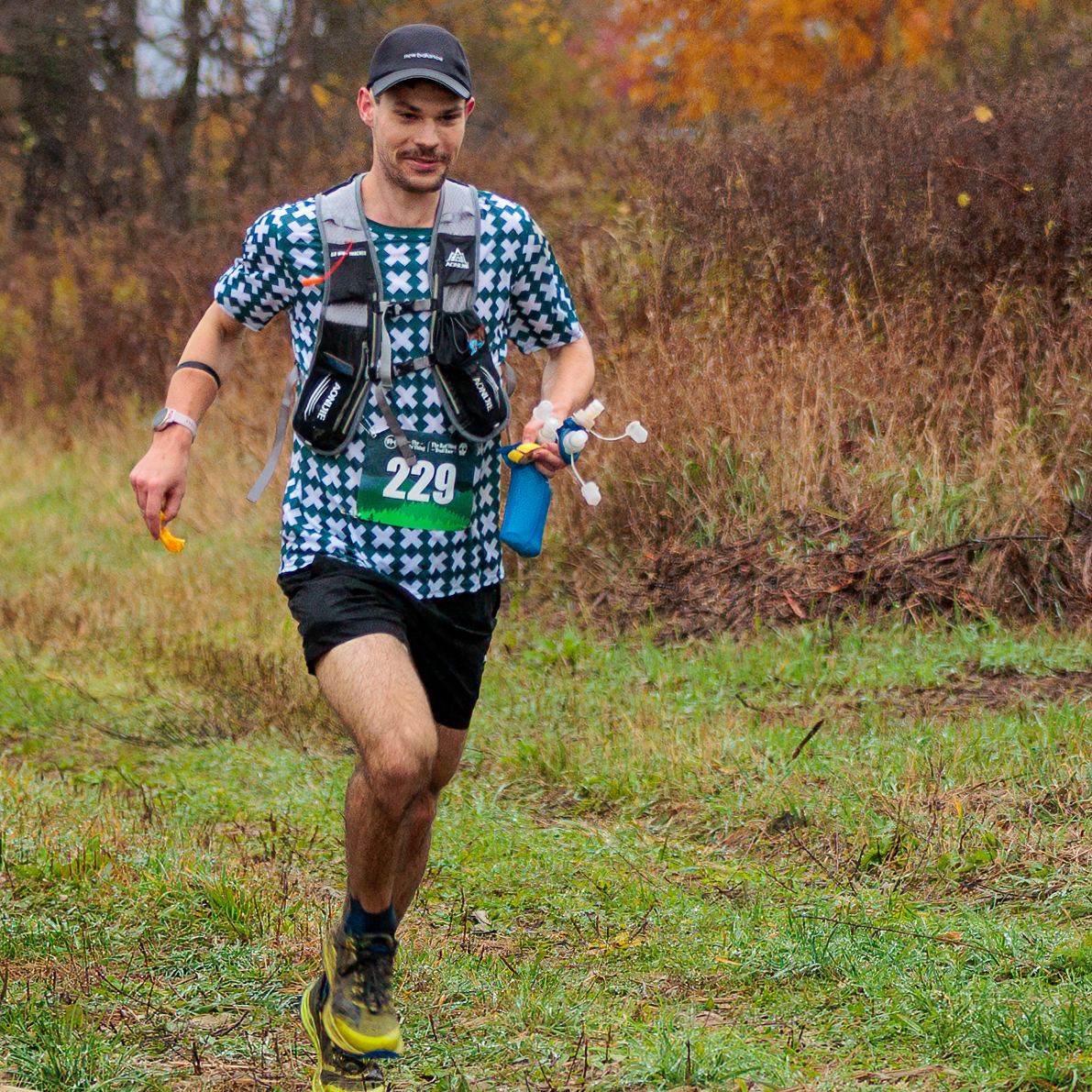
To give you an example, in my recent Sulphur Springs 50k, I recognized as early as 4 kilometres into the race that my hamstrings were already showing signs of wanting to burst out! This inherently was a negative thought, and one that I couldn’t avoid from creeping into my brain. But it’s also one that I was right to bring to the surface and recognize, so that I could then react accordingly. And that’s exactly what I did. I fuelled early and often with electrolytes, water and other nutrition to counter-act the tightness from getting worse. In the process, I managed to delay my suffering and a complete cramp until the final three kilometres of the race.
Throughout the race, I thought about my hamstring and how it was feeling tight. But I also thought about how the guys ahead of me went out at course-record pace, and that one of them was bound to blow up. I told myself over and over “someone’s going to blow up, and it’s not going to be you.” While I did ultimately end up cramping late into the race, having a positive attitude despite my potential for misfortune allowed me to stay present, and continue to kick it into high-gear without feeling sorry for myself.
So much of ultramarathon running is about who can delay their suffering the longest. Much of that comes from training all sides of the process, from speed to nutrition, hydration, climbing, strength, and mental fortitude. But it also comes from staying positive even when things start to not go your way. Much of what’s happening in the body when things start to go wrong are only signals and “check-engine lights”. They are not catastrophic events that become unrepairable. A lot of the time, the mind is even capable of exaggerating the pain and making it worse than it seems.
But what I’m subscribing is not about pushing that pain away and ignoring the negativity going on inside your mind. Instead, it’s about staying present and continuing to push past the pain when it’s safe to do so. It’s about continuing to engage in self-talk and visualization throughout the race so that you can stay in the moment. It’s about preparing for those events before the race so you know exactly how you’re going to deal with them when they ultimately happen 47km into the race. It’s even about reframing those negative thoughts as positive ones.
If I’m suddenly going slower because my hamstrings are cramping with three kilometres to go, I can think about this in several different ways without panicking. I can think about how I’ve already done the hard work to get into the position I’m in, and how lucky I am that the cramping didn’t happen earlier. I can even stay present in the moment and know that the race still isn’t over, and that I have a chance of catching what’s ahead of me if I just keep pushing. I don’t have to worry about what’s behind me and all that could go wrong. I can instead reframe my mind to think about all that could go right if I keep pushing.
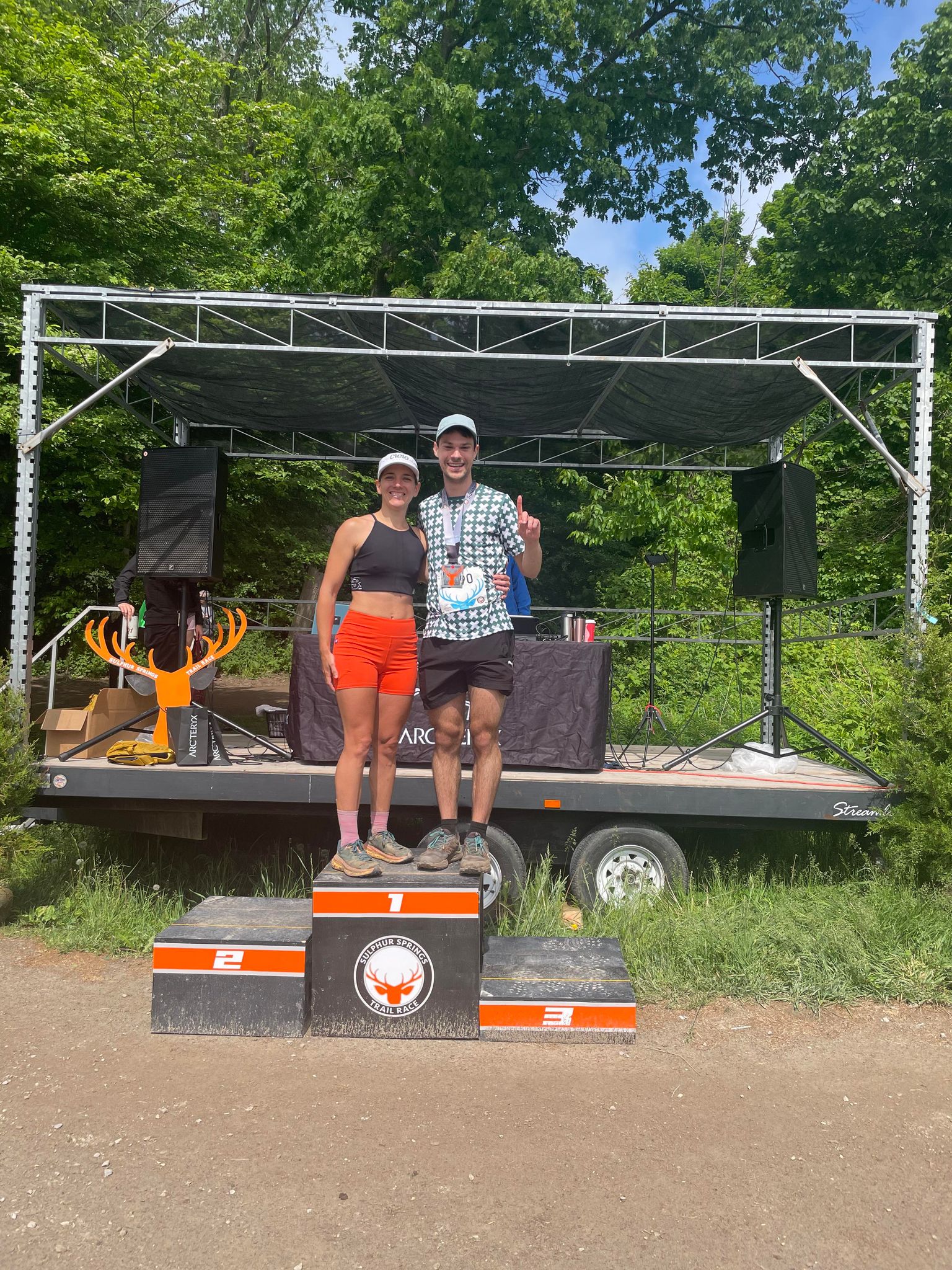
This is exactly what I did in hunting down 2nd place in my recent Sulphur Springs 50k. I hadn’t run anywhere near second place all day, and for the final twenty-kilometres, I had no idea how far ahead they were. But I kept controlling all the things that I could control and continued at my pace for as long as I could hang on, knowing that if I did, I could have a chance of hunting down that person ahead of me. Eventually, I closed the gap to just milliseconds, after not being in it with a fight whatsoever.
Had I panicked and thrown the race away within those last three kilometres, I would have likely finished fifth or sixth, walking to the finish line after fighting for three and a half hours to stay within reach of the podium. But instead of letting the negative problem rule my race with three kilometres to go, I kept pushing right to the line, nearly securing silver instead. This is the mindset I want all of my athletes to develop.
Negative thoughts are not inherently bad, but it’s what you do with those negative thoughts that truly matters.
Thanks for reading & see you soon!
Strava Profile | Rhys Desmond
YOU MIGHT ALSO ENJOY…

Squamish 23K – Race Recap
This year, I made an intentional decision to go down in distance on the trails, working on fundamental speed and efficiency over total vertical gain, long training weekends, and all the extra layers that go into ultras. Along the way, I’ve relearned what I’ve always known: I’m much better when races get longer. This would…

Whistler Half Marathon – Race Recap
The Whistler Half Marathon had the makings of something special. I’d been on course enough in the month leading into the race, and had the experience of running fast along several key sections. But I just couldn’t execute on race day. In the end it was back in my usual spot, with another fourth place…
The training behind Laurence Laplante’s 3-hour marathon
Laurence’s consistency in training has been down to her own dedication to recovery and looking after herself; and three training tweaks within the last year. Here are the training approaches that helped Laurence to execute a 2:58 marathon PB, and a 3:02 day in Ottawa.






 Rhys Desmond