Out of all the training I’ve done thus far for my ultramarathonning future, my back-to-back Saturday/Sunday long-runs have been both the most enjoyable/enriching, and the most beneficial to increasing my physical and mental capacity for running long.
Back-to-back long run days are absolutely essential to the ultramarathon/marathon training process, helping you build up your mental and physical capabilities toward running long. The first few times will be painful. Your legs are going to hurt, and you will need to mentally push past the pain, and physically look for any warning signs that you’re doing more damage than good. But once you get used to running long, and running long after already running long the day before, you will feel like a million bucks, and the runs will only get easier, longer, and faster.
So long as your progress remains steady and you increase by no more than 10% per week, you will be surprised about how quickly you progress. In eight weeks, I’ve gone from a first round of back-to-back 20k+ runs of 21k/20k to a faster pace at 34k/21k. I’ve done this with a greater mental toughness, a greater recognition for how fast I can go in various moments along the way, and a greater awareness of how to keep myself positive, entertained and in a ‘flow-state’ throughout the duration of the endeavour.
Beyond the steady increase bound to occur in pace, distance, and ease of effort, back-to-back long runs are a far more sustainable way of training than trying to hit your target distance in one straight shot.
This of course is relevant to what you’ve worked up toward, and let’s face it, you likely haven’t worked up to a place where running 50 or 60k is both mentally and physically attainable for you. But if you’re doing it right, you’re probably coming close to a place (if not there already), where 25 or 30k is becoming mentally and physically satiable for you. So why not do this back-to-back, and cover that distance of your intended race target, rather than all in one go?
If I was training for a 30k, I’d do the exact same thing with double-15’s. I’d even strive to hit my intended 30k race pace in back-to-back 15k runs, working my way up to a place where I can run even faster than I thought. Let’s be honest with ourselves, 30k race pace is much easier to attain over a 15k period than it is over a 30k period. So this is the easiest way for you and your body to actually work up to that 30k race pace.

Don’t get me wrong! Speed work, recovery days, slow runs, flexibility exercises, strength training, proper nutrition, mental toughness and all the rest have been essential to my ultramarathon training process. But the back-to-back runs have been what has transformed my long-running capabilities, and only added to my enjoyment of the process. I’ve genuinely never enjoyed running more than the exploration of finding new trails for back-to-back long-hauls. This is a privelege. Build yourself up, proceed with caution, and get out there with some intuitive training, hitting those back-to-back long-hauls.
Be sure to check out more of our content below, and join our community!
Thanks for reading & see you soon!
Strava Profile | Rhys Desmond
YOU MIGHT ALSO ENJOY…
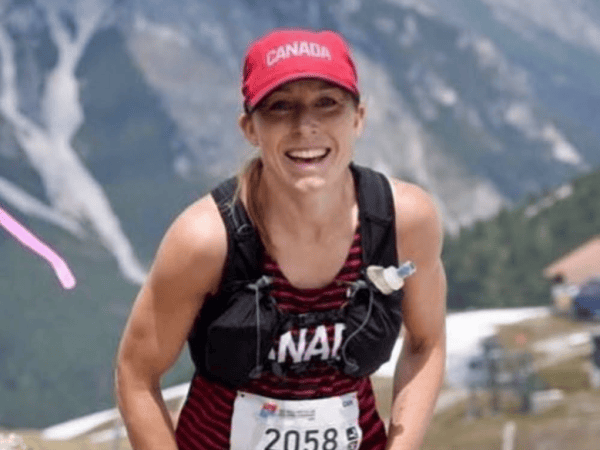
Kalie McCrystal
It’s been almost two weeks since Kalie went missing on the Matterhorn. By now, we would have all hoped to have some form of an answer.
Like Hillary Gerardi said this week in City News, Kalie is symbolic for what so many trail runners aspire to be and dream of doing. The dream of…

Squamish 23K – Race Recap
This year, I made an intentional decision to go down in distance on the trails, working on fundamental speed and efficiency over total vertical gain, long training weekends, and all the extra layers that go into ultras. Along the way, I’ve relearned what I’ve always known: I’m much better when races get longer. This would…
Newsletter – Three things I do before and AFTER every run
The hallmark of a good runner lies within the ability to not only have good routines around the run itself, but within everything that surrounds it. Growing as an endurance athlete does not only happen within the repeated movement patterns of the activity itself, but within the adaptations that happen when the body stops moving.…



 Rhys Desmond