“All things are difficult, before they are easy”
– Thomas Fuller
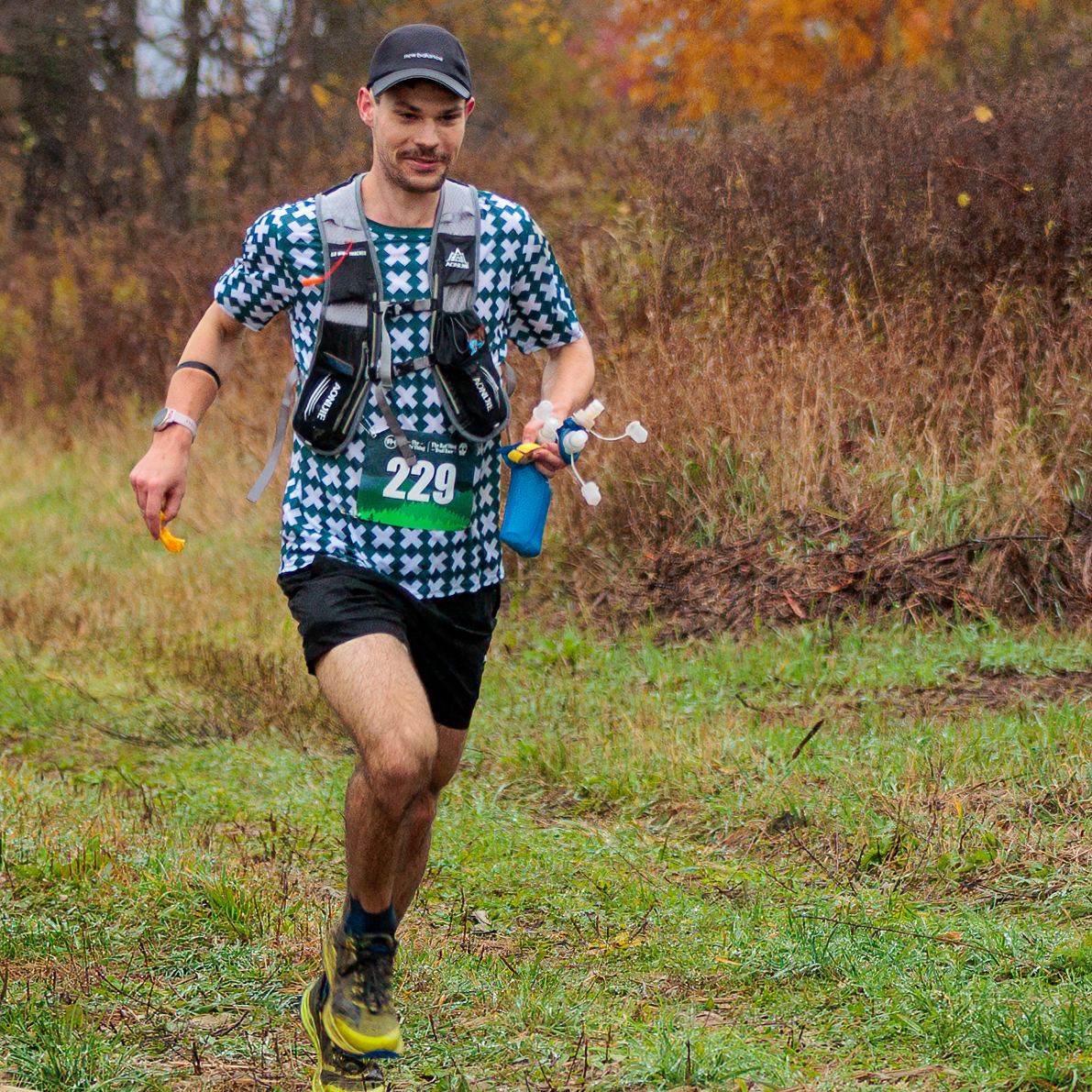
Exactly one year ago, I visited my parents ahead of my sister’s birthday, ahead of the Falling Water Trail Marathon.
Today, I’m visiting my parents, ahead of my sister’s birthday, ahead of the Squamish 50K.
In that time, it actually feels like very little has changed.
Back then, I confidently handled the toughest of terrain with suave and swagger. But even then, I considered Falling Water extraordinarily technical.
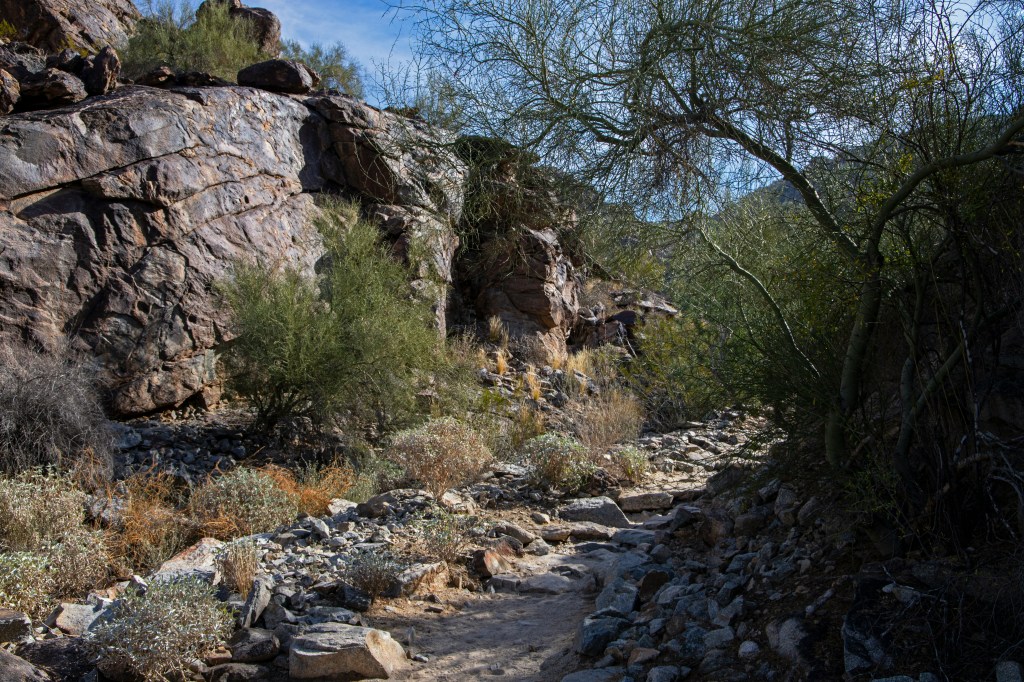
When I visited the cottage and had the chance to run on giant rock, I shied away from the opportunity. Mostly out of the false mentality that it wasn’t runnable. That it was actually too technical for any person to even attempt to escapade.
Today, I decided to give it a try, and found it entirely runnable and comfortable. Technical in the sense that I hit 7-minute-k’s, but runnable in the sense that I hiked very little.
Again, this isn’t to say that my technical trail ability has skyrocketed within the past year. I’ve always had a preference toward technical terrain, and maximum elevation gain.
What has changed, possibly the one noticeable change between this year and last – my mentalities. Technical trail running (like downhill) is mostly mental. It does involve a serious amount of skill, often culminating from experience in other sports (e.g. skiing, soccer, mountain biking, etc.).
But for the most part, it’s all about having the confidence to believe that you are a technical wizard that will be sent to Hogwarts. It’s about actually believing that something is runnable, and then going out and running it at your own pace. The more you do it slow, the more you can do it fast. Because like the quote at the top says – anything is difficult until it becomes easy.
One of the reasons why I think the Falling Water course all feels so natural and easy now is because I’ve done it dozens of times. I know the foot placement. I know where to slow and when to ease off the gas. It’s become muscle memory. The brain then has the honour of doing so much less work. It’s essentially processing less new information, as it’s already done the hard work over the course of many runs.
So beyond simply developing the right mentalities and the belief that technical trail running is actually easier than you think, this is one of my best tips for running on technical terrain. Process as little information as possible.
PROCESS LESS

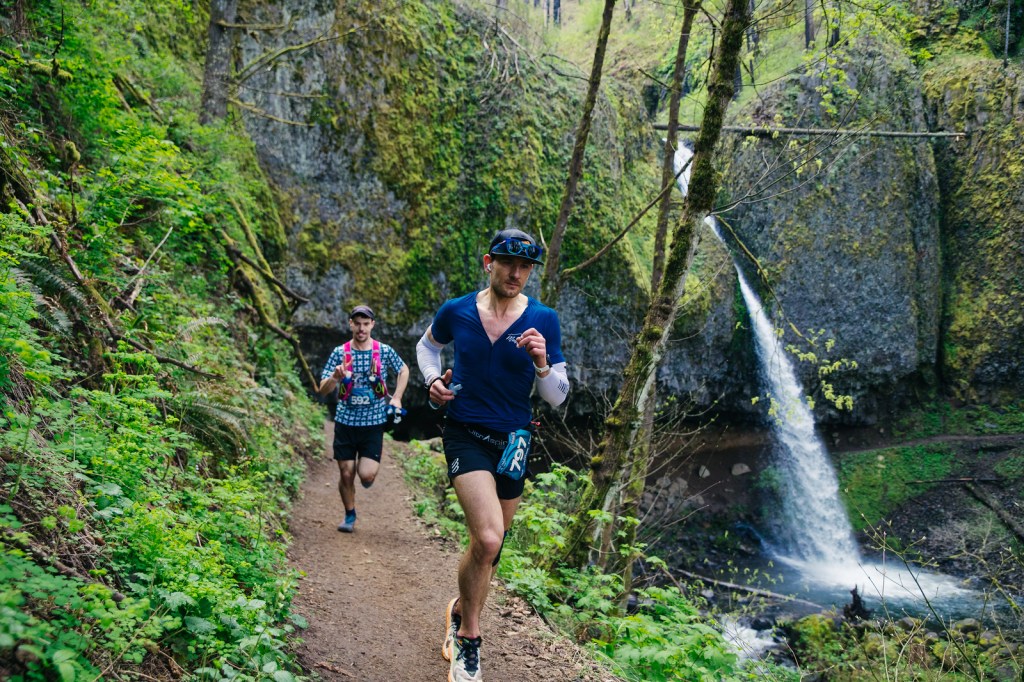
I’ve said it before, the more thinking and processing you do in life, the more you’re actually likely to mess up. You simply can’t take in bucket loads of information at once, especially not when you’re already careening down a hill at high-end speeds.
SEE: Perfectly imperfect is perfect
It might seem counter-intuitive, but it’s better to process less. Of course, you need a balance. You can’t close your eyes and let the wind take you. But you also can’t scrutinize over every single step.
In the soccer world, I studied scanning at the elite end of performance when working with pro athletes. The best in the world spend very little time focused on any given thing at one time.
Instead, they glance at something for a second or two (at most) before moving their eyes to a new piece of information. In the soccer research world, we call these ‘short fixations’.
SEE: How athletes can improve their scanning and perceptions of BOTS.
A player might scan toward their teammate on the ball, then to the space available, then back to the player on the ball, then to the space, and so on. Each scan lasts about a second or less – meaning the eyes are never fixated on one specific place on the field for long.
In trail running, the eyes have to move at unbelievable speeds to take in all the information your brain is needing to process (especially when running downhill). It’s happening so fast, that you’ve probably never even noticed it before. Since I study this kind of thing in my own training, I’ve been able to recognize how I operate within the ‘short fixation’ framework.
I scan at the space ahead, then back to the immediacy of where I’m about to place my feet. That song and dance goes continuously until there’s something out of the ordinary (another person, a dog, a fallen tree, a river crossing, etc.), where the eyes have to fixate for longer than those milliseconds. Most of my attention is fixated on the immediate steps and the immediate actions of the moment. As I lift one foot into the air, I make micro-adjustments to the size of my step based on the immediacy of what lies ahead.
But I can make each step easier by having already processed the information of what’s two to three steps in front of me simply by glancing at it through this technique.
What is that technique?
Again -> What’s ahead of me? Then – What’s directly in front of me? Repeat.
But here’s the super important part. I’m taking in very little information. I’m not telling myself “Oh by the way, watch out for that root.” (top ten ways to trip on a root).
I’m simply seeing the root, and remembering where it is, so that my brain can see that information and do something about it at exactly the right moment.
I’m letting what feels natural run its course, without overthinking. I’m running fast and free without any doubts of tripping, falling, or injuring myself.
It’s confidence. It’s skill (from years of playing soccer and hockey and being in a low, shuffling stance). But it’s also information processing. I’m able to take in a lot of information at once, and understand correct actions to take within milliseconds. That is the strength of any technical trail wizard, and one of the main reasons why I love the sport.
If you’re able to focus on what you’re doing and let your body naturally do the work, you don’t have to analyze every step. You will still make correct decisions in those milliseconds, even if there might have been a slightly better path to take. Don’t sweat that. Just keep rolling.
Confidence. Skill (developed often through muscle memory). & Information processing (which is made easier by muscle memory). With these three things in mind, I will now take you through how I navigate the toughest of terrains out on the trails.
TECHNICAL DOWNHILL
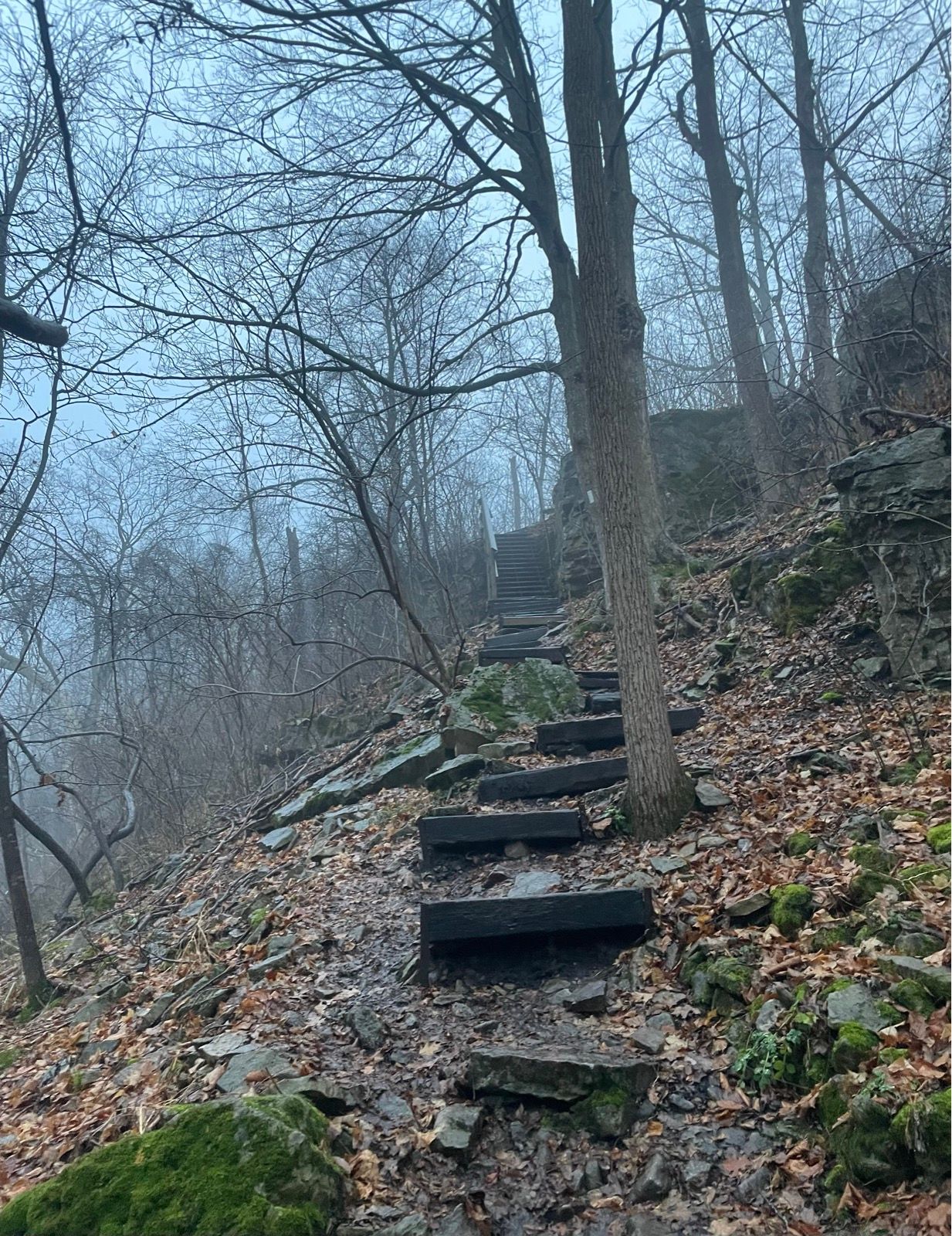
I’ve written a few articles on downhill running to date, and I can summarize both of them in one quick sentence for you right now.
Downhill running is a mix of confidence, and knowing when to take small steps as opposed to big steps.
If the downhill is fairly runnable, the steps will be quite big. If it involves a crack in the trail or the need to avoid some rocks or roots, I might also take a bigger leap. But for the most part, I’m small-stepping it all the way to the bottom. Smaller steps are a sure-fire way to stay controlled, and also cause less muscle breakdown than those larger leaps. The longer your body hangs in there, the greater the impact. So small-stepping it on downhills is naturally a great strategy for reducing muscle breakdown (ensuring you can do more downhills in a single run). But it’s also optimal for handling the technicality.
All you need to do is flow with the straightest path you can find. But it’s also important not to change course too much to get yourself onto a better path. You can’t go against the forces of your own body when running down. That’s when most of the slip-ups happen (when you’re trying to stop yourself from falling). And you don’t need to be a physicist to understand that it’s also slower to go sideways than it is to go straight down.
If you need to slow yourself down, use trees wherever possible, or lean back. Leaning forward = fast. Leaning back = holding back.
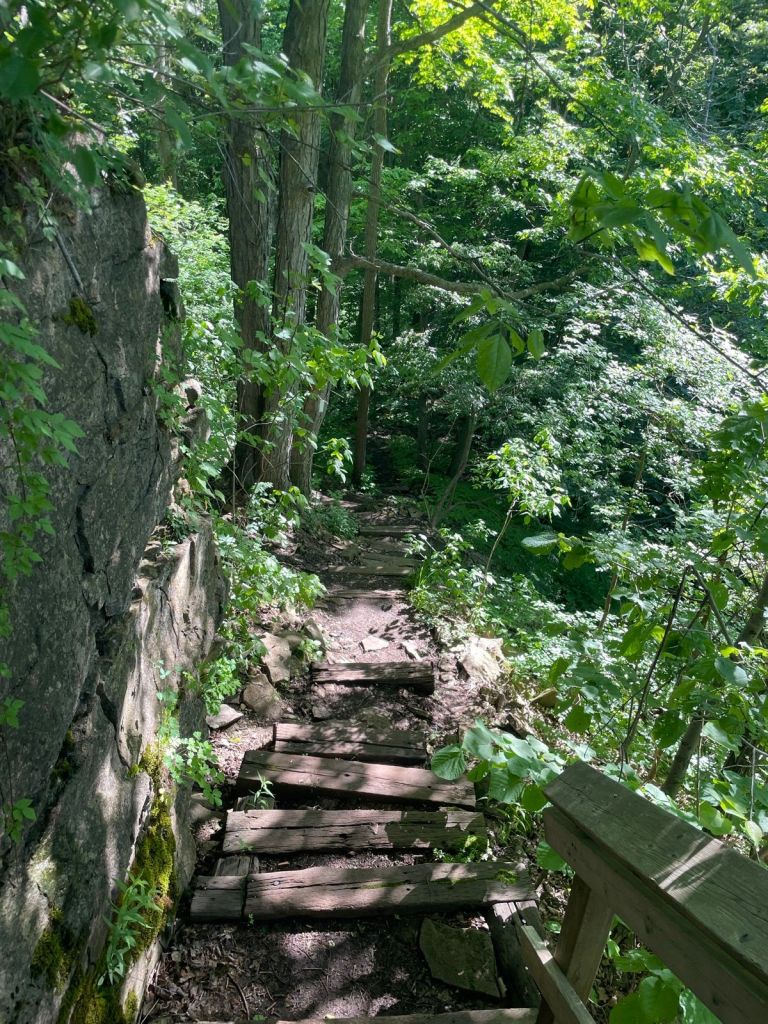
But if you’re actually wanting to go fast, it’s all about foot placement (based on the lightning quick information processing). I avoid landing on any root or rock when it’s possible to hit softer ground, lengthening or shortening my stride to land in front or just shy of the technical bit. On stairs (more like steps), it’s often faster to land on the actual steps themselves rather than having to change stride so much by landing on the dirt that separates the steps. I’ll even skip steps when possible with a larger leap.
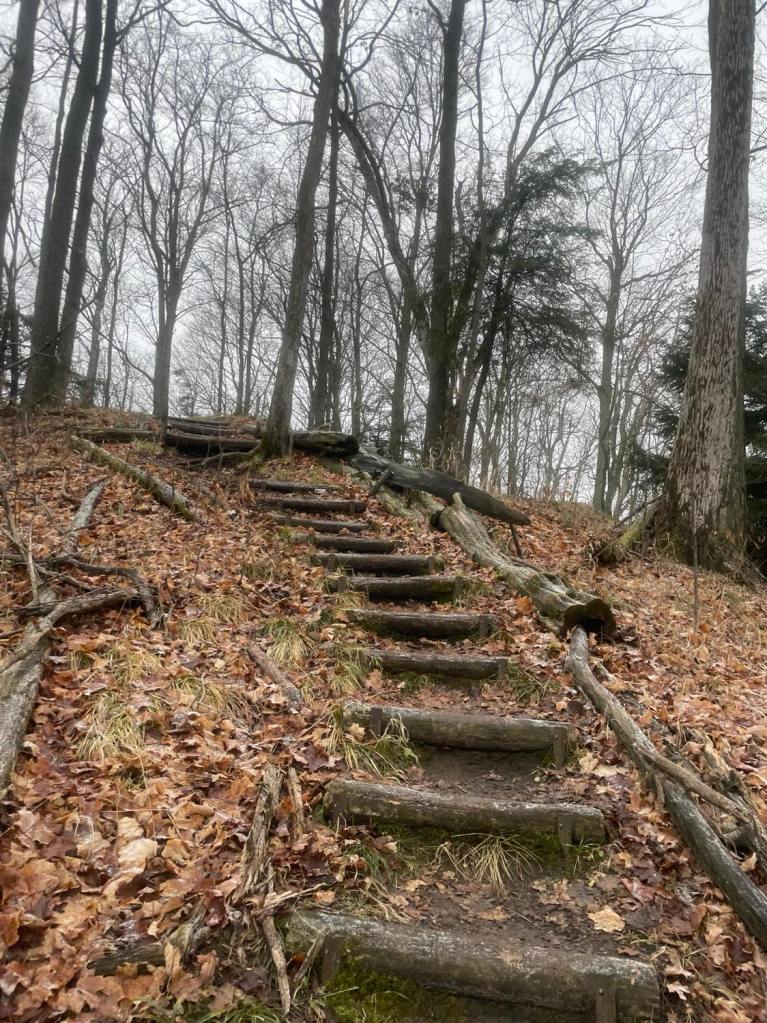
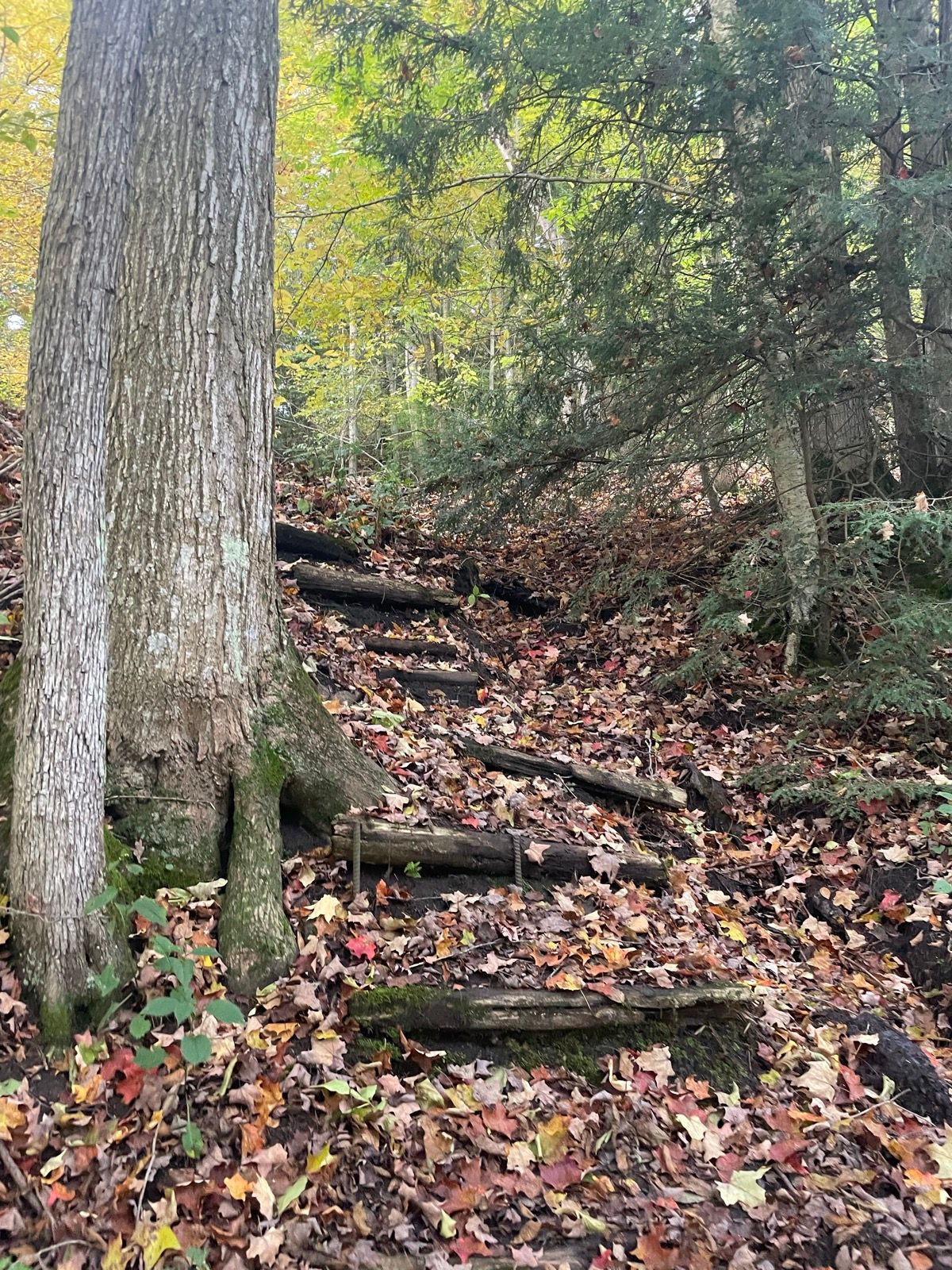
On rocky downs, steep sections or uneven ground, I’ll use my arms and hands for additional support. I like to raise them up and smack the air in line with my legs, and while it may be a bit much, there’s something really powerful about Grayson Murphy’s famous ‘airplane arms’ when it comes to keeping balance. Stay in tune with your own body and what you naturally do to keep balance, and make that a conscious choice over time.
TECHNICAL UPHILL
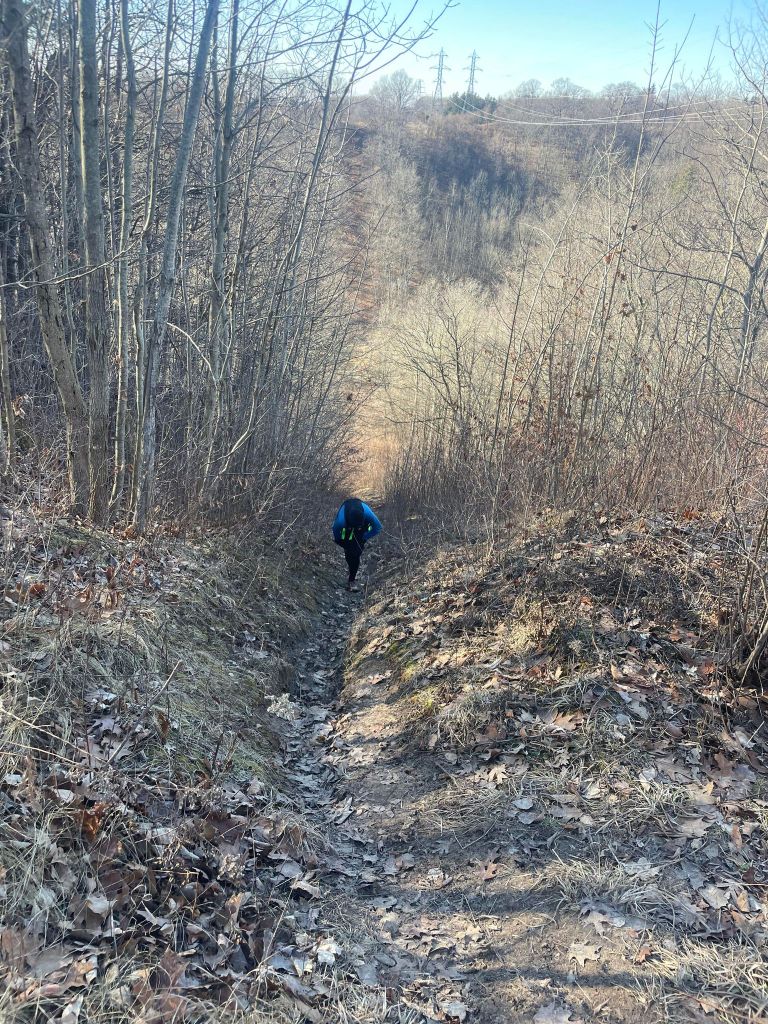

This might seem crazy to say, but uphill running on technical terrain is unequivocally the easiest of them all. Three reasons:
- Less muscle breakdown
- More time to process information
- Foot placement matters way less (subsequently less risk of injury).
Despite being the easiest biomechanically, it’s also the hardest on the heart-rate, and subsequently feels difficult. Don’t let it. Hike when you need to hike. Run when you can run.
Technical uphills are essentially just a crux between that choice. Hiking here, running there. Hiking with big steps to push yourself up from one section to another, to sometimes even smaller steps when it comes to something like stairs.
Speaking of stairs, there are lots of different ways you can attack them. But taking them one step at a time (with both feet) has never felt like the right approach for me. Instead, I like to leap from one stair to the next (often skipping a step along the way). I also change up the muscle groups, alternating between small and large steps, and often using the railing like poles to propel myself up – almost like an Olympic swimmer doing a breaststroke.
When it comes to the super technical stuff, you should be hiking anyway. So it becomes much easier to take things slow, take those large steps to push yourself up, and gradually make your way up the hill, running in the brief moments of normalcy.
ROCKS

Rocks typically come in two forms:
- Rocks that exist within the ground itself.
- Rocks that sit above the ground as though they are the trail themselves.
When it comes to the first option, it’s easy. You place your foot slightly ahead or in front of the rock, landing on softer ground.
When it comes to the second, you take it slower. You dance, you shuffle, you pretend like you’re a technical wizard that’s about to be sent to Hogwarts. You dance to the rhythm of your music. You gallop side to side. You use your hands to scale up and down when needed. You enjoy the process. Fast footwork on rock is possible, but it takes practice. Slow down first, and you will speed up later.
MUD
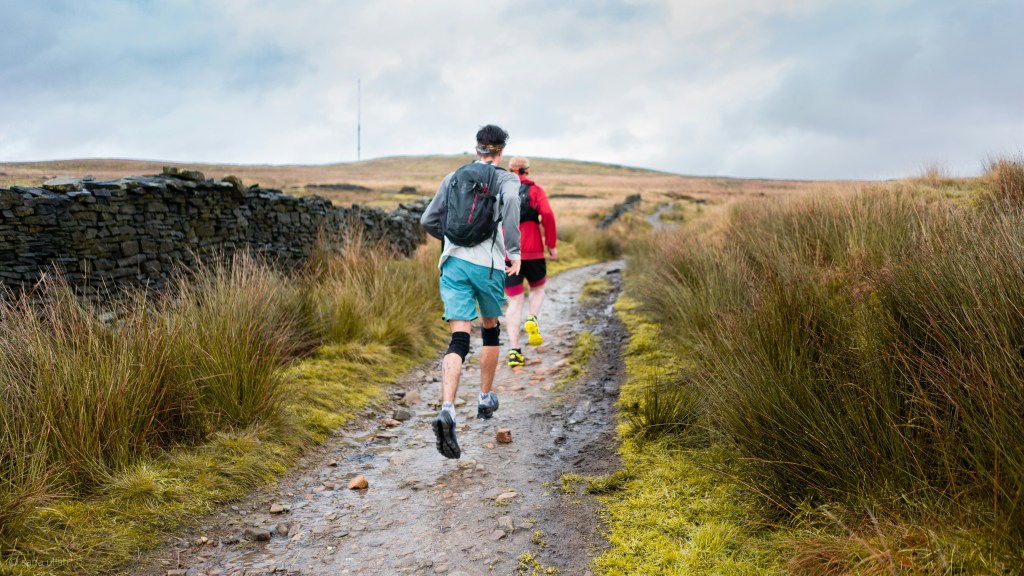
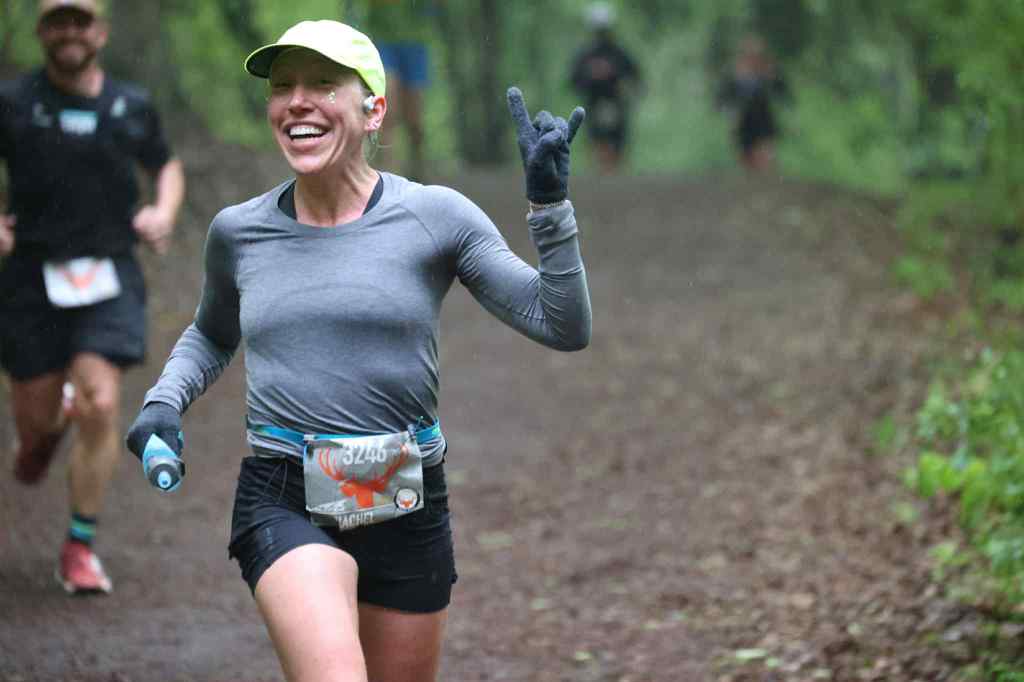
I love running in mud. It is inherently more difficult (and dangerous). But it’s also well worth the practice in case you get a rainy day on race day.
For muddy downhills, I like to dig my heels into the mud, and slide ever so slightly with the trajectory of the trail before transitioning to the next foot. It’s not a full-on snowboarding session, but the heel does stick to the ground longer than normal. To do this, you make yourself smaller, dig your heels in, and let the trail naturally take you until your momentum makes you switch to the other foot. You can keep your balance with your arms and hands doing the work when needed, and slow yourself down by digging one foot into the mud at a time.
For muddy uphills, you have to lengthen your stride. It becomes more of a bounding leap than a normal small-stepping grind, ensuring your feet actually spend less time on the ground and don’t get caught in the mud.
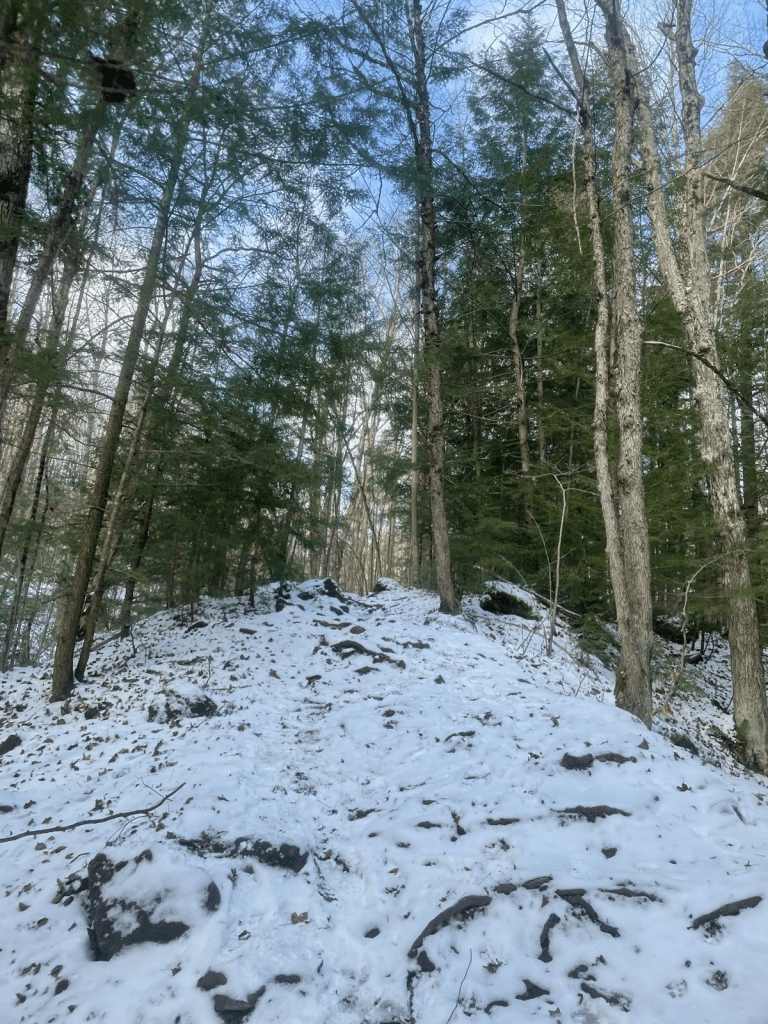

Technical trail running is my favourite style of all. I’ve thrown myself into the wolves with some of the most technical races I can find, and the bulk of my training is spent on some of the most technical trails around. I hope that these tips can help you to become a confident technical trail runner, and someone who can easily process excessive amounts of information at once to make optimal decisions with little to no thinking time.
Thanks for reading and see you soon!




 Rhys Desmond