
I don’t have any mountains. I move mountains. But I don’t have any to train on.
Often times, I feel like I want to escape. To train in the mountains so that I can match the mountain goats stride for stride. But in reality, you can train for mountainous terrain without mountains.

The ideal is that you have mountains. But all is not lost if you live in a relatively flat area. Here are my best tips for training for mountainous terrain without any mountains.
TREADMILLS & STAIRS

If you don’t have a mountain, treadmills can become your best friend. No one likes the treadmill as much as running outside. At least, no normal runner likes the treadmill as much as running outside.
But you can set the incline to the maximum, get into your grooves, and run uphill for as long as you want. You can hike. You can take it step by step. The only thing you can’t do on a typical treadmill is run downhill. But when it comes to training the legs for the demand of a sustained uphill, the treadmill can often be one of the best tools.
My favourite uphill workout to do on the treadmill is a Brett Hornig special – 8 x 3 mins uphill at maximum incline and threshold effort; followed by a 90 second hike in between. The heart rate stays high, and your body practices how to switch from hiking to running like nobody’s business.
Other than the lack of downhill, the other key note with the treadmill is that the muscles required when hiking on a treadmill are significantly lower than hiking on a technical, mountainous trail.
That’s where something like stairs can come in handy. I like hiking up stairs because it’s a similar movement pattern to those grander steps from one section of the trail to the next, rather than just letting the legs flow at a walking pace like you might be able to do up a grassy hill.
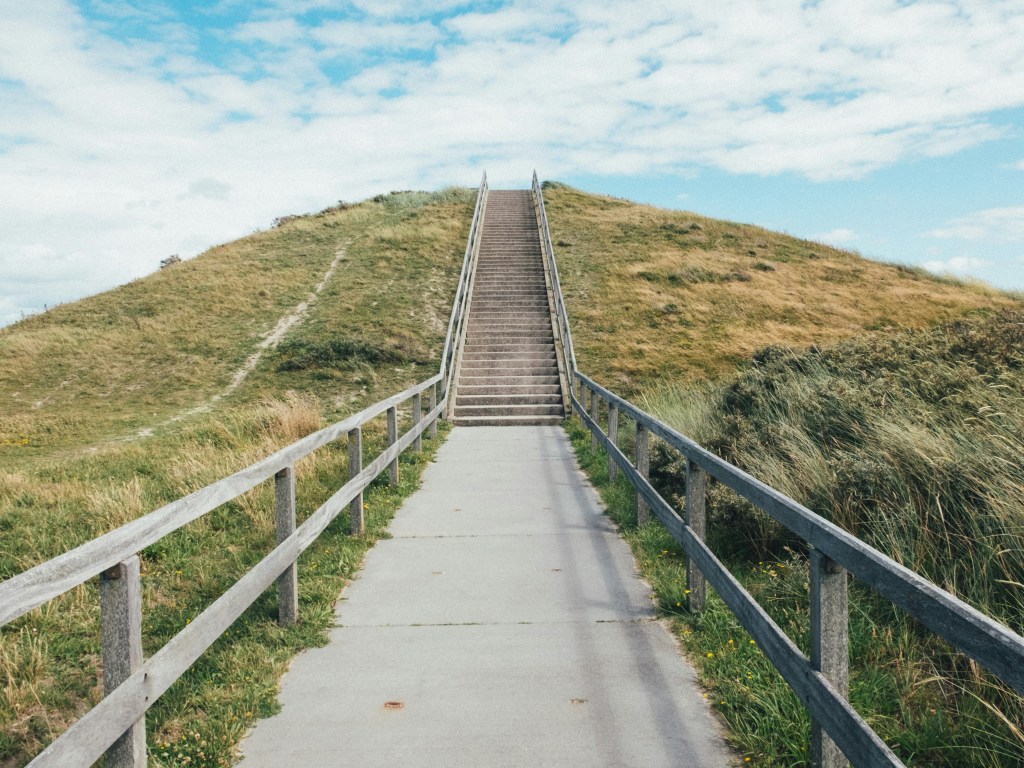
I’ll always skip a step to make it resemble that real hike outside, but sometimes I’ll even step further than what my body naturally wants to do, going from step 1 to step 4 and then 7. This works different muscles, and more closely resembles which parts of the muscles will actually be used on race day.
That’s one of the key benefits to stairs in comparison to an uphill treadmill. You can get some semblance of the muscles required uphill, and even the small-step movement patterns on technical downhills. I like to leap down from the third or second stair furthest to the next level, giving myself that feeling of pounding that comes from leaps on technical terrain. It’s a soft landing rather than actual pounding, but I like to think I’m working my ankle and knee muscles more than just flowing down to the bottom would allow.
Speaking of strength, that’s the other essential component to the puzzle.
STRENGTH WORK

So we know that we want to identify ways to resemble the movement patterns. But we also need to build up the strength in those muscles in creative ways, to ensure the mountains don’t take as much of a toll on our bodies.
I like to follow the Roche’s for strength work, such as their Mountain Legs or Speed Legs routines. Single-leg step-ups are great and resemble legitimate movements you’ll get out on the trails, and things like squats and lunges are also going to go a long way toward building up strength in the quads and hamstrings – essential muscles for leaping and stepping.
It’s important to then identify the type of movement patterns you will experience on race day as much as possible, identify which muscles those movement patterns target, and build that knowledge into your strength routines.
As an example, when I raced Falling Water, I knew that I’d be doing a ton of side stepping and step-downs, so I built things like speed skaters (leaping from one foot to the other) into my strength work. For much of QMT, I already know there’s going to be a ton of hiking, and a ton of step-downs. So I’m already thinking about how to use stairs and strength work to practice those movement patterns and build up the strength work required of those muscles.
If you do strength work once-twice a week, you’ll be on a great path toward having exactly what you need on race day.
FINDING SIMILAR TRAILS

You might not have mountains, but hopefully you have trails. Whether they be half an hour away, two hours away or five hours away, you might need to make a commitment toward finding similar trails to your race and replicating as much of those demands as possible.
It’s important to then know what you’re going to get on race day (either through experiencing it or talking to others who have). You can then look to replicate as much of the race as possible through what I call – “game-realistic training”. In any way, shape, or form, it’s important to get as race-specific as possible whenever training for a goal race.
I know for my next race in QMT, that I need the sustained rocky uphills, the technical downhills, and a lot of shuffling through rocks. I’m going to then prioritize the trails that allow me to focus on those movement patterns.
If you have the ability (the time and the financial means), then this is the best piece of advice I can possibly give in this entire article. Take a holiday weekend and make a three-day training block out on your race course. If you can do this at any time before your race, you’re going to have a better sense of exactly what trails you can utilize in your own area to replicate the demands of the race. You’re also going to build up those mountain legs, and more importantly, muscle memory on the actual race course.
This is essential to doing well in any trail race. It’s knowing exactly where to step. Exactly when to make moves that suit your strengths. Exactly when to hold back. How to navigate the entire race start to finish. Getting on your race course is the best way to do all of that, even if it’s only for three days three months out from the event itself.
When it comes to the most technical terrain, no one is going to be able to run fast. No matter how talented they are at dancing through rock, or how speedy they are at everything else. No one can run on super technical terrain.
The differences can still be massive.
Why? It’s those that know exactly where to step, and do so with confidence and bravado, that can fly through technical sections when others can’t. If you don’t know the course, you don’t know where to step when things get wild. If you know the course, it almost becomes second nature. You don’t even have to think.

I recognize that this is not possible in most situations, but if you can get out on the race course through any option available, take the opportunity. If not, prioritize stairs, treadmills, strength work, and trails in your own backyard that can replicate the demands of the race. If you can focus enough attention on each of these pillars, you’ll be just as good as if you lived in the mountains yourself.
Thanks for reading and see you soon!



 Rhys Desmond