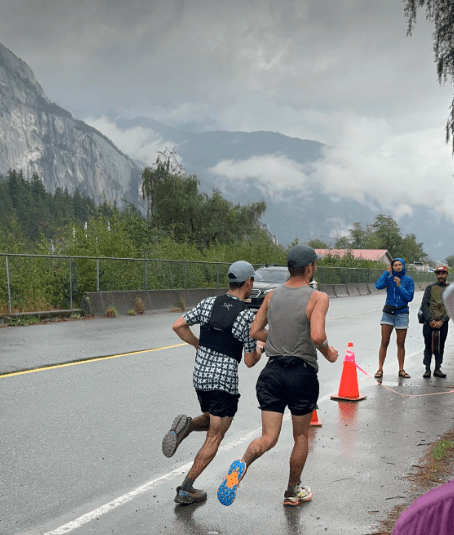
One of the best parts about racing is the chance to see where you stack up against other people. While the focus always needs to be on you and your race, the dynamics of racing against other people is often what makes racing memorable and fun.
In trail running, on often narrow courses with technical terrain, steep climbs, and dangerously close cliffs, it can sometimes be difficult to pass other runners.
Sometimes you might want to pass another runner, but worry it’s not the right time. Other times you might want to pass, but there’s no space. Or maybe you’re the one with someone careening down your neck.
So how do you navigate this? What is the “etiquette” around passing in a trail race? Here is my answer!
STEP 1: KNOW YOUR INTENTION
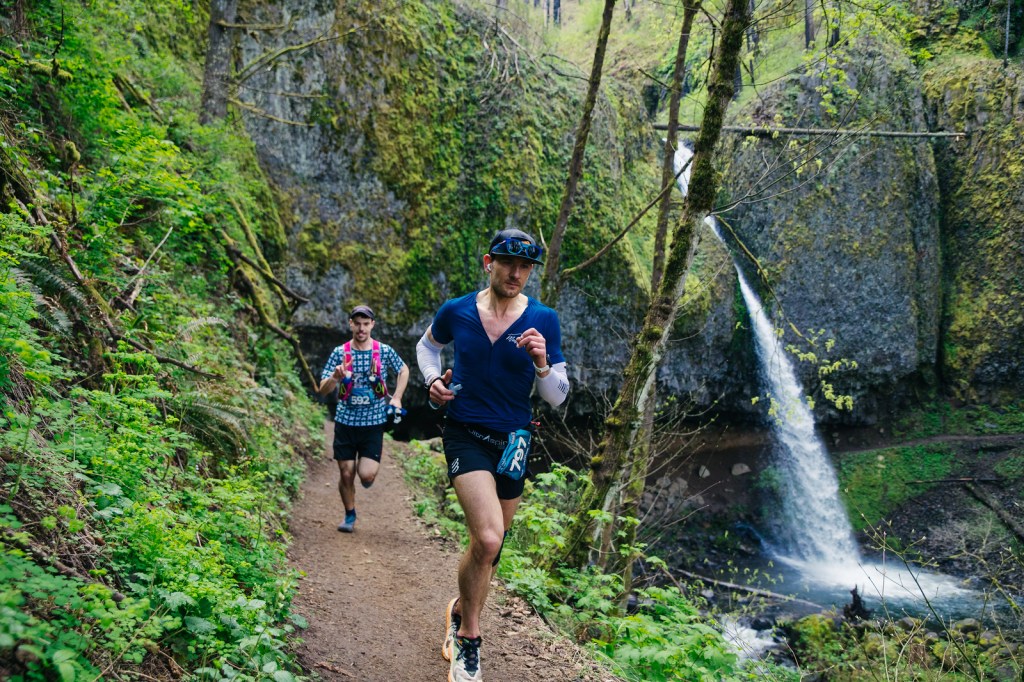
When approaching another runner, I often inherently know whether my intention is to pass them, or to run with them. If I know I just want to run with them, I’ll tell them exactly that. “Good job. Stay there. Let’s work together to catch the guys ahead.”
You will often know how they’re feeling from how they react to your presence. If they speed up (or work harder), they likely don’t want to be passed by you right now, and that’s okay. Wait it out.
Maintain appropriate distance, and eye the course carefully. The trail will eventually open up and widen. On technical bits, sometimes there are two “correct” paths you can take. Take the opposite line from them.
If they stick with you, amazing. Now you have someone helping to keep you engaged and focused on the task. If they can’t recover from that move within the next minute or two, it was definitely the right call.
By the way, any time someone catches up to me, I will almost always introduce myself. I’ll simply say “Good job! I’m Rhys.”
Whether it’s me catching them or them catching me, I like to tell them my intentions for the next section. Something like:
“I’m going to take this downhill faster. Come with me.”
Every single time I’ve done this, it’s given me an immediate boost in confidence and alertness, and I’ve always left that runner behind. This happened at my first ever trail race, and it happened at my most recent one.
Knowing your intention and spelling it out is really valuable when racing other people, and often gives you more confidence to maintain your position.
To give you another example, when I ran Squamish 50K back in 2024, I started much of the early miles with my now coach Jade Belzberg. She was running for the gold and a course-record, whereas I was running for the top 10. I didn’t want to get in her way and at one point she asked me the classic question: “Do you want to pass?”
I turned the question back on her and said something along the lines of “What would be most helpful for you? Do you like to lead the pack or follow?”
She said either, and so I simply took her context clue and went ahead for that section. My intention was to run with her and, if so lucky, help be a small part of her great day. Once I made that clear, it was much easier to balance that line of running with her (and Elisa Morin!) for the first half of the race.
STEP TWO: LISTEN FOR CUES
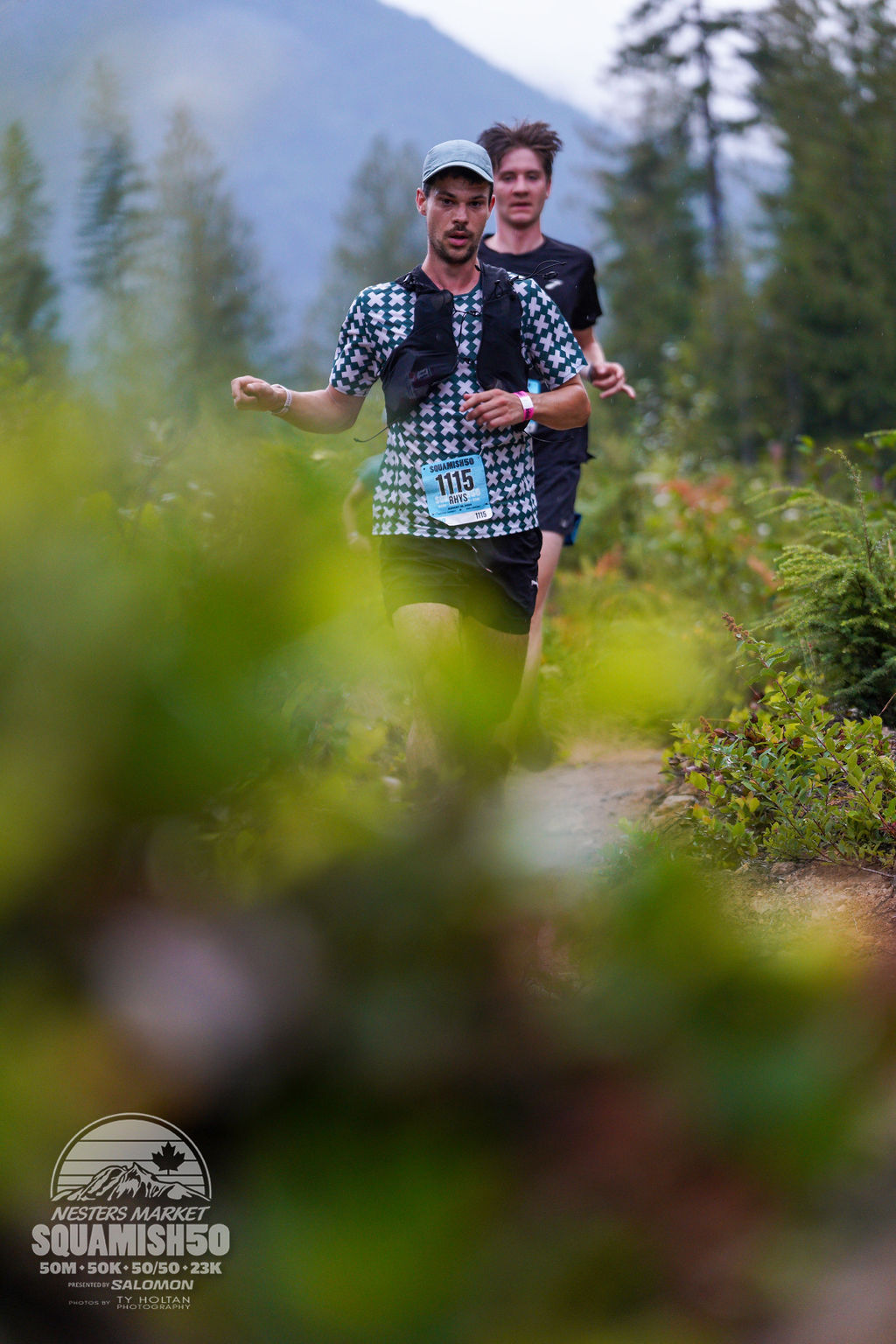
A lot of the time, other runners will sense that you are coming. They might hop out of the way. They might speed up. They might even look back.
Now is a great time to say hello, to give them positive feedback, and to prepare yourself to either run with them, or to pass. For just a moment or two, watch them.
How are they moving? How are they breathing? How are they responding to you?
The best context clue of all is this question: “Do you want to pass?”
I’ve actually never asked this question. I think people will pass when the time is right, and you are well within your rights to hold your line and run your race until they can safely do so.
But if they ask this, almost 100% of the time, they want you to pass them.
Now is the time to state your intention. I might say: “No. Keep doing what you’re doing.”
I might say: “Yes, when the time is right, I will.” That way, they continue to lead and can hopefully gain confidence from that, under the mutual understanding that when it’s safe to pass, you will.
There was another moment at the Squamish 50K where Jade asked this question on a technical, steep, downhill. I surmised that she likely didn’t want me knocking her over, so the best course of action was to pass when it was safe to do so.
Another time at Harricana, the very moment Anne-Marie took to the trail first (I stopped to get water on my head and she didn’t), she asked me this question in French. I told her that I would retake the lead, so that she could just focus on running her race.
You have to read what other people need from you in the moment. Especially, I think, as a male racing with super strong CR setting women. Talking to some of them, they often don’t want the extra burden of having you behind them. Asking to pass is, if anything, often preferred. Especially if they’re basically asking you to!
But here is the best way to phrase the question if you’re the one asking:
3. MAKE IT COLLABORATIVE & MOMENTARY
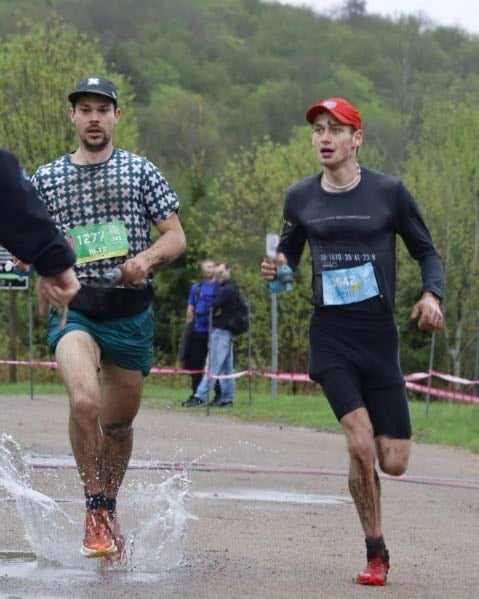
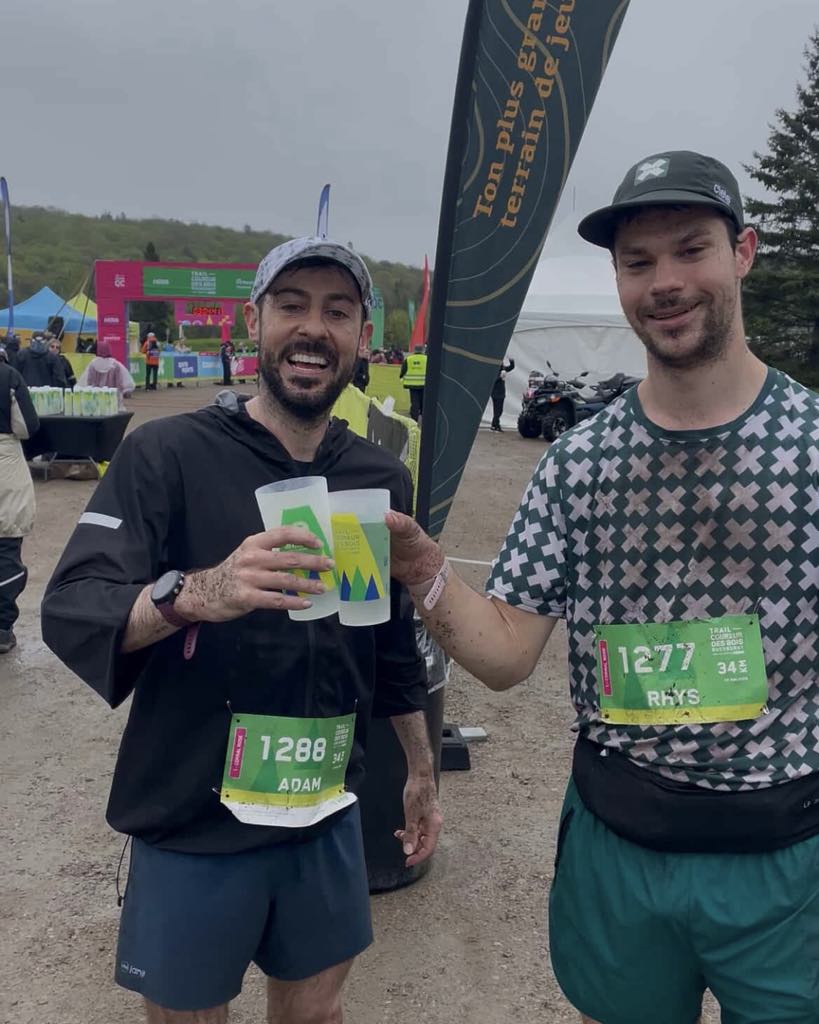
Race dynamics can change on a dime. At the Harricana 28K last year, I felt a little faint on a downhill, and let two runners pass me. We then reached a technical section, where the pace was too slow for my liking. So I passed them back (and never looked back!).
This is what often happens in races: you pass someone, they pass you, then you pass them back.
So when phrasing the question, always make it about the moment.
“Do you mind if I take the lead in this section?”
“Let’s work together on this uphill. I’ll take the lead.”
Or my favourite: “I’m going to take this next uphill fast. If we work together, we can catch the guy ahead.” This is exactly what I said to Francis Lefebvre at the 2024 Harricana 42K: “If we work together, maybe we can catch Charles.”
Make it about the moment. It doesn’t need to be ‘I am stronger than you, let me go ahead.’
They might feel better on a different type of terrain, and pass you back. This is what happens all the time when I race people more than once. You start to know things like ‘I actually need to pass him on the uphill, because he’s a much better flat runner.’
In fact this is what Louis Moreau said to me at the QMT 50K (when everything was going well). As he passed me on a downhill, he said in his French accent: “You will catch me on the uphill.” Super encouraging, super collaborative, and a very clear intention. He knew his strength, and he passed me. Later, on a strength of mine, I passed him back. Just having that dialogue can be so confidence boosting for both of you.
On this note, two months later, I raced Louis again. On an early uphill, I went around him and told him “good job, etc., etc.” He then proceeded to stay with me, step by step, as we navigated some gnarly downhills. And for awhile, he didn’t make any move to pass. So I knew, ‘He feels good here. He’s fine to hang on. I can continue to lead the line. We can work together to catch up to the guys ahead.’ Eventually, he made a decisive move and I never saw him again.
After the race, he said that I “brought him back from the dead.” It was actually helpful having me (the slightly slower runner) in front of him. I guessed that he gained confidence knowing that if he stayed patient, working with someone he’s beaten before, he could eventually use that hard work to charge ahead. That’s what he did.
Running with other people shouldn’t be a hassle. It shouldn’t be a problem to pass, or to get passed by another runner.
If you can find someone that’s running the same pace as you, and you can collaboratively work together to understand what works best for the both of you, this can be a really magical thing.
As long as you can read the cues or even ask them how they’re feeling, you’re going to be set up for a safe and respectful pass, while running a smarter, better race.
Thanks for reading and see you soon!