

This article is part of a 15-question checklist that every trail runner should consider before their next race.
The questions you need to consider:
MENTAL PREPARATION


EXPANDED
A – Visualization is the most underused tool in a runner’s arsenal. Picture yourself at aid stations. Picture yourself on key sections of the course. Picture yourself finishing the race. I use visualizations all the time in training, thinking about what it’s going to be like on race day.
Additionally, do your homework! Study what will be available at aid stations and when they occur. Study your competition, if you find that helpful. Study previous times and splits, if you find that useful and not overwhelming.
I know this isn’t for everything, but I love to look at the times and splits of previous podium placements, and have that as a reference if that’s what I’m aiming for. I also like to study start lists in case there’s someone I may be able to work alongside and strategize with.
B – If you’re going to visualize (or even practice) anything in your training, it should be what to do when things get hard. Not everything is going to go to plan on race day. You might get lost. You might forget your nutrition. You might slip and fall. Having a plan in all of these worst-case scenarios is crucial to staying positive in the moment and reacting to whatever the race throws at you.
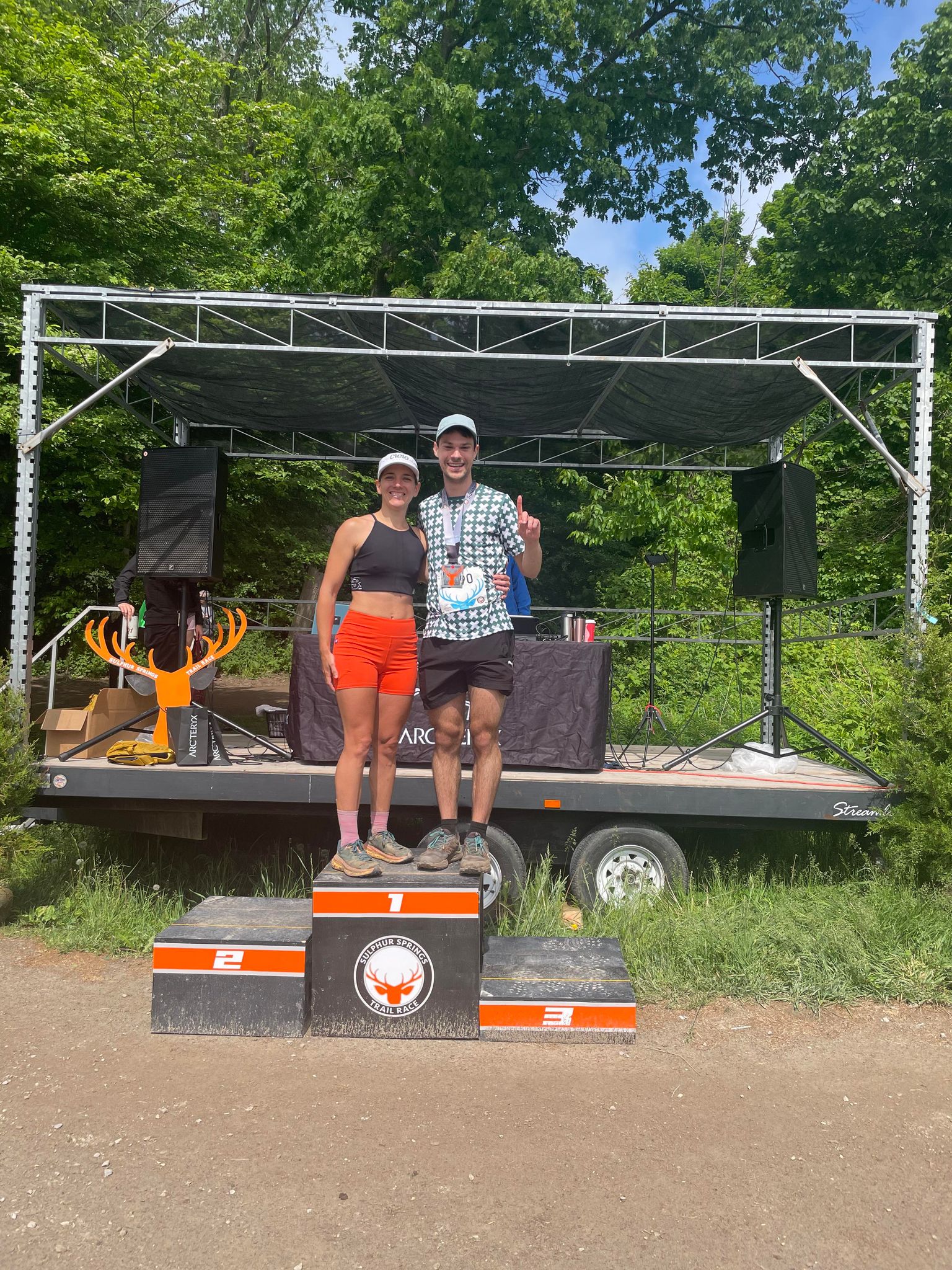
Prior to my first 50K – Sulphur Springs 50k, I made a list of all the things that could go wrong and what I would do. Some things went wrong, but I was able to overcome each of these things and stay cool, partially because I’d already planned for these things to in fact go wrong! Spoiler alert, I still think this is my best 50K to date.
C – I don’t think you need to dive too into the specific details on this one and lock yourself into specific times and splits. You should, overarchingly, be running by feel and not time when it comes to trail running. But you should have a rough idea of what effort and pace you’re going to start with, and how that might affect your ability to stay strong throughout, and eventually finish well. Having several contingency plans for what’s happening around you is key, and ultimately you need to run your own race!
D – Simply saying ‘have fun’ isn’t good enough! Get specific and make your goals not only attainable, but detailed. I don’t tend to set outcome goals for myself when it comes to races, as it usually ends up resulting in more disappointment. I find that I operate best when I have a rough idea of where I want to place and what time I might want to run, without holding myself to that.
If you have more than one goal, you’re also going to be able to better react when things inevitably go awry. No longer in contention for the win or the podium or the top ten? Well at least you had the ‘B’ goal of finishing the race.
My main goal for every race is simply to race smart. If I race smart and come tenth, I’ll be happy. If I race smart and podium, I’ll be happy. For me, racing smart is just that key to unlock everything else, and to not get too bogged down in where and when I’ll finish.
Is there anything I’m missing when it comes to recovery? Let me know below and be sure to check out the other key topics in the checklist!









 Rhys Desmond