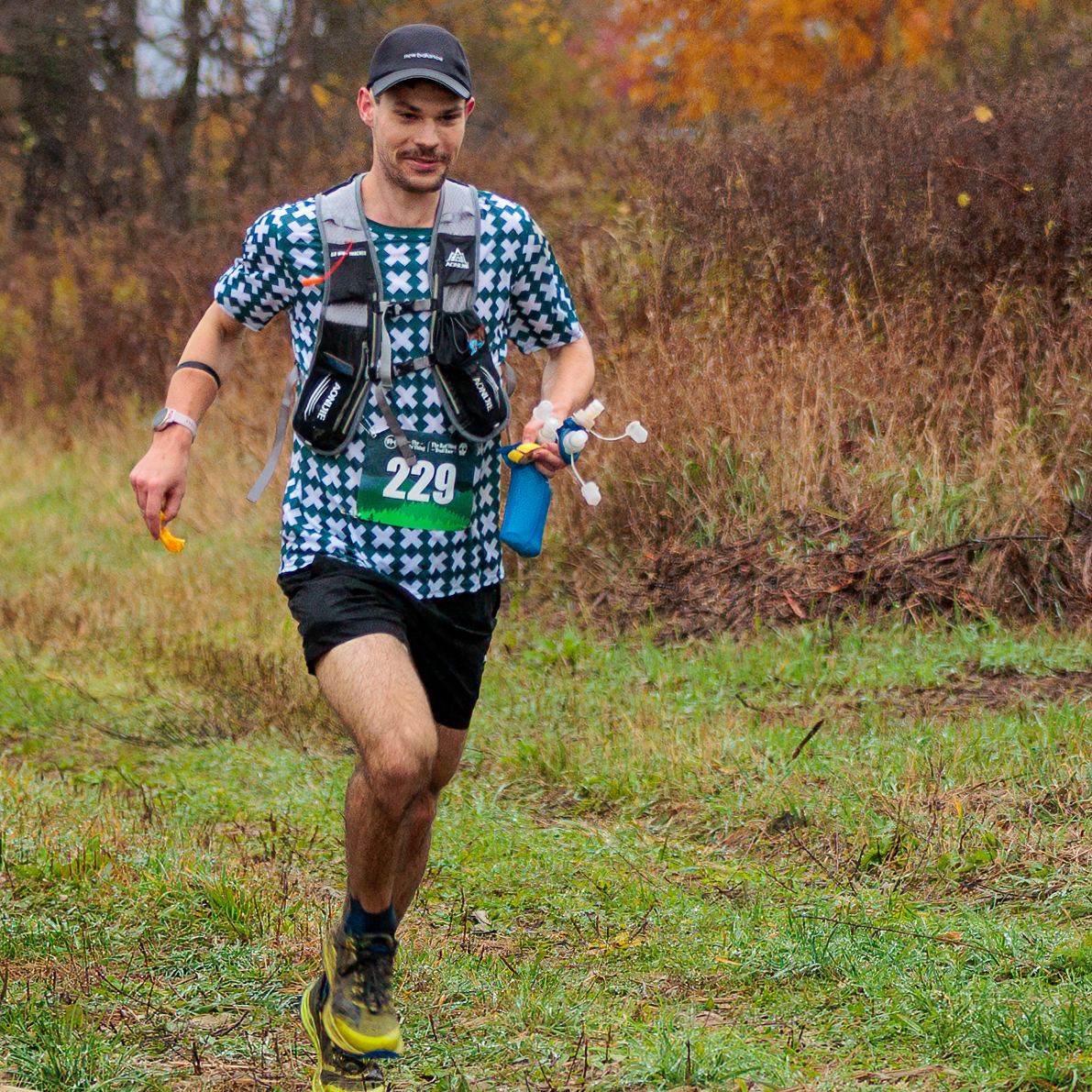
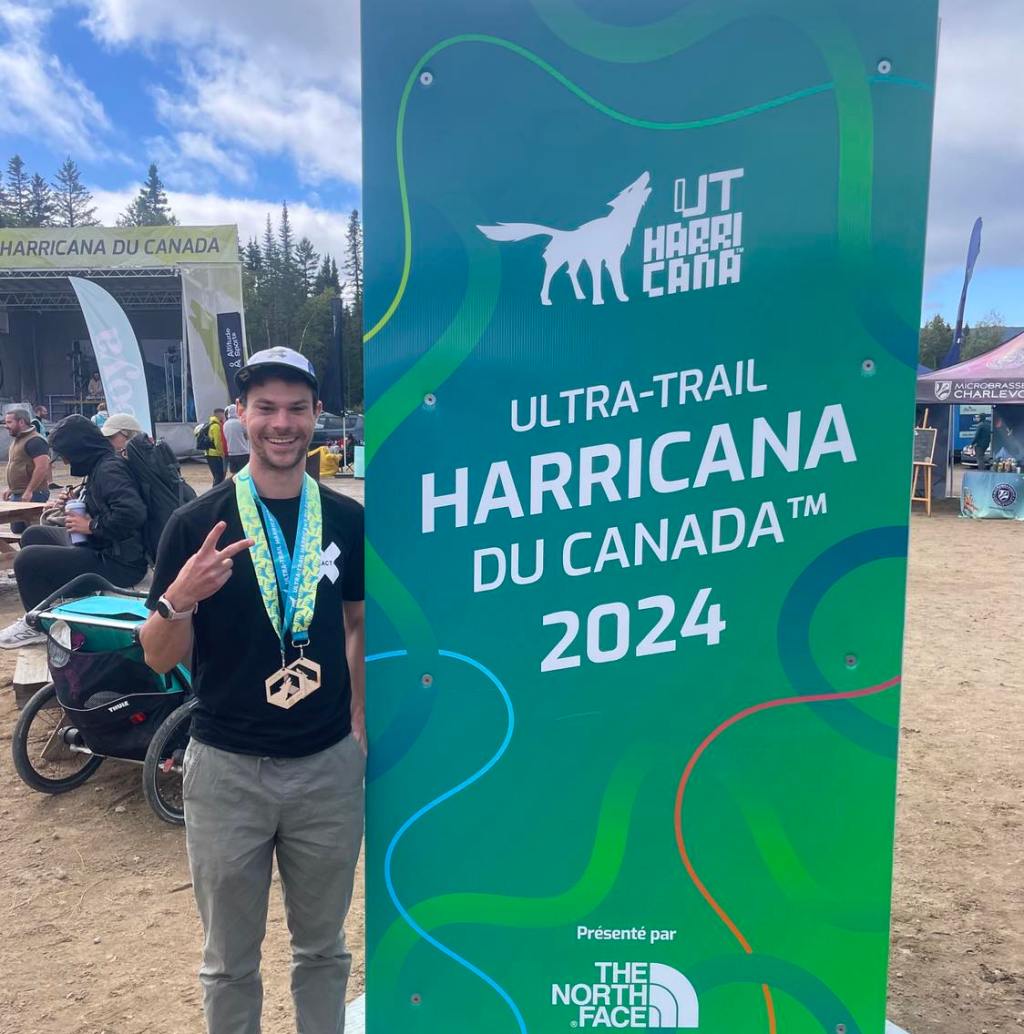
Let me tell you a story about the 42K race that almost never happened.
Far too dramatic, I know. Most likely untrue, I know.
But (get ready for my here’s the thing moment!) here’s the thing:
I recently posted that one of the best ways to approach downhills is with a sense of reckless abandonment.
Our shuttle bus driver into the start of the race at Zec du Lac au Sable had the exact same mentality. Zero fear (unlike his passengers), storming down the rocky descents and tight turns without worry. He completely trusted himself the entire time.
It was inspiring, to say the least. A reminder that reckless abandonment is generally a good approach in certain situations. But that most of the time, in a downhill heavy course, being relatively cautious on technical descents is actually the better play.
Thanks Bus Driver!
Side note – I almost titled this piece: “Thanks Bus Driver!”. Ultimately, I decided against that, since it might look to the unreading eye that I must have cheated my way to the finish by taking a bus in the remote lands of Mont-Elie. But seriously, merci monsieur Bus Driver.
Luckily, we made it all in one piece. Well, me, partially in one piece, thanks to that damn knee.
In the lead-up to the event, I had done some solid running, most of which took place through a bit of pain. As the walks and runs continued to unfold, I worried that my gait was going to be affected down the other side (as I continue a cycle of compensation injury after compensation injury). Inevitably, my achilles started to feel off in the days leading up to the event, and I had another mental block to overcome.
You see, when you go into a race with an injury, knowing you’re not the fastest person in the field, you quickly come to an understanding that you might need every kind of micro-advantage you can find to truly have your day.
That, alongside my own interests in the sport at a high level, and voilà, bonjour, ca va to the past two weeks.
For the past two weeks I…
- Lived in La Malbaie, close to where the second half of the race takes place.
- By proxy of that, studied the course relentlessly, including comparing my efforts and times to that of previous podium placers.
- Conducted experiments with my sodium intake, trying to identify how to curb my ever-present hamstring cramps.
- Messaged Quebec friends in French, including even coming up with a phrase in conversations with Élisa Morin called ‘Controlled crushing’. It sounded like the perfect race strategy – a controlled effort throughout, where you are also absolutely crushing it.
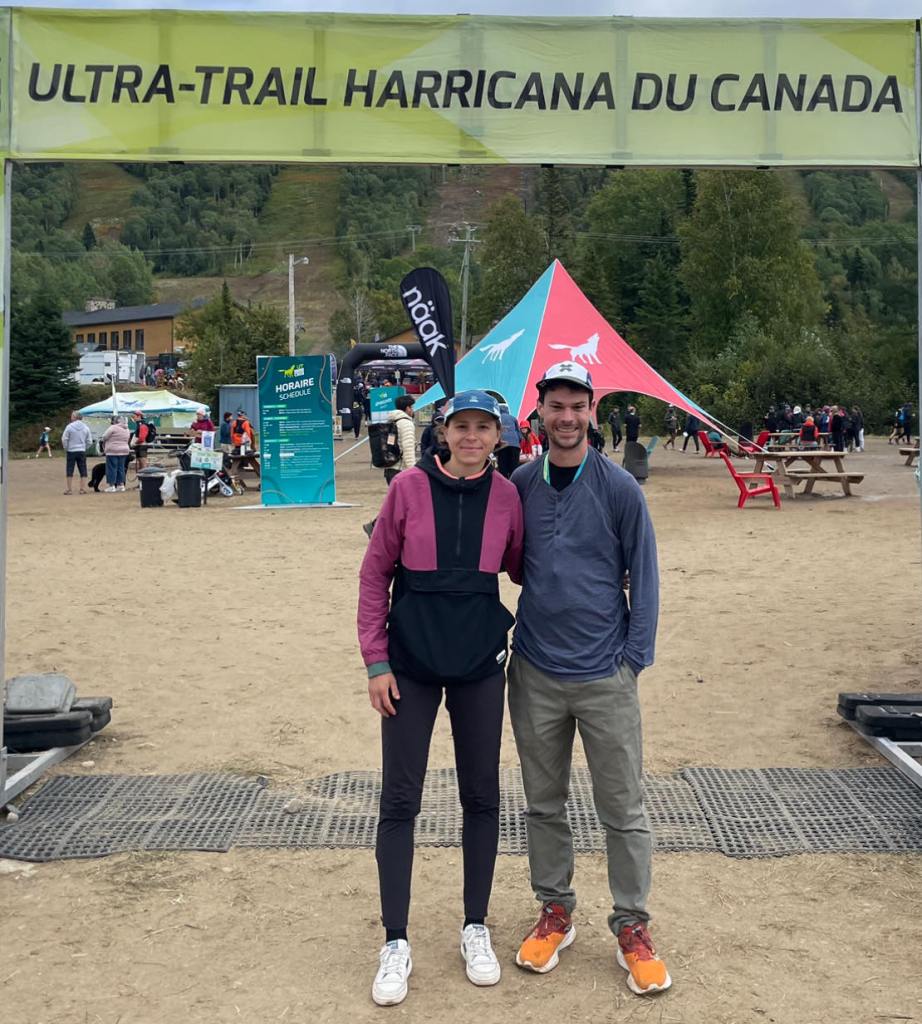
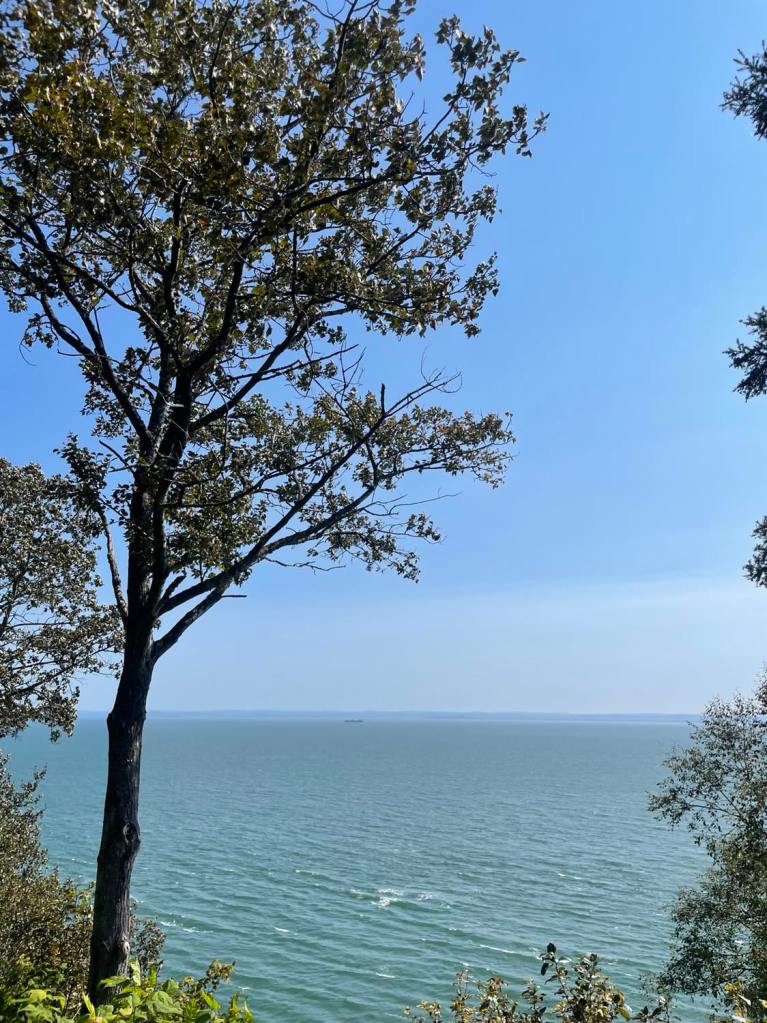
I recognize that living on-site and getting out on the course is not a luxury that everyone has before a big event. It was a conscious decision that I made after losing my job – giving myself both a vacation, and the best shot possible at performing well at one of North America’s biggest events.
But for those that like to study and hyperbolize, and can do so without it creating unnecessary anxiety, I’m a big advocate for research and experimentation. I researched just about every angle of the UTHC 42K course, saving only the first section for race day. This played a massive part in my performance on race day, ensuring I knew exactly when I wanted to make moves on the course.
In the span of twelve days, I got out on the course a total of seven times, mostly in and around my favourite section within Mont Grand Fonds.
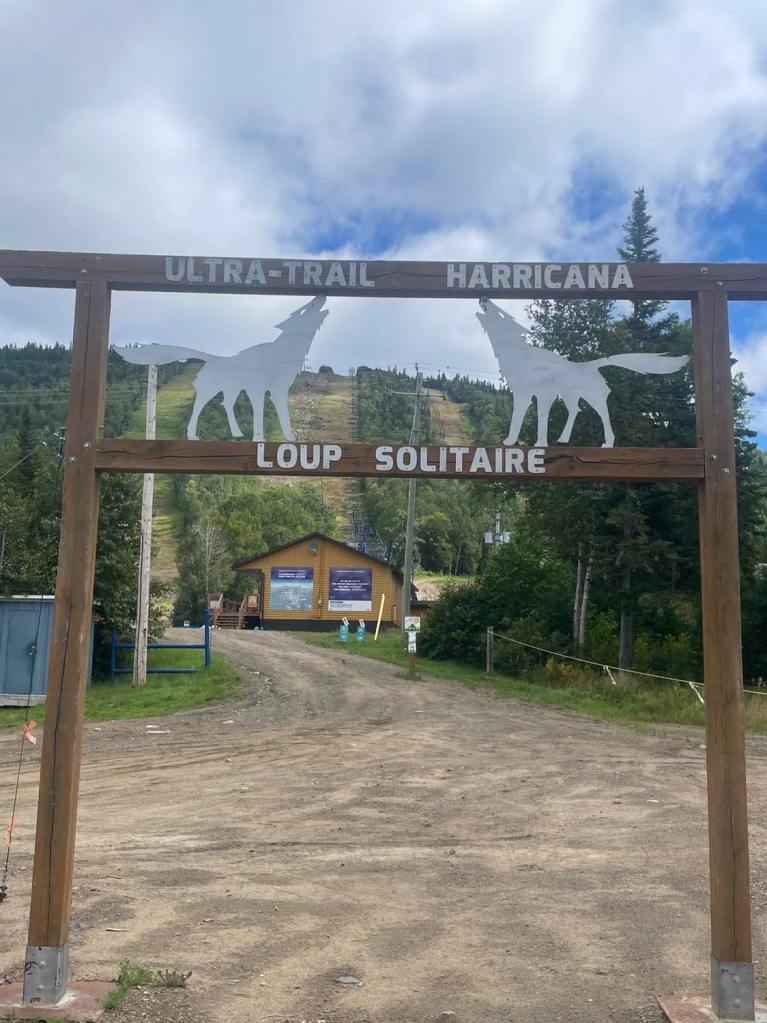
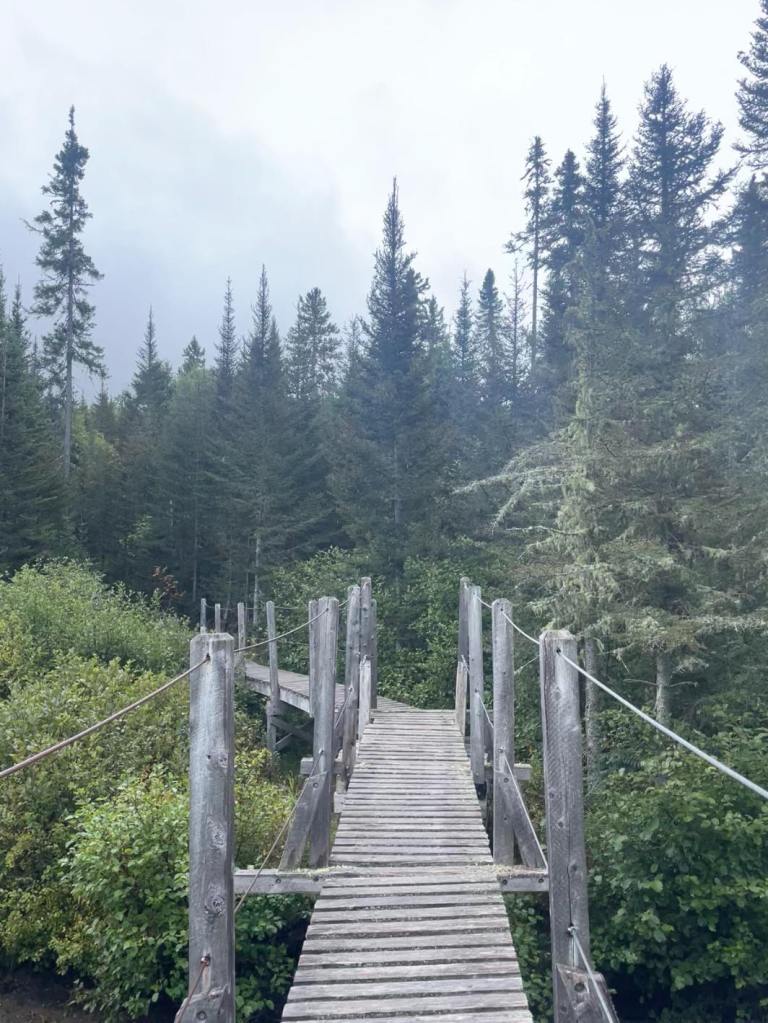
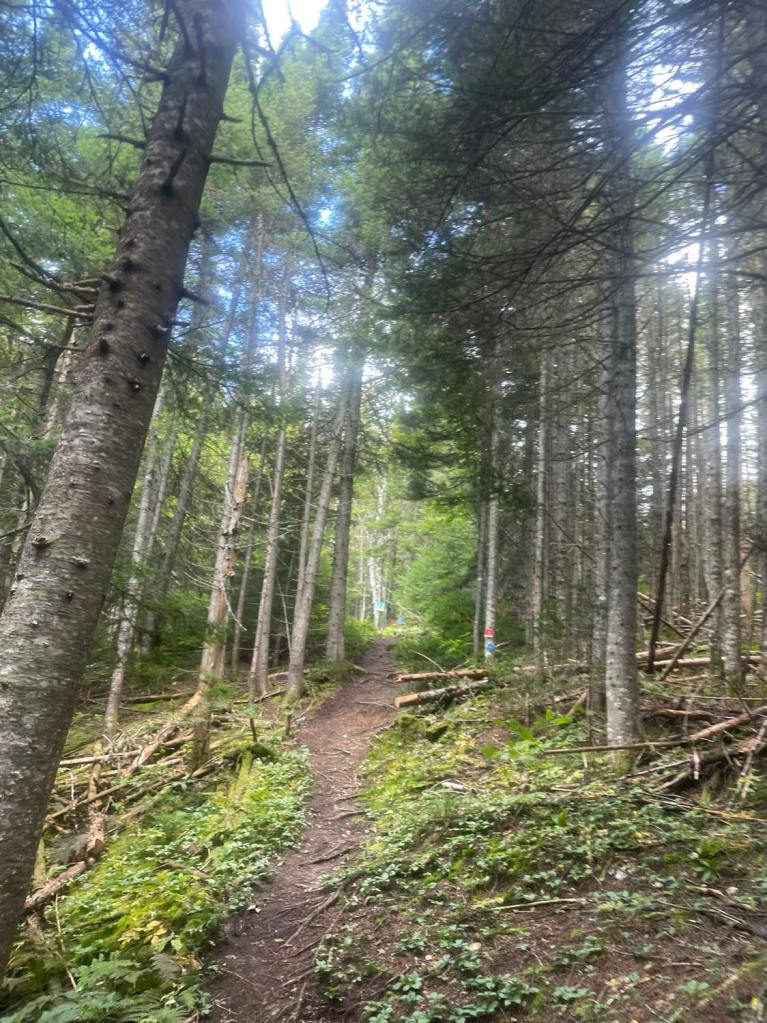
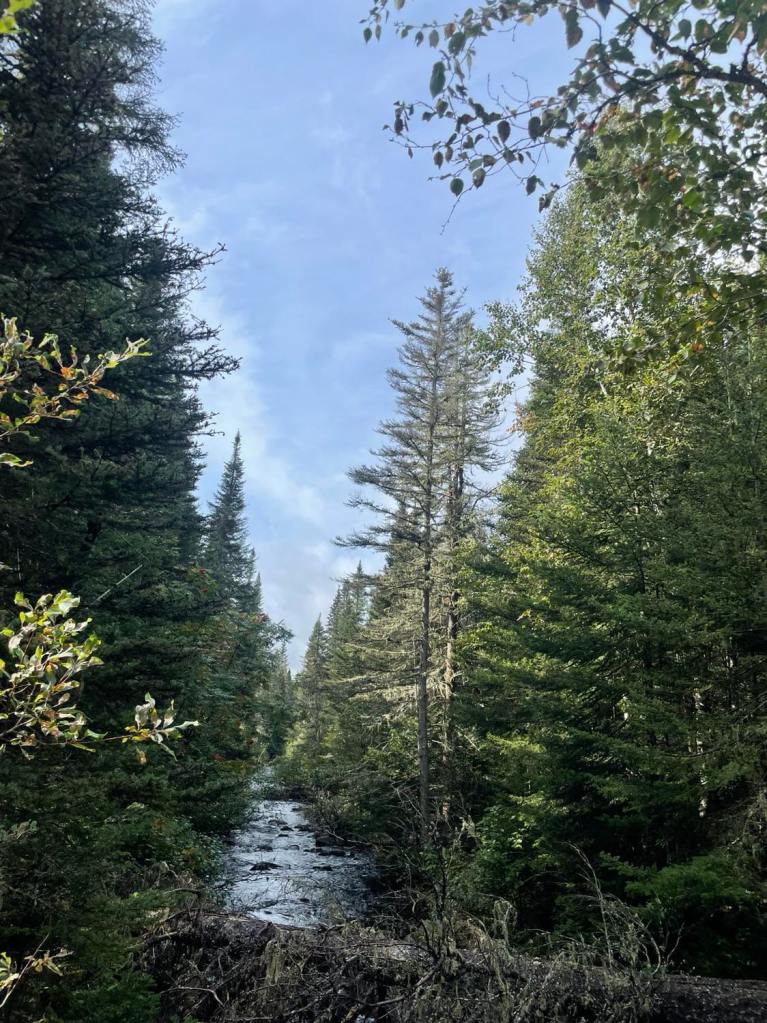
This, alongside a calculated and cerebral approach mulling over my own data, experimenting with different levels of sodium, and comparing my times to that of previous podium placers, meant I had everything set for how I wanted to race.
My plan?
- Identify the early leaders and hang with them for a bit to study their skillsets. Then drop off if the pace is exceeding 170bpm, remaining calm and collected through to the first aid station at 12K.
- After 12K, with the knowledge already acquired about the remainder of the course, roll with the punches and stay strong, putting in steady work on the climbs (knowing my knee was causing some uncertainty in my mind on the downs).
- From 21K-28K, split around 38-minutes, taking that steep steep final downhill in porcupine land conservatively.
- Start making moves as soon as you hit Mont Grand Fonds, running every step of the climb – about 16-minutes. Carry that pace into the next few climbs to continue making dents in the field.
- From 34K, pretty much just go full gas with whatever is left, knowing that entire section to the finish at 44K is a net downhill, and rolling, suiting your strengths.
Within these five sections of the course, I had scrutinized over the splits of Jean-Francois Cauchon (2021), Christopher Levesque-Savard (2021), and Benoit Didier (2023). Since Benoit and Charles Castonguay won the event together last year, my assumption was that studying the splits available from Benoit (couldn’t find Charles on Strava) would give me great indications as to how Charles would race again this year.
So naturally, after the bus ride of doom (thanks Bus Driver!), and the runners hesitantly made their way to the front of the start line, I, as per usual, introduced myself to Charles. He asked me if I wanted to work together, and I said I would. Deep down I knew we might not for two reasons:
- Winning the event last year, Charles was likely to take the lead from the start of the race, which is always the opposite of my strategy.
- That damn knee.
Predictably, Charles went out at the front, alongside Francis Lefebvre. The two seemed chummy and communicative for a good portion of those early jeep road miles, as Charlie Shea and I sat a bit back. As soon as we hit the trail, Charlie and I made quick work of the trail to catch back up with Charles and Francis, allowing me to execute part one of the plan: information processing.
- Charles – supremely comfortable, talking the entire time. Smooth in every section, but importantly – handling the technical bits well.
- Francis – slipping and sliding a bit, hiking a bit on every climb, regardless of steepness.
- Charlie – making incredibly interesting decisions to say the least, even at one point taking the lead from Charles.
Studying this information allowed me to identify that I would likely be able to make up ground in the exact ways I wanted to in the second half of the race. I could tell Francis and Charlie wanted to stay with Charles. I took the calculated risk of remaining reserved extremely early on, knowing that the pace would be too much for what I wanted to do in the second half, and that the other two guys were taking a bigger risk in trying to stay with him.
I gained confidence in running with them for a few kilometres, as I could see that Charles and I were the two best on the technical footing, and also on the climbs. Having this information, I remained relaxed in fourth, and as I started to feel my knee flare up, I slowed the pace down and let them go.
Staying relaxed throughout this time was key, knowing that I could continue to be patient and wait for the second half of the race, where everything would suit me so much more. The flat, technical, muddy sections were difficult to run through, but I arrived at the first water station exactly on Charles’ splits set the year before. I could see all three of them when we started the descent out from the water station, and I again let them go, knowing that I wanted to save legs for all the downhill in the final 10K.
Don’t be like the bus driver. Thanks Bus Driver!
Coming back into the technical trail, I could feel those oh so familiar hamstring cramps coming on, and managed them by easing the pace, massaging, and taking in sodium.
This, to get sidetracked for a second, was one of my grandest studying pursuits in my two weeks in La Malbaie. Whenever you hear someone talking about muscle cramps in ultras, your mind immediately goes to one thing:
Sodium.
But in every research paper I read and every podcast episode listened, two inconclusive conclusions were made over and over.
- High sodium intake is generally the most utilized method for curbing muscle cramps.
- Sodium might simultaneously have little to do with the equation. And even if it does, muscle cramps are not only about sodium, and much more down to biomechanics.
From knowing my own body, I know that:
- I’m injured right now, which is naturally causing imbalances and other muscles having to work harder. It’s also meant that I haven’t been able to prioritize enough strength work in the last month.
- I have a few known blood flow issues.
- My hamstrings are perpetually tight.
Hence: prone to hamstring cramps. BUT, in the context of the sodium equation, I wanted to experiment with my friends at XACT Nutrition, and identify if there might be something more on the table. Specifically, whether too much salt was on the table.
My ultimate hypothesis:
- Cramping happened to a significantly less extent on races where I managed my effort better.
- I was, potentially, actually, overdoing my sodium intake. In the quest to stop muscle cramps, I might have invertedly been causing them. With that, what would happen if I took less sodium?
In the quest to do some carbs through liquid form (not currently available through XACT), I had previously been taking in about 1500mg of sodium in a 500ml bottle, approximately every hour. That seemed excessive, especially since I know I’m not that salty of sweater.
The problem with most of the products on the market is that they are either high in carbohydrates without much sodium (Coca-Cola, Gatorade), or too high in sodium for any amount of carbohydrates I’d be filling my bottle with (Precision, Skratch).
So I had a plan.
Practicing every step of the way in training and conducting my own laboratory experiments, I switched to a formula that worked for me in my first year in the sport – taking one XACT Electrolyte tab and three XACT Nutrition bars per hour. That much, was easy. But it would only leave me at 75g per hour.
So, I made one crucial change.
Wanting to keep a high caloric value in-tact, I mixed that electrolyte tab of 500mg of sodium, with a can of coca-cola to get 45g of carbohydrates per bottle. This meant, I would be taking 120g of carbohydrates per hour, without missing out on the sodium. Simultaneously, I’d be getting an additional boost from the caffeine.
This worked like a charm. Alongside managing the pace and intensity, and actively slowing down any time I felt a cramp coming on, I had figured out how to master my sodium intake.
So as I managed the potential for cramps and the potential for my knee to flare up again, I took that technical trail section pretty quietly. I didn’t have a single misstep along the way toward the second aid station, arrived right on Charles’ 2023 splits, and quickly filled up my bottles to cruise into the start of everything I like about the course.
This is where things get fun for me.
We’re 22K into a 44K race (that they call a 42K), so we’re exactly halfway. I know all the splits from previous podium placers, and what I had done on easy to moderate efforts in training. So I knew the exact time that I would likely hit in this section, especially if I ran every step of the climb toward the slow-moving porcupines.
Side note #2 – I also wrestled with a title of ‘Land of the Porcupines’, but thought that I should have at least seen one porcupine on race day to be able to title a race recap such a thing. Otherwise, false advertising.
I knew that Chris LS had taken the 21K-28K section between aid stations in 38 minutes back in 2021. I had done 42 minutes at a moderate effort in training, and thought that a middle-ground of 40 minutes would be reasonable on race day. Adjusting for the fact that I ran every step of the climbs, I did the section in 39 minutes, before taking that long steep downhill in the darkness down porcupine lane ever so conservatively.
Effort effectively managed, and this section executed exactly to plan ✅.
Again, this is now the point in the race where I know I’m about to make moves. But, taking inspiration from the bus driver (thanks Bus Driver!), I know that it’s a super steep, technical downhill with giant rock and splashes of mud in many sections. AH! Saving energy again for that final 10K, I managed my effort, took it step by step, and hit every high note.
As soon as we reached Mont Grand Fonds (28K), I knew it was go time.
I had done the climb up from the third station in 13-minutes in training, setting a Strava crown prior to the event. I had also done the climb in 15-minutes a couple days before at an easier effort. So on race day, I had planned to do the climb in about 16-minutes, running the entire way. I knew all the while – no one else ahead or behind me would dare attempt such a thing.
It was at the top of this sixteen minute climb ✅, that I caught Charlie Shea, and moved into third. At 30K into the race, I had moved into a podium position, and just needed to stay steady. I could tell Charlie was struggling, so I made another surge up the next climb to truly make a dent in his podium hopes. I then took the downhill the other way blazing fast, hoping I’d see second-place – Francis Lefebvre.
And there he was! Right before the final aid station at 35K: Francis Lefebvre.
As I filled up two more bottles (did not need to do this!), I told Francis Lefebvre exactly what I intended to do.
“I’m going to take the next climb nicely, then hammer the final 4K. If you want to hang on we can try and motivate each other to catch him.”
It might have been the French to English connection, but Francis seemed less convinced. Truth be told, I hadn’t convinced myself either.
Secretly, I knew what was about to happen. The final 10K of the course would be a mix of rolling hills, rocky descents, and a super fun roundabout Naak segment on the narrow trail. All of which would suit me massively.
Respectfully, I played a bit of mind games with Francis, describing exactly what the trail would look like steps before, ensuring he knew how well I studied the thing.
All the while, I knew I’d take the climb “pretty nicely” as I vaguely described, which meant putting in a good effort below 170bpm. If he wanted to hang on, I felt confident that it would be hard for him to do so. I could then cruise into the rolling hills (suiting one of my key strengths on the trails given what we have in Ontario) comfortably.
So moments after describing the river and technical bit at the start of the Naak segment, caffeine bursting through my veins, I made a big, big surge on Francis.
To his credit, Francis hung on for longer than I expected. When we reached the bottom of the descent on Montagnee Noir, I expected him to be gone. But he was still there. Hanging by a thread.
Next would be the rolling hills, and quite a bit of mud. So I knew that I could stay strong, take the technical sections supremely easy to avoid any slips, and hammer the hills to put more and more of a gap. But the more I moved at intensity, the more I felt nauseous.
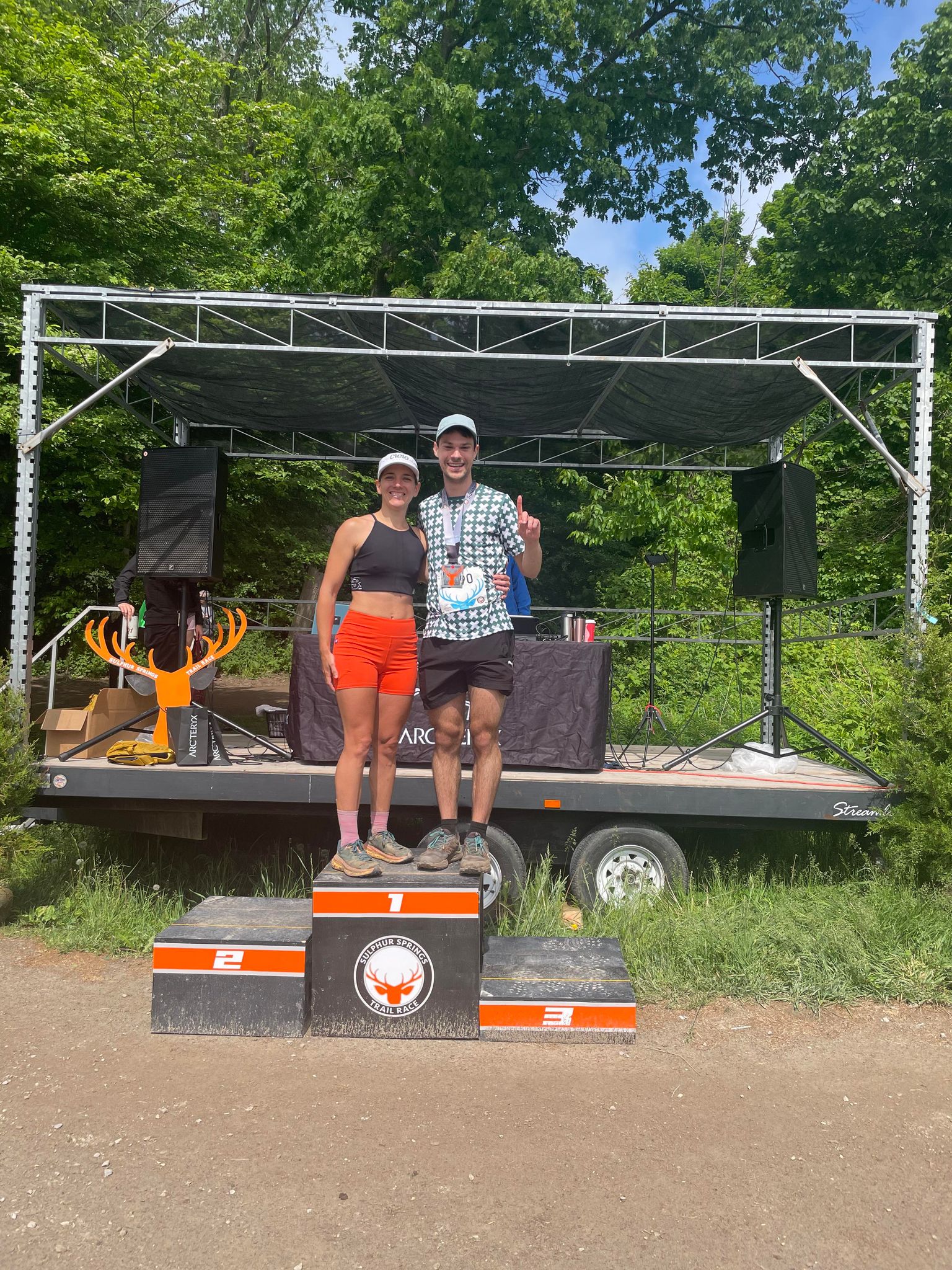
I’d taken in 120-140g of carbohydrates per hour, and the last thing I wanted to do in my pursuit to catch Charles like I did to Aaron at Sulphur Springs, was to paint the trail a new colour. So instead of sprinting to the line like I have in most of my races, I slowed the pace, slowed the drinking, and cruised to the finish up and down those sweet sweet rolling hills.
I kept on hoping throughout this time that I would see Charles, but every time the curtains opened on the trails, he was nowhere to be seen. He was far too strong on the day to catch. But I had executed the race perfectly to run the splits that he ran last year, and as I approached the ending, I could see that 3:53 would be within the cards. 3:53 is exactly what won the event last year, and so I continued to just stay calm right until the end, cruising into exactly that time.
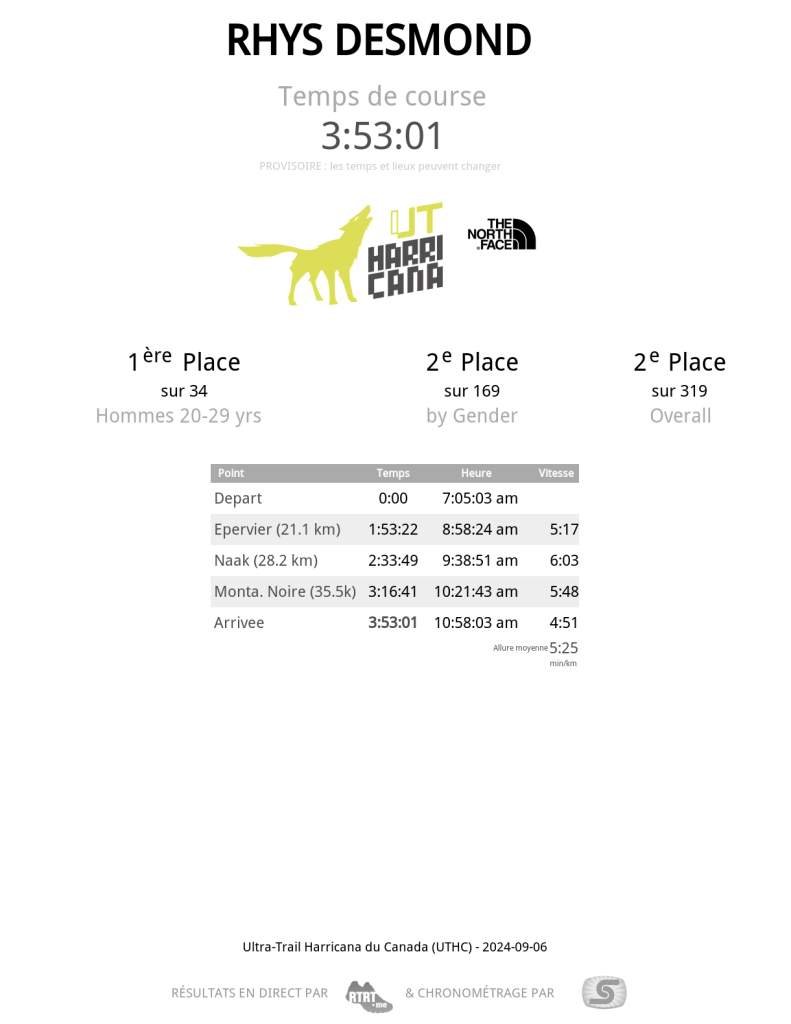
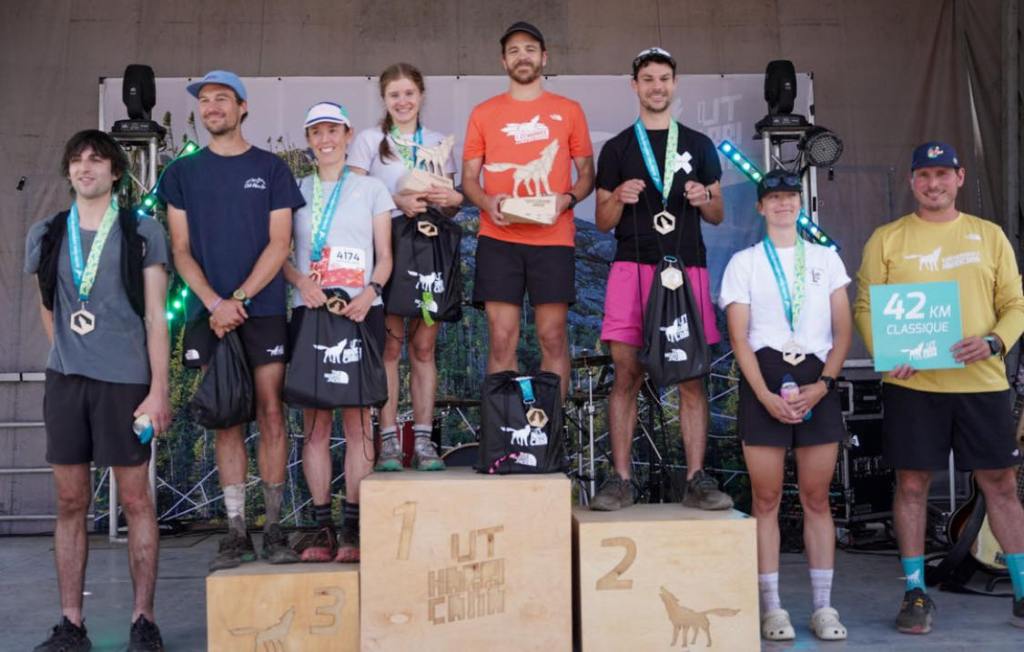
A second place finish in one of Canada’s biggest races, and one of the smartest races I’ve ever run.
Couple more key takeaways (actually five):
- I actually love the trail marathon distance. I thought for most of the first half that I was racing it like a 50K and was leaving too much ground to make up. In the end, I executed it perfectly.
- Charles Castonguay must actually be one of the top runners in Quebec, underratedly. He was so relaxed throughout that entire first portion, and probably lulled Francis and Charlie into the false sense of security that they could hang with him. Thanks for that one, Charles.
- Pushing to obscene levels of carbohydrates and caffeine worked like a charm thanks to my tests in training with XACT Nutrition. But perhaps more crucially, the adjustment in sodium intake, alongside managing my effort throughout, completely helped in managing my hamstring cramps.
- I’ve always spoken about needing the technical bits and some downhill to compete with faster runners. But when it comes to these North American majors, I’m finding that my strengths actually lie within sustained climbs, rolling hills, and the ability to withstand a high number of downhills. Maybe it’s not so much skill, but strength.
- About a year ago, I ran the Falling Water Trail Marathon all out, in a time of 3h56. This course was not only more challenging, but two-kilometres longer, and I managed a steady 3h53. Improvement? ✅
What’s next for me?
I, Rhys Desmond, solemnly swear to never take sugar or caffeine again.
After this orange pekoe.
After a few days of that, I will return briefly to Ontario for an XACT event and then decide whether I will be living and training in Quebec for Bromont and Defi des Couleurs, or whether I will move somewhere else and return to full-time work!
I, Rhys Desmond, will then likely become a coffee addict.
After this orange pekoe.
That’s what the race directors of these events clearly want! Any time you do well, you get a big bag of local coffee. Honestly, I can’t wait to try it.
In the meantime, I have loved this time in La Malbaie, living the life of luxury, and gaming the system in every way I could to come up with a dream day at UTHC.
Thanks for reading and hopefully, see you, and an uninjured decaffeinated me, soon!



 Rhys Desmond