It might be because I’m injured and haven’t been able to expend all this energy, but I am still buzzing like a bee from the Squamish 50K a week ago.
According to Strava, I’ve never raced harder. Racing toward a near top-ten finish at a National Championship through injury, I shouldn’t be surprised. But with so many positives to take away from the race, I wanted to detail a dossier of what worked and what didn’t. It’s a library of information for myself, that hopefully anyone reading can also find value in.
Here is what worked and what didn’t at the Squamish 50.
RACING WITH THE LEAD WOMEN
At these top North American races like Gorge, QMT and now Squamish, I’ve developed a bit of an identity around racing from behind. I don’t like racing from the front even when I’m one of the stronger runners in the field. It’s more fun to come from behind, not to mention safer.
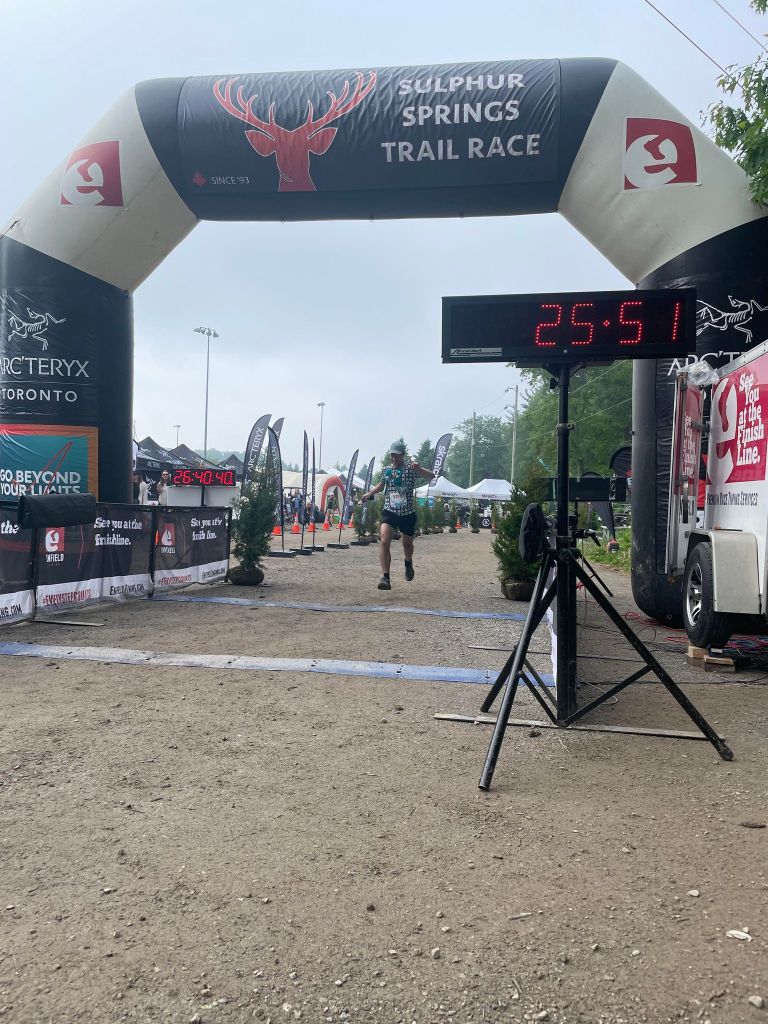
But in these bigger races, I’m self-aware enough to know that all of the men featured in my race preview are faster, fitter and stronger than me. It’s not a belief thing. It’s a reality thing. Doesn’t mean I can’t get there. Just that where I’m at right now is not the same as Alex Ricard or Charlie Sikkema. Recognition of that is key. I went into Gorge thinking that I could try and challenge for top three, and it blew me up even trying to challenge for top-five.
What I do have that many might not have to the same extent is a mental resilience when things get tough, an ability to delay suffering even when secretly dying inside, and the ability to withstand difficult terrain throughout a race. This all plays into racing from behind.
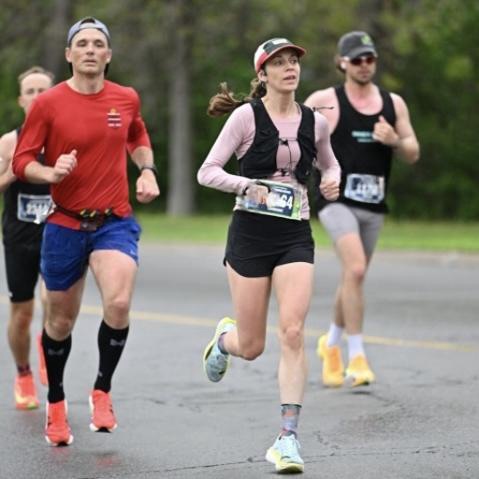
The best of that art are often the lead women, who work their way up toward a top ten (or so) overall finish – exactly where I want to be. I’ve spoken several times about how I watched Sarah Biehl float by me at Gorge en route to a fifth place finish, and how I wish I would have stuck with her far outside the top ten at the start of the race to have more energy at the end. This played into my race plans going into Sulphur, QMT, and Squamish. It worked like a charm at Sulphur. At QMT, I needed to take the entire thing slower from an early fall, but it still worked in moving from 11th to 7th in the final 4k. Then it gave me my favourite racing experience of all at Squamish.
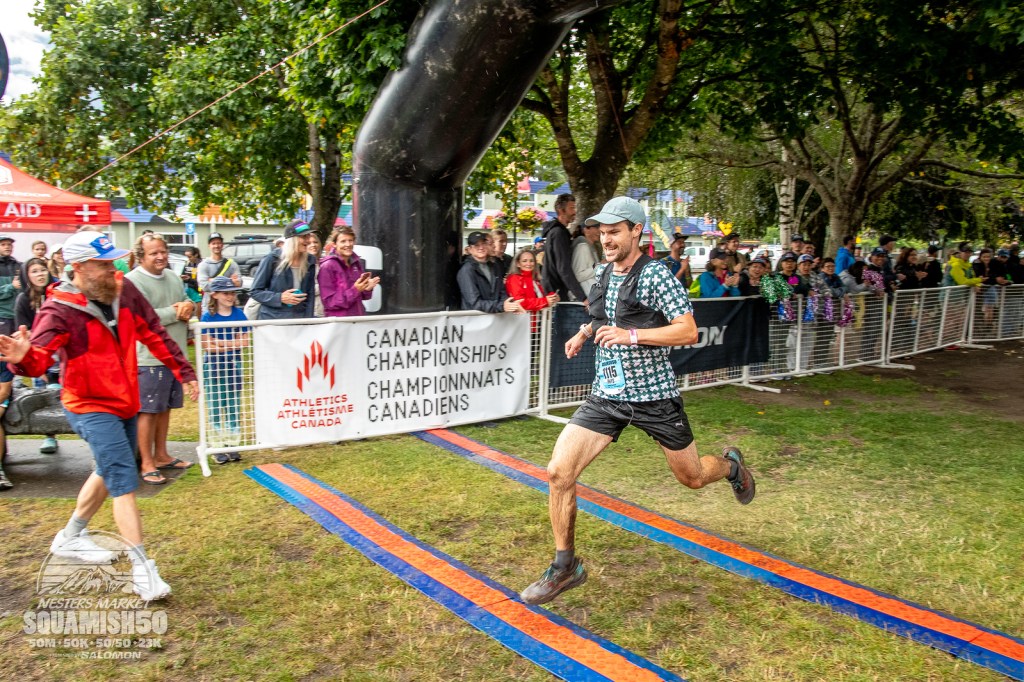
The only part of the race that I regret is in letting Jade and Élisa go at the halfway point. Once Élisa and I reconnected after 40K, we motivated each other to a strong finish the rest of the way. It sounds like we were both suffering from 30-40K, and I can only imagine that we would have helped each other through that time if I hadn’t stopped for pickles.
REFRAMING NEGATIVE THOUGHTS
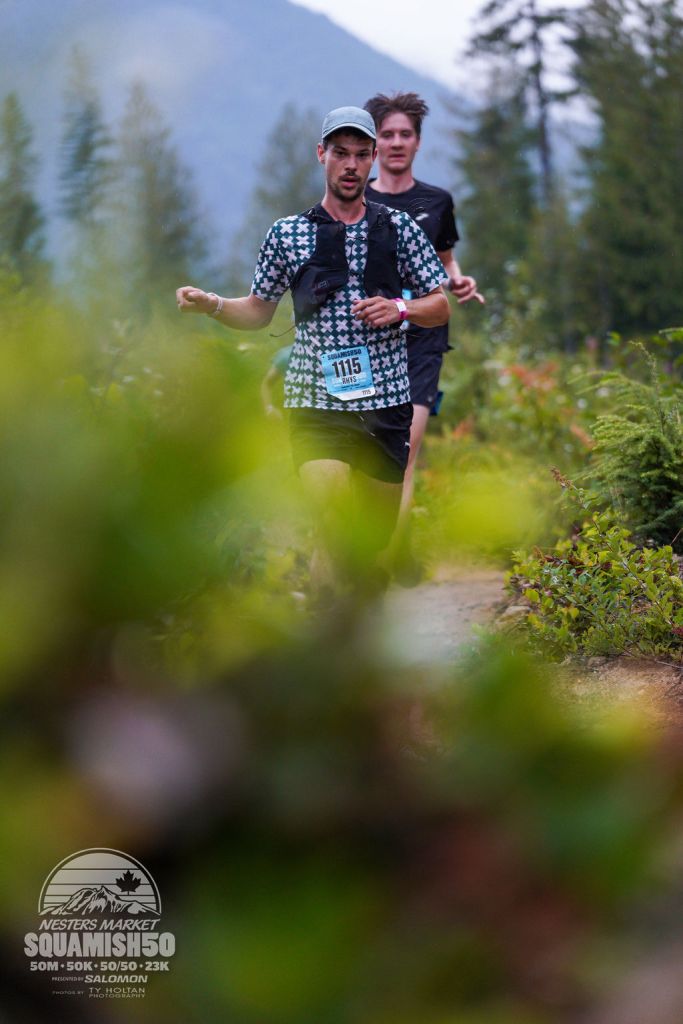
Another aspect of mental resilience that I’ve spoken about at length is the ability to channel negative thoughts as positive ones. From 30-40K, I let myself get into bad headspaces. As soon as I took an XACT bar and flowed with a downhill, I was able to convince myself that I was okay, even though I was actually hurting just as bad from 40-50K as before.
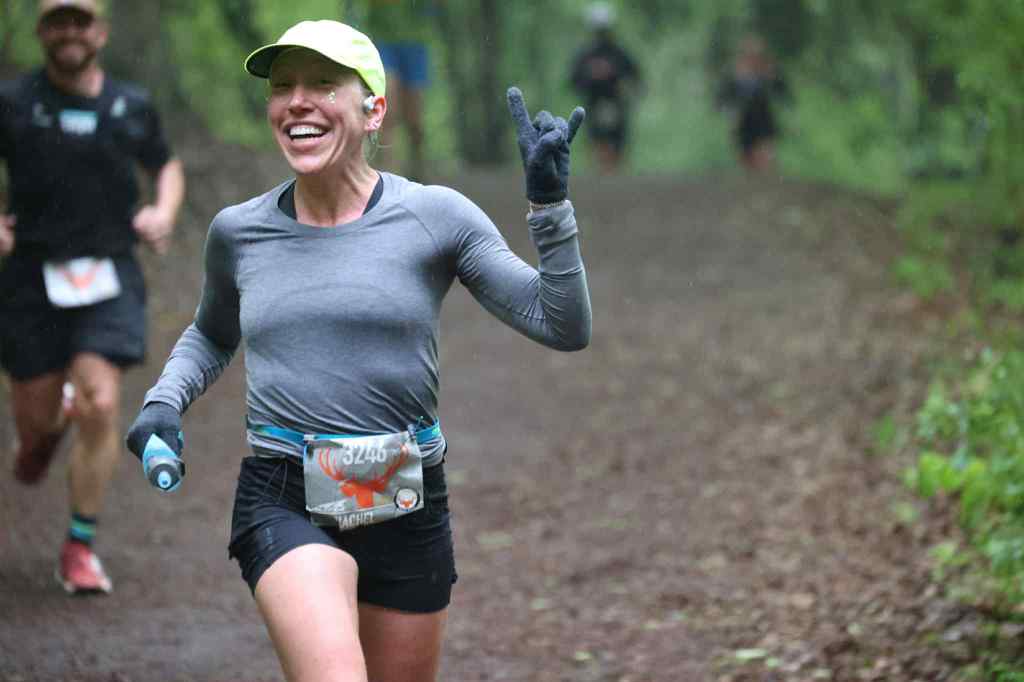
This was an entire mental re-shift. I got a boost from lead crewmate Josh Bolton at the aid station, and encouragement from catching up to Élisa and her kind words. I should have known this to be a massive mental boost from the earlier parts of the race. Chatting with Mitchell and Christopher made everything feel easier, and created an atmosphere where we were all rooting for one another.
That constant positivity kept all of our spirits high in those early stages. So undeniably, I should have made more of an effort to stick with Jade and Élisa after that first crewed aid station. Even if things were inevitably going to get tougher from there, I might have been able to convince myself that it was all okay, through the act of trying to push Élisa in the process.
PUSHING BEYOND MY DEPTH
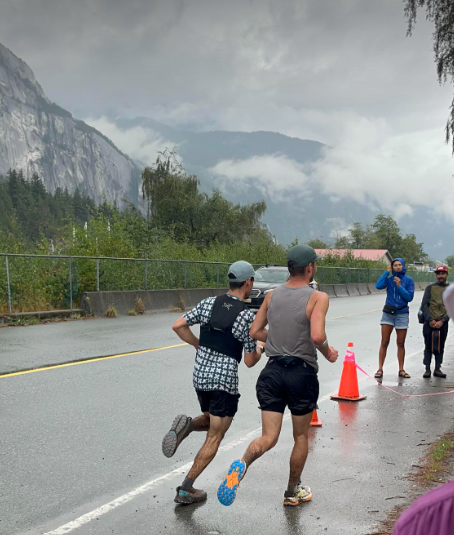
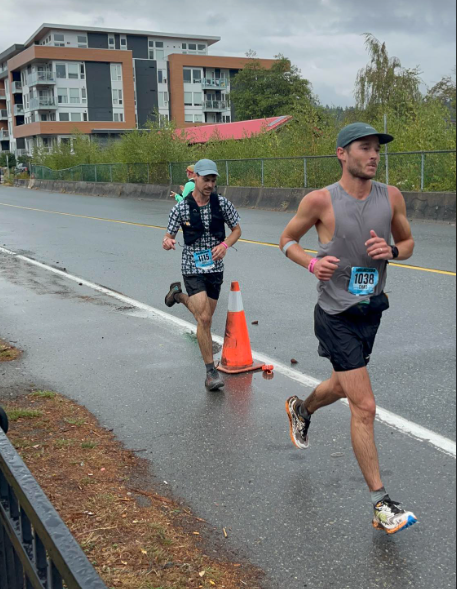
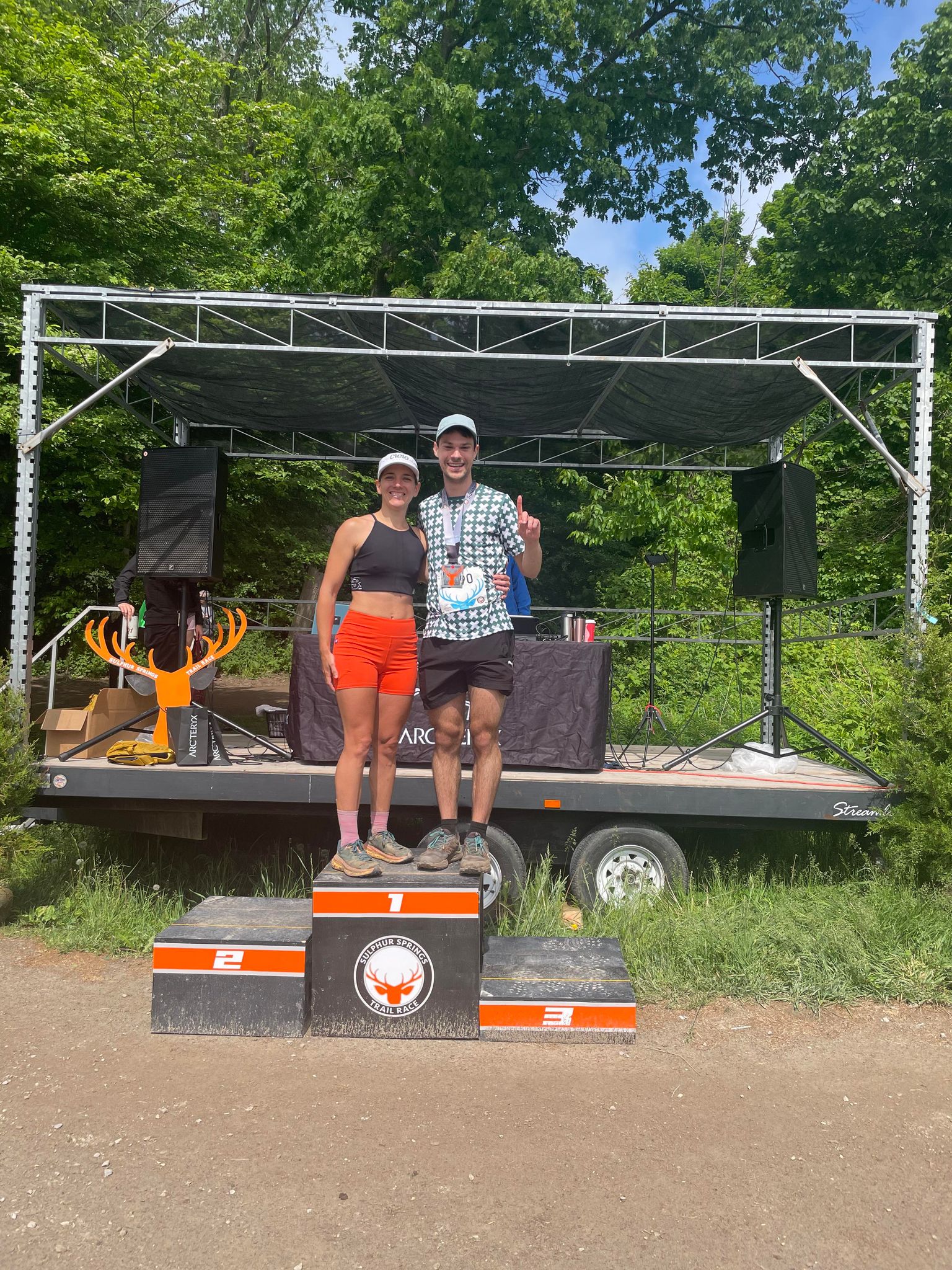
Since Gorge Waterfalls 50K in April, I’ve been curious about how hard I can push my body before the point of no return. I didn’t think I was pushing my body that hard for the first half of that race, and then suddenly at 36K, I had to fight every fibre in my being to tell my legs to move. I intentionally took a gamble at Sulphur Springs and stayed steady, playing my cards to win the race in the final 1k.
Then at QMT, I was out of the race for the podium before we hit 10K. I’d injured myself, but I had already let Eric, Marcus and Victor get far too ahead to challenge for top three. I raced this one like a 50-miler, ensuring that I’d have enough energy to not blow up. In hindsight, I had more to give.
This left a few questions in my mind before Squamish 50K, around how hard I could push in the early stages. Sticking with Jade actually pushed my HR higher than I wanted in certain moments, but I rolled the dice nonetheless. It still resulted in a bit of a blow-up, but a manageable one nevertheless. In the end, I raced the entire thing really hard. I now know that I can race hard from the start like that (at a safe level), while still having enough in the tank to keep going strong. Injury aside, I work just as hard, but it doesn’t take the same toll on my body to do so.
WHAT DIDN’T WORK – AID STATION STOPS
Working with XACT Nutrition, I’ve had fairly consistent fuelling plans between training and racing across the last year. On this day, for whatever reason, I just went all out at aid stations, grabbing real food, grass-fed pickles and Christmas music high-fives. I didn’t need to spend so much time at the 24K aid station, or even the other ones before and after.
For every aid station, I lost time on Élisa that I needed to make up through running. Strava thinks my moving time was about 5 hours 16 minutes, which feels wrong, but would have comfortably put me in the top ten had I made zero stops. Similarly, at QMT, within relative efficiency, I still lost about six minutes. Cutting back on real food will help with this, not to mention being smarter with when I take in liquid.
Beyond that, it’s all about staying positive when things get tough! 30-40K is a tough stretch in any 50K, as it can be difficult to properly assess how hard to push before the final 10K. But as soon as I convinced myself I was okay, I started to move better.
I’m still recovering from this knee injury, but I’m so excited to execute my race plans and learnings in Quebec over the next few months. Thanks for reading and see you soon!



 Rhys Desmond