Race organizers of the Gorge Waterfalls 30K granted special start-line access to Nike ACG athletes, raising questions about fairness and consistency in rule enforcement at one of North America’s premier trail events.
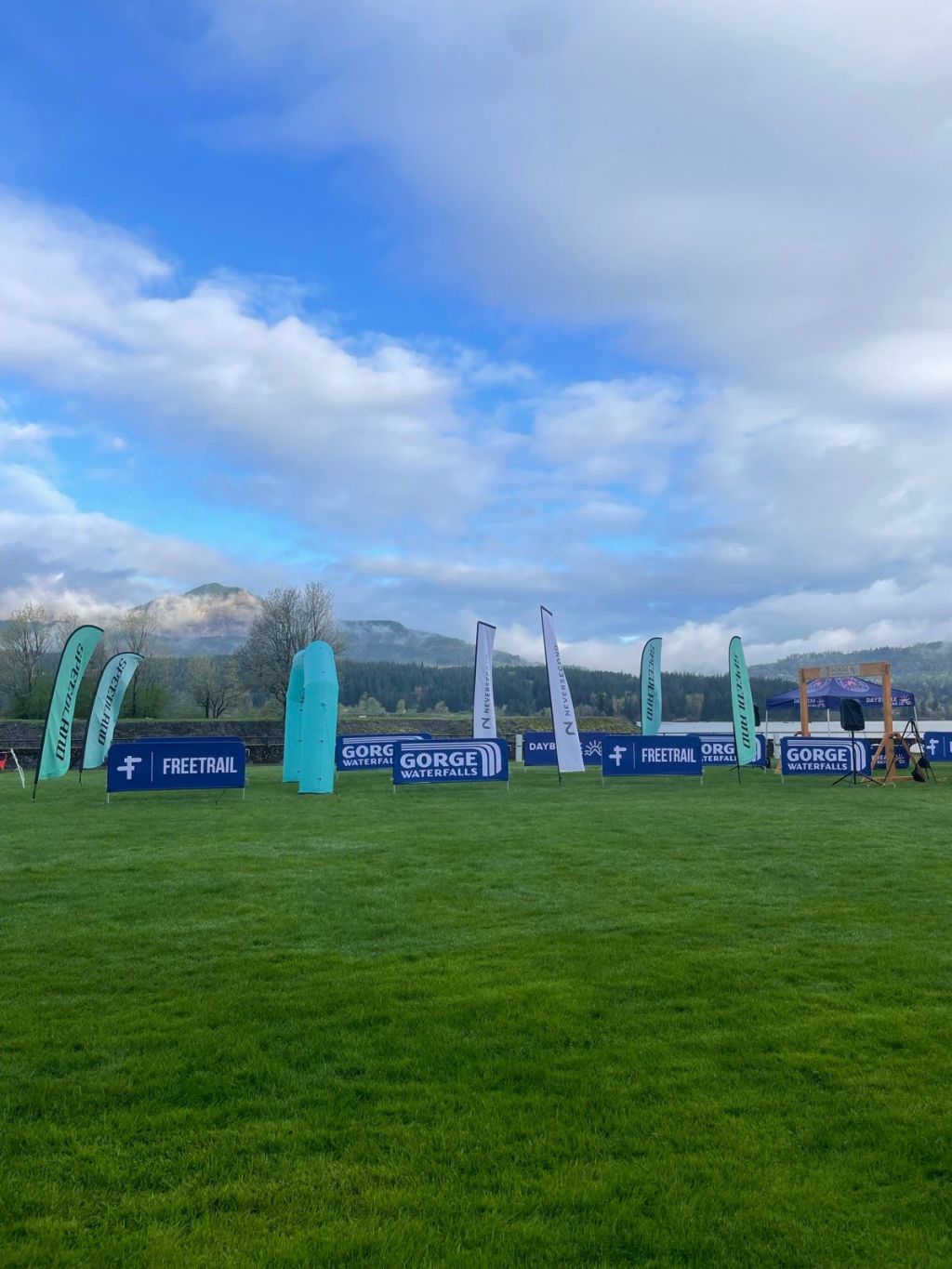
The Gorge Waterfalls 30K is the opening act to a festival weekend of trail races in Cascade Locks, Oregon. The race, surrounded by the beautiful forests (and waterfalls) of Mount Hood has become one of the hallmark events in North American trail running since its revival in 2023 from Daybreak Racing and Freetrail.
Last year, the Gorge 100K served as the qualifier for Team USA at the Trail & Mountain Running World Championships. This year, it’s a Western States lottery qualifier, and has the backing of a big corporate sponsor, Nike’s trail team – ACG. The 30K itself was tipped to be a highly competitive race, featuring last year’s Golden Trail World Final winner Lauren Gregory, Western States regulars Tyler Green and Riley Brady, and multiple members of World Championship teams for the U.S. and Canada.
Given what’s on the line for athletes, races of this scale have strict guidelines, most of which are in place for fairness and participant safety.
One of those rules was very clear. It was posted everywhere – both in the official rule guides sent out to participants, and to the official website of the race:
“All runners must ride the shuttle bus to the start. Runners may NOT be dropped off by car at Wahkeena Day Use for the start due to State Highway Department parking restrictions and ongoing historic road construction project work.”
Yet according to several athlete reports, this rule was not consistently followed, including from athletes of the race’s corporate sponsor, ACG.
ACG came into Gorge Waterfalls in November 2025, offering up prize money for the race. The 30K would be allocated the lowest amount of prize money, but still something substantial in the world of trail running. As per the official website, the 30K runners would receive $2,000 for first, $1,000 for second, and $500 for third.
When a brand like Nike or Hoka puts money into a race, they’re not just ‘supporting the sport.’ They’re buying exposure, storytelling, and brand association. Steering prize money toward their own athletes helps guarantee that return.
Inside a company like Nike, questions will be asked after throwing so much money at a race like Gorge Waterfalls. Questions like: ‘What did we get from sponsoring this race?’
It’s much easier to justify the cash splash if:
✓ Their athletes podium (thus get more exposure).
✓ Their logo and gear appears everywhere on social media posts (often from these podium placements).
✓ Positive results influence future athletes to sign for the brand and join the team.
While sponsorship can help raise the sport’s credibility, uneven rule enforcement risks undermining it.
When questioned about this on Instagram, Freetrail responded:
“Nike ACG is the presenting sponsor of our event and our agreement allows for their access to the start line.”

Freetrail’s response indicates that Nike ACG athletes were permitted access to the start line under a pre-existing agreement with the race organization.
However, the existence of such an agreement raises questions about fairness, with more than 400 participants having to follow the rules as written on the website. Of the six athletes eligible for podium places and prizes, three of them were ACG athletes. This calls into question whether or not ACG athletes had an unfair advantage.
As one athlete put it: “It’s a clear advantage.”
WHY THE SHUTTLE EXISTS
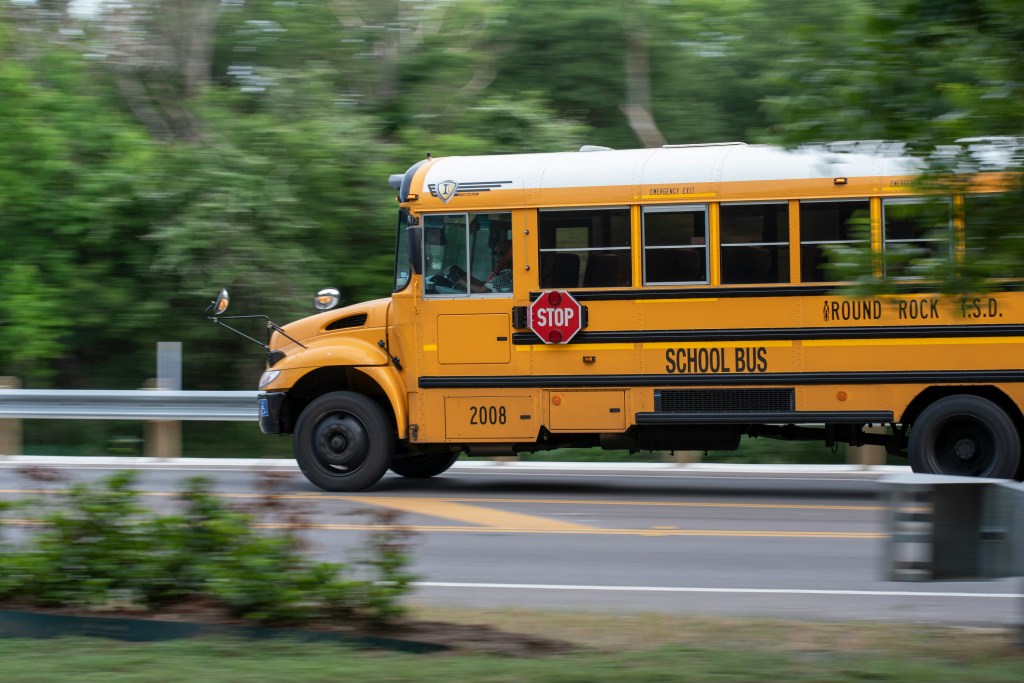
Shuttles are used at races like Gorge for two main reasons:
- To reduce traffic congestion at start lines with limited parking.
- To create a point-to-point route, thus having different start lines from the finish line.
Gorge Waterfalls is a big race. Not only is there prize money and sponsor bonuses on the line, but racers toeing the start line have approximately 450 other participants to contend against. To have all those athletes trying to find parking at the same time in a day-use area already absorbed by tourists would be a nightmare.
To the second point, that would be even more of a nightmare if 225 of those participants were headed out one way on the narrow trail, and 225 were headed back. You can get away with this in a 100K as things naturally spread out over time, and attrition becomes more likely. It’s simply unfeasible in a 30K, when the vast majority of athletes will finish the race within a close time span (between 2 hours and 4 hours).
At every race I’ve done with either a mandatory or ‘recommended’ shuttle bus, the start line is at one end of a trail, and the finish is at the opposite. You park at the finish, and you’re brought to the start line.
In all of these cases, making the race a ‘point-to-point’ race significantly reduces risk for athletes. In ‘out-and-back’ courses on such a narrow trail, you would simply have too many stoppages and congestion. When athletes are locked into a race, they don’t want to stop for anyone or anything. That can create significant problems if they’re heading in different directions.
The only way to avoid this at a race like Gorge would be to make it a ‘looped’ course. That is – have runners spend most of their time on a road beside a highway, which defeats the purpose of a “trail race”.
So, the solution is that all of these athletes run in the same direction, therefore creating the need for a shuttle bus away from the finish line. Top that off with the limited parking at Wahkeena Falls, and it’s clear why Gorge has a mandatory shuttle.
“A CLEAR ADVANTAGE”
Prior to the Quebec Mega Trail 50K in 2024, my sponsor gave me a ride to the start line instead of the optional bus shuttle. I arrived later than the majority of the athletes, thus avoiding the long wait in the painful cold rain. I got to sleep in till after most athletes had to arrive for their shuttles, and enjoy a breakfast closer to the start of the race.
As an athlete posed to me in reference to this year’s Gorge Waterfalls 30K, this is “a clear advantage.”
For Gorge Waterfalls, the shuttle leaves a whole hour before the start of the race. If you’re not staying in the immediate vicinity of Cascade Locks, you have to go out of your way to arrive to the start line in time. You have to carry your gear with you for that hour, meaning it’s hard to time pre-race eating, hydrating, and warming-up.
That’s okay, if everyone’s in the same boat.
But athletes arriving to the start line on their schedule (or that of their sponsor’s), don’t have as many logistical considerations. They can arrive as they please to warm-up when they want, avoid the long lines to the washrooms, get in a proper warm-up without worrying about where their layers of clothing and drop bags are going to end up, and fuel properly for that hour leading into the race without dipping too far into their fuel designated for the race itself.
On this particular occasion, it was even more of an advantage given that several athletes reported that at least one shuttle bus took an incorrect route. Athletes on that shuttle bus had little to no time to warm-up as compared to their competitors.
This is particularly strange, given precedent from the 50K in 2024, when all shuttle buses arrived to the start line late.
I was on those buses. That year, the shuttle was optional. The shuttles arrived late to their meeting spot in Cascade Locks, subsequently arriving late to the start line at Wahkeena Falls.
When we arrived, many of the top elite athletes were already there, warming up, doing their drills, and well into their pre-race routines. The other 400+ of us had to join long lines for the washrooms, and crowded spaces with limited room to now warm-up within a shortened time window.
The start time was pushed back about fifteen minutes to accommodate for this, but it was clear that the athletes that had the ability to arrive at the starting area had the advantage.
In 2025, I competed in the Gorge Waterfalls 30K and took the mandatory shuttle to the start line. Based on direct observation and my own conversations with elite athletes during the bus ride itself, the vast majority of elite athletes arrived via the shuttle last year.
The introduction of new sponsorship in 2026 coincided with a shift in how athletes accessed the start area, according to multiple accounts. Elite athletes that made the trek out via the shuttle bus were then handed unequal treatment in their fight for podium places, especially if placed on the bus that went the wrong way to the start line.
Incidents involving race logistics or rule interpretation often receive limited public scrutiny in trail running.
We saw this last year with the 2025 Black Canyon 100K, where Ferdinand Airault received outside aid and deviated from the course, resulting in an initial 20-minute time penalty. Four months later, after the issue received public scrutiny on social media, Black Canyon revised the decision, and issued Ferdinand a disqualification.
The events of the 2025 Black Canyon 100K demonstrated that without consistent enforcement or external scrutiny, rule violations may go unaddressed.
The situation at Gorge Waterfalls highlights broader questions around consistency, transparency, and rule enforcement in elite trail racing. As the sport continues to grow, how races apply and communicate their policies, particularly when sponsors, prize money, and elite athletes are involved, will remain an important area of focus.
There is still time for future races to correct course and ensure their policies are being strictly followed, thus contributing to a fair and equitable outcome for all athletes fighting for podium places and prize purses.




 Rhys Desmond