When I speak to anyone outside of the running world, I often feel crazy when I explain that 50K races are a natural starting point for many people who enter into trail running as an adult.
I don’t think it necessarily should be this way, but many people (like myself!) will start with a trail 50K before even a road (or trail) marathon.
The natural progression is to then continously go up in distance – all the way to 100-milers for those that dare (and higher for those that double dare).
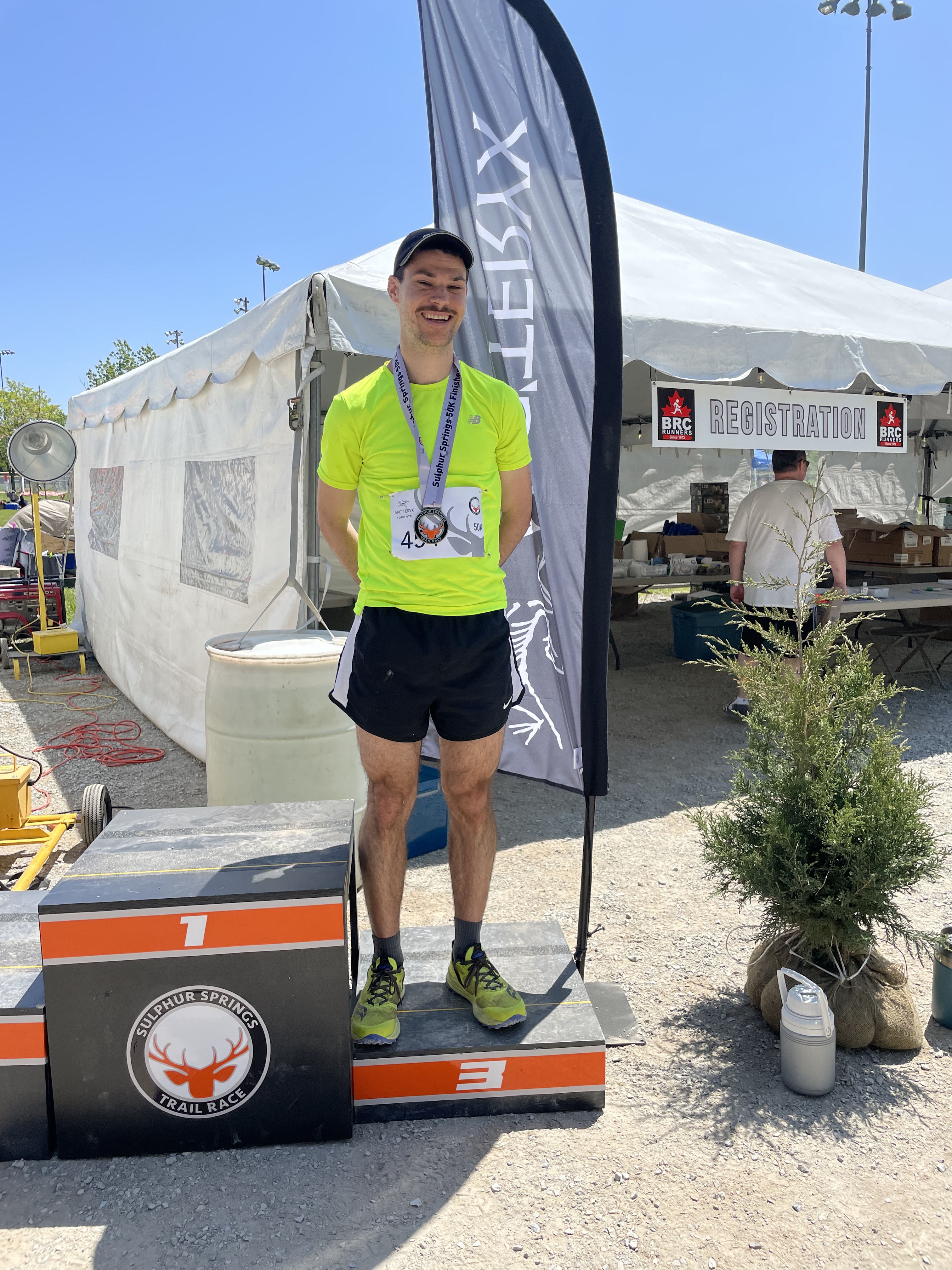
I’ve watched many of my friends follow this trend, including just about everyone who raced with me at the front of my first ever 50K.

And while they’re awesome for doing so, I don’t think it has to be this way.
Short distance racing really isn’t prioritized by that many in the Canadian trail running scene, and I think this needs to change.
Not only are these distances easier to recover from, they can often breed a higher level of competition by being more accessible to different types of athletes.
You can fit more of them into a season, and better structure a racing calendar around a key focal race without breaking yourself beforehand.
With the Coupe de Quebec coming next year, short distance racing in Canada should be in for a rise. But this really is only the start.
As I gear up towards my next few shorter races and coach many athletes doing the same, I wanted to share some thoughts on the training theories for a shorter race taken from my most recent training block – leading into the Harricana 28K.
This will all be based on my interpretations of the training subscribed by my coach Jade Belzberg, who also happens to be one of the speediest Canadians around! Here. We. Go.
SPEED COMES FIRST
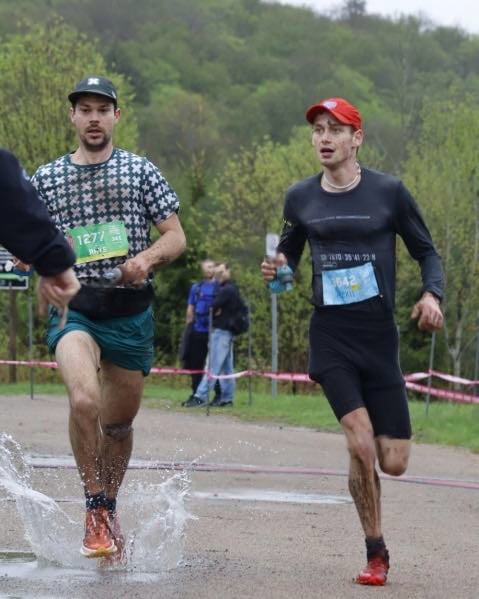
When starting a training block for any distance (including any ultra distance), speed work is more imperative than most realize. And it can be implemented right away.
At the start of a block, implementing a few short and punchy VO2 max workouts not only breeds massive benefits for spiking an athlete’s immediate speed. But also their confidence around that speed.
I started training for Harricana about a week after QMT in July, introducing strides back into the routine fairly quickly.
In that second week (sometimes even the first) you often have three good options:
- A VO2 max workout with shorter intervals and typically also shorter recovery times
- More strides
- Intensity via cross-training
Although periods of downtime can be scheduled, particularly after a long season or in the uncertainty of an injury, speed is something that can be structured every single week.
Utilizing different tools like strides and cross-training to get that speed and intensity back into the legs after a race is a smart way of getting the heart rate up at a low cost to the body.
So on our second week back from QMT, coach Jade threw in a classic VO2 max test of 15 x 1-min hard / 1-min easy.
The aim of a workout like this is to remind the body what it’s like to run fast, and get back into the flow of maintaining speed following a period of downtime, so that it can be strengthened in the weeks that follow.
After 1-minuters, we then followed that up the next week with 2-minuters and 1-minuters.
From there, we did my favourite workout of the block and went into some 3-minute hills, but still keeping 1-minute hills.
I loved this progression because we kept the 1-minuters each and every week (maximizing that turnover and efficiency), whilst building off the previous workout.
And even more to Jade’s credit, at this time, we still didn’t know if I was going to get into the 28K at Harricana. I had originally signed up for the 65K, and was angling for a switch down in distance following QMT.
So even regardless of the race distance, we were always going to start with a focus and foundation on speed. Then build from there…
NEXT COMES THRESHOLD
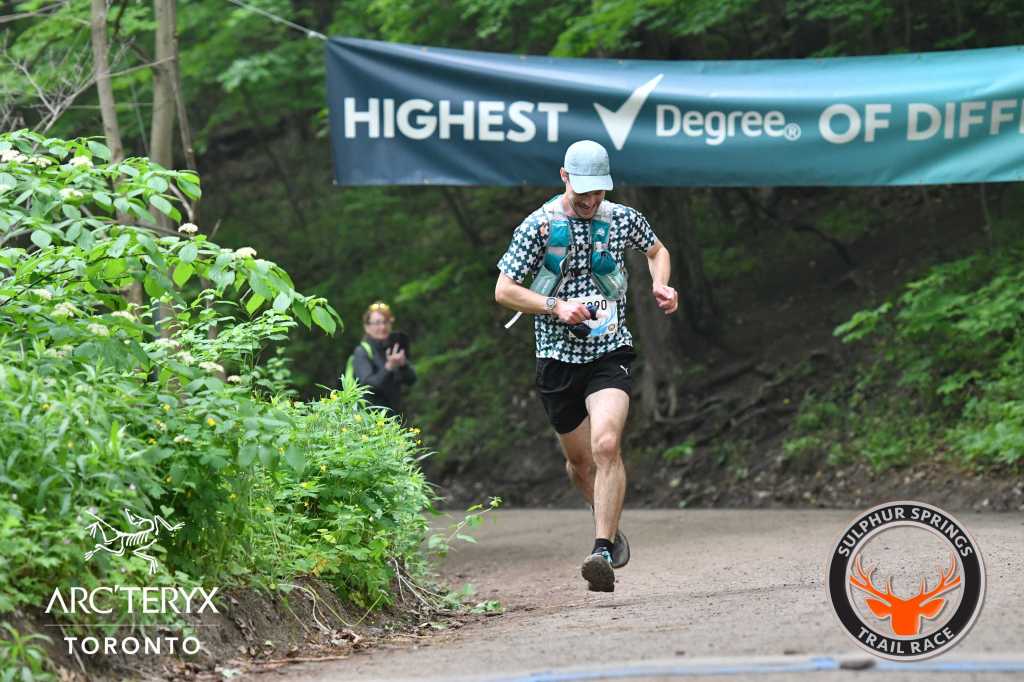
After a few weeks of these short and punchy VO2 max workouts, we then started to get more race-specific.
We shifted to longer intervals, where my muscles would focus on maintaining that speed and efficiency over longer periods of time (as required in a 30K race!).
Most of my workouts were 4-5 minute hills with a jog down recovery, but we also threw in race effort work into my longest run of the week.
This is a theory that Jade and I both avidly subscribe to!
You can do strides most days of the week, but everything else is kept pretty much easy. That is, except for the higher demand days – the workout and the long run. To keep hard days hard (and more race specific) we throw a ton of race specific work into long runs.
My favourite from the block of training toward Harricana was a 30-minute uphill tempo at race effort. Harricana essentially includes an uphill segment that lasts just about as long as this, so not only were we incorporating a race specific effort, but a race specific muscular demand.
Fatigue resistance is massive in an event like this, and the long downhill that follows a long uphill effort like this is equally valuable.
If I were to structure all of my training for myself off of vibes and pure enjoyment, I’m sure all of my speed work would be long thresholds (essentially – a pace that is sustainable for the duration of a longer effort). But you need that speed development to come first, so that you can run these long thresholds more efficiently, and at a higher power output.
You also need to develop that fatigue resistance to avoid muscle breakdown!
BACKED BY FATIGUE RESISTANCE
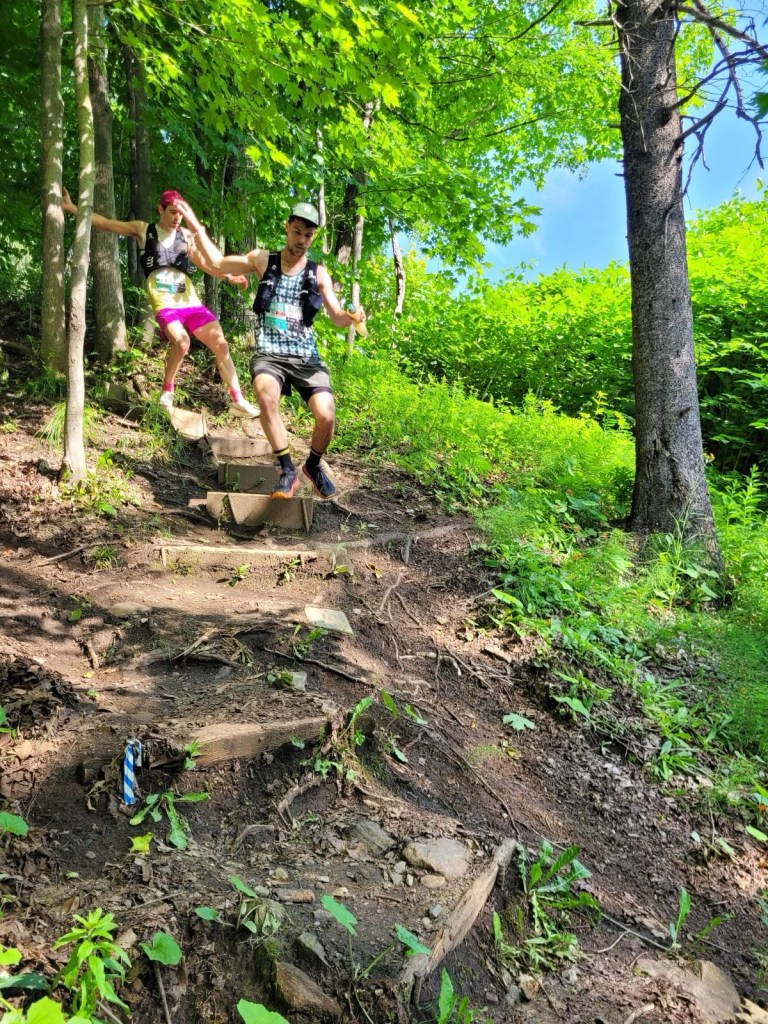
Prior to the race, I can recall talking to Jade about how I wanted to take advantage of my downhill ability without worry.
We had just come off a very strong workout and soccer formation of 5-2-3 (5 up, 2 down, 3 hard), getting in that race specific leg pounding the week before the race.
I don’t think I quite meant busting out a 2:55 pace to try and break away from Anne-Marie, but I had all the confidence that my body could handle the progressive loading of those harsh, fairly technical downhills riddled throughout the course.
As in the style of the workout, those harsh downhills are often met immediately after with a long uphill (or vice versa). Training your body to get in and out of the flow of running at different paces is a skill, and one that requires a ton of muscular strength and durability (also known as fatigue resistance).
This includes…
✅ Strides at the end of easy runs
✅ Race specific time on feet and terrain (even a little goes a long way!)
✅ Two strength workouts a week
✅ Additional cross-training tools like arc-trainer and cycling.
It must be noted that this was all done with an 8.5 hour per day job, out in the heat of the summer all day running around with kids!
If you can nail the recovery from this kind of work, the fatigue resistance you can develop can fly through the roof.

With all of this work cumulatively combining, I didn’t even need to get that much vertical gain.
Harricana 28K is a demanding course. It features about 1,200m of elevation gain inside what is actually 31K, where you’re either climbing, descending, or dancing on technical terrain the entire time.
I averaged just over 2,000m of vertical gain per week in the lead-up to the race, most of which came on roads.
One trail session a week, (with a ton of hilly road work and strength training), was more than enough to be prepared for the demand.
This isn’t wild or completely unorthodox by any means, but it still might be counterintuitive.
Sure, you can get out on course and be more prepared. But there’s something to forever be said about becoming a faster, more efficient runner on flatter terrain, and letting that carry you through the bulk of a faster race. Even one with 1,000+ metres of elevation gain.
I didn’t have the maximum amount of volume or vertical gain leading into the race, but I had more than enough as I managed to prioritize all the pieces to the puzzle. And as runners prepare for their races, checking as many boxes as possible in all regards is often always more effective than just checking the running box.
The past few weeks I’ve been battling an ankle injury as I gear up toward my next 30K, but I can’t wait to continue implementing some of these philosophies in training as the year comes to a close.
Thanks for reading and see you soon!





 Rhys Desmond