
There’s a certain rhetoric I’ve heard floating around the training theory world.
The theory that you can do “the bare minimum” in training to prepare for an ultra.
The theory is sound from an injury and risk perspective. It might even help you finish the ultra of your choosing. But it has gaping holes when it comes to athlete potential, and setting an athlete up for success.
In most cases, a coach should probably be giving an athlete close to 2/3 to 3/4 of the maximum of what they can handle at that time in a training block. You still undershoot so as to not overtrain, but you certainly don’t do the bare minimum to just skate by.
Trail and ultra running is a complex, multifaceted discipline that requires so much more than just aerobic fitness and endurance. It’s as much a mental game as a physical one, and it’s as much about nutrition, strength, and recovery as it is about training.
In order to maximize the chance of success in such a multifaceted sport, we therefore need to train the body and mind to handle significant demand.

This is done carefully and cautiously through first building a solid foundation, incorporating moments of down amidst the up, and most importantly, prioritizing recovery around training.
You can, most certainly, do that through the bare minimum. But you can do it more effectively by trying to push athletes closer to their upper limit within a training block.
This is all why I left behind my first trail coach. My mileage was really low. My long runs weren’t that long (especially in comparison to the races I signed up for), and the feedback was minimal.
My body was always ready to handle significantly more, and I expressed this quite a few times over a year long period. And it never came. And while I never got injured under his guidance, I also felt my progress and race results stagnating and decreasing, rather than improving.
Working with my current coach, we’re still really cautious about my injury history and life demands outside of running, but we’re pushing up closer to that 2/3 to 3/4 of what we know I’d have no problem handling.
Because in truth – the saying is true! It’s better to be undertrained for your event than overtrained.
But in that good old simplification, it’s underrated how colossally bad being undertrained can be too. I experienced this first hand at the 2024 Gorge 50K, when my legs forgot how to work at 30K, the exact amount of hours I had been allowed to train toward. I still finished, and actually, I still finished top ten, despite a really tough final 90 minutes.
That’s because the bare minimum does work.
I was ready to run 50K and finish the race. That was even my ‘C Goal’! But I wasn’t ready for my ‘A Goal’ of finishing top five and under a certain time. Nowhere near.
I try to avoid outcome goals like this and focus more on “process goals” nowadays, but the point still stands!
You can check the box ✅ and say “We did it!”. This works especially well for athletes returning from an injury. But reaching that full potential will require more than just the minimum.
You might never even see the maximum. That’s for college track and the wild world of FKT’s. But the minimum just isn’t enough either.





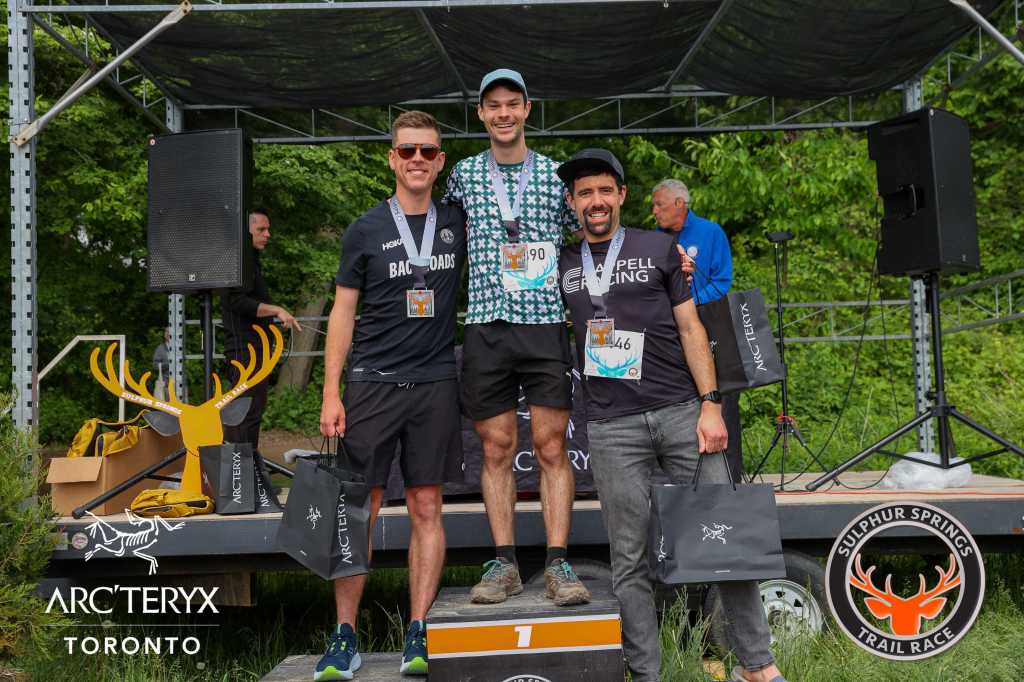


 Rhys Desmond