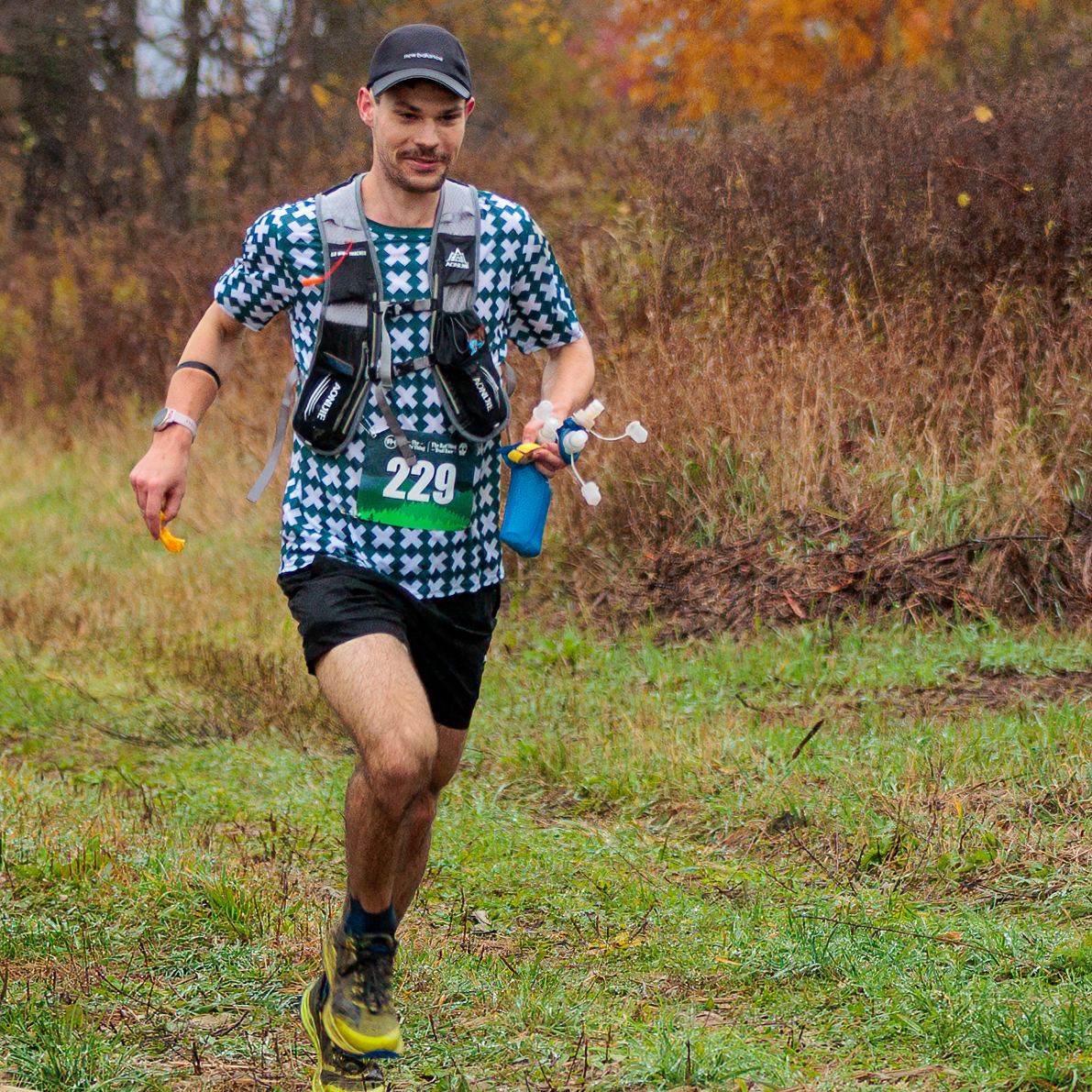
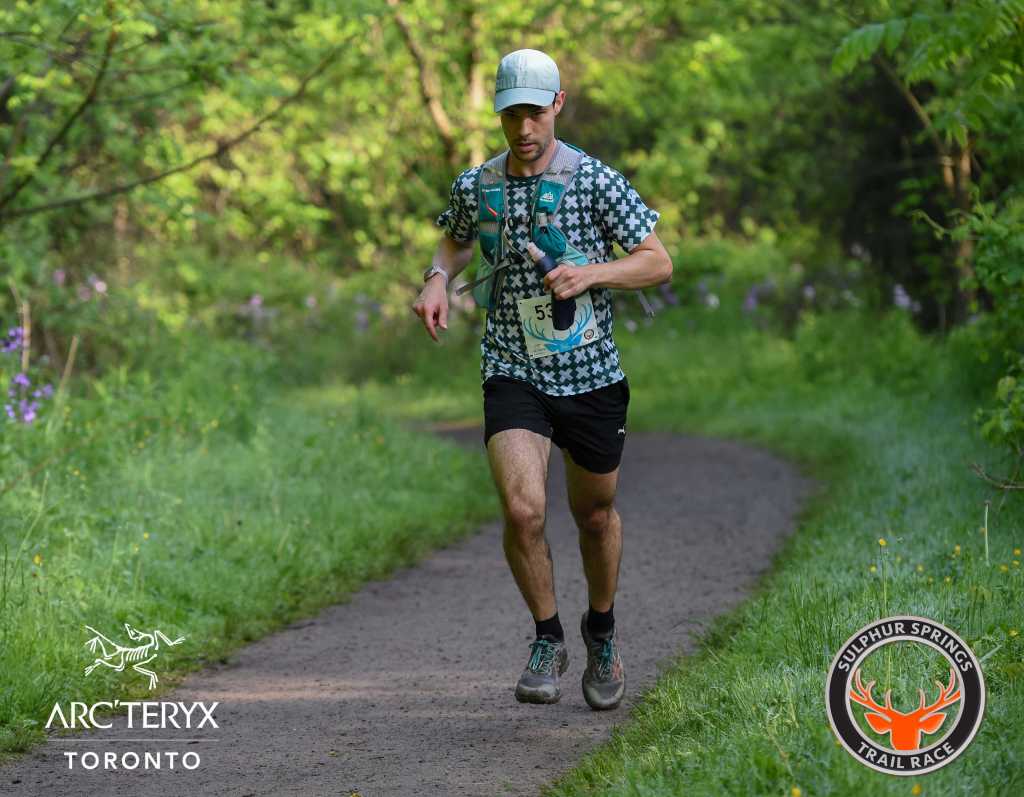
A couple months ago, Tanis Bolton and I came up with a three-layered phrase mocking running influencers.
Fashion. Segments. Content.
It’s all we care about, truthfully.
But truthfully, truthfully, and you never break a double truth, fashion is fun. Fashion, dare I say, can create some superpowers out on the trails.
I remember writing this in an article even a few years ago. Looking good = feeling good. Looking good = feeling confident. Feeling good and feeling confident = enhanced performance gains.
No, I’m not saying that you put on a suit and suddenly you’re a Wizard ready to be sent to Hogwarts. Although if you put on a cloak and a wand, you might.
What I am saying is that in the context of ‘dressing to impress’, all you really need to do is dress to impress yourself. Running in something snazzy and looking fly, will help you legitimately fly. These days, there are so many accessories that trail runners can customize to handle long days on the trails, and look good in the process. After all, Fashion(.) is one of the three most important things when it comes to trail running.
And now that we know that fashion is one of the three most important things in trail running, here is what I do for clothing in order to impress myself, and the coyotes I train with.
PACKS & BELTS
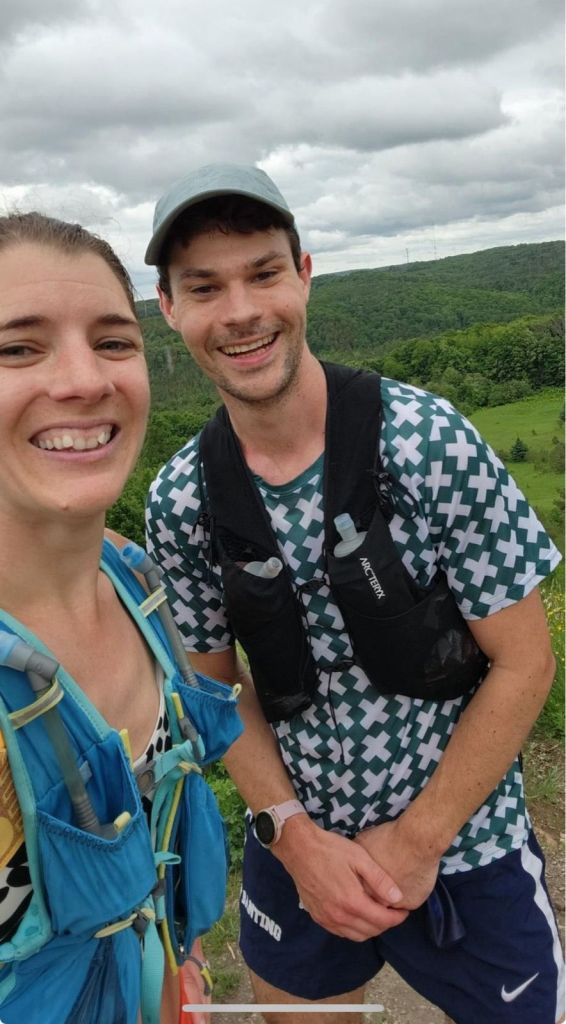
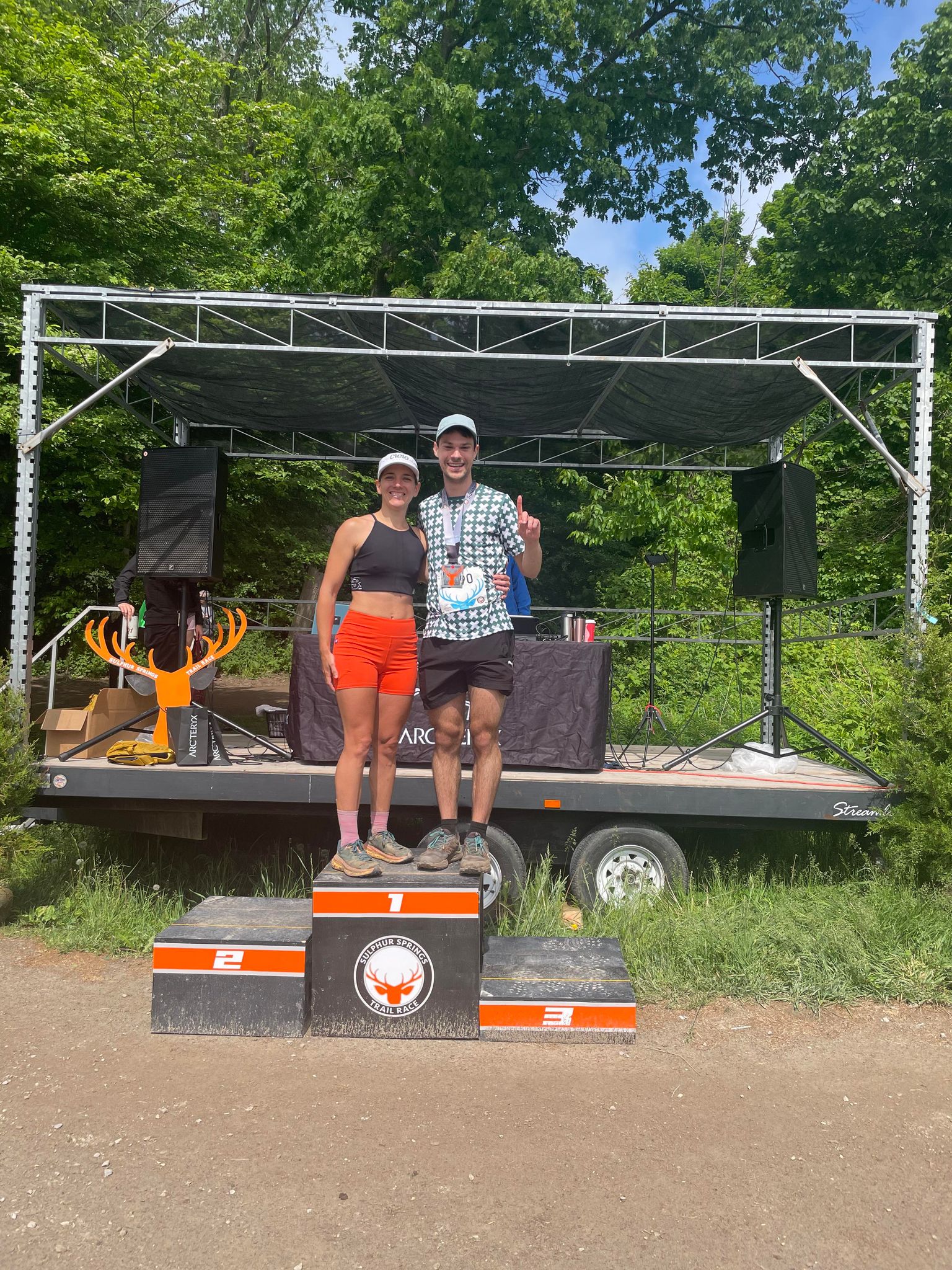
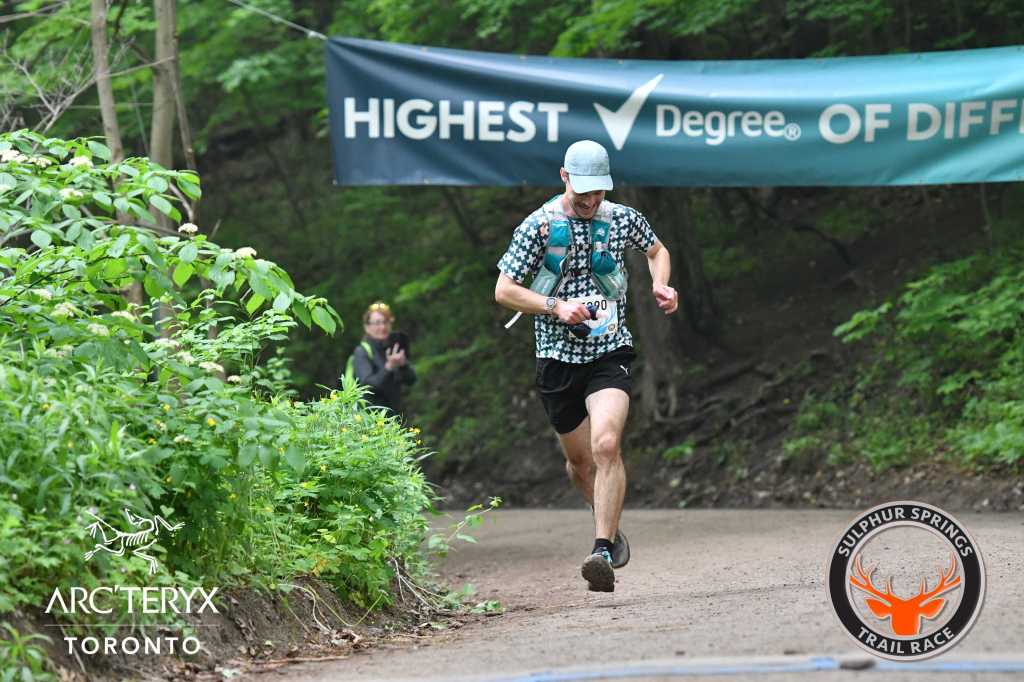
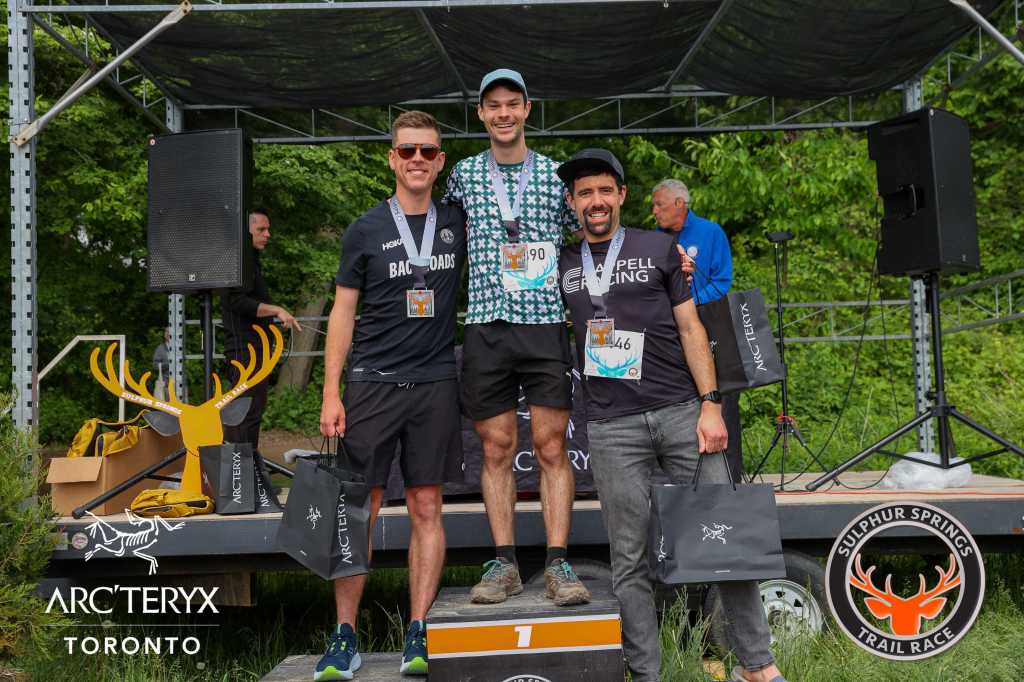
On every single run, I’ll have either a pack or a belt. Currently I’m using the Arc’Teryx vest from the Sulphur Springs prize pack. I like the space that it has for fuel, with enough room at the front and back for bottles. It’s not bouncy, although the thickness of the material does irritate my skin in a singlet. Right now it’s my favourite vest because it’s black (fashionable), comfortable (equally important), and spacious (I take a ton of XACT Nutrition bars on long runs).
On shorter runs that last less than 90 minutes, I’ll simply take just a waist belt. Right now I’m using Spibelt. For three reasons: Fashion. Segments. Content. No, really: fashion, simplicity and comfortability.
The belts are small and super lightweight. I can fit what I need (generally), and then easily adjust the straps to match the amount in the belt, always keeping it tight around the waist. Typical belt items include: phone, keys, empty flask, and XACT Nutrition bars.
I am however looking to expand my belt game in the future to include something that can Jim Walmsley-style place the bottle over the belt, or inside of it. Most of the elites I’ve run with in races use waist belts rather than vests. In fact, from Golden Trail to Skyrunning, all the pros in short-trail and sub-ultra strap on that belt, with intentions of carrying less.
It’s true! With shorts that have pockets (more on that later), you can fit most of what you need for races (including mandatory kit) in a belt.
In the process, you’ll be lighter, and more fashionable.
But despite the growing popularity of these snazzy belts, I’ve stuck with the vest game for 50K races for now. Pourqoui, you ask in Quebec French?
- It’s way, way, way easier to take something out of a vest than a belt. For a belt, you have to unzip the rip, dig, yank, and zip back up so that you’re nutrition doesn’t float up into the air. For a vest, you just feel and grab.
- I drink more than most. Therefore, having a vest stops me from carrying two bottles in my hand at once. I actually like to carry a bottle in my hand, but having at least one hand free is key on technical downs, rocky terrain, and in grabbing anything else you need. Possibly, quite possibly, I need to train my body to drink less, or utilize the smaller flasks that can fit in a belt.
- Mandatory kit. I’m a sucker for rules (and safety), and so I carry the mandatory equipment on me for these Quebec races. With one of those big Nathan or Naked belts, I’m sure you can fit everything in. But I’ve currently just gone for the lightweight belt option, giving me less space. & With a lightweight belt, the more you stuff, the more bounce, interestingly enough.
But I’m curious about exploring different belt options in the near future and think that everyone should do the same in finding what works for them.
CLOTHING – WARM WEATHER
In the warmer temperatures, I love to wear shorts with pockets. I’ve seen both Paul Vanoostveen and Jade Belzberg with these snazzy short tights that have a slick pocket down the side for gels.
I prefer shorts with a pocket zipper on the trunk. This has been great for ensuring my keys haven’t floated onto the trail somewhere (they can be harder to feel for in a vest packed with nutrition), and as a spot for my XACT bars when not carrying a vest.
For runs lasting between an hour or two, I like to double down on the belt to short pocket combination, rather than an entire vest. In these cases, I’ll often carry liquid in my manly hands. I have a preference to do so anyway, as I like having something in my hands, and I tend to drink more that way (most of the time that’s a good thing).
On top, I’ll usually wear something branded by XACT Nutrition, because it’s sleek and snazzy, a support system for me on the trails, and a brand that is pushing the envelope in the sport.
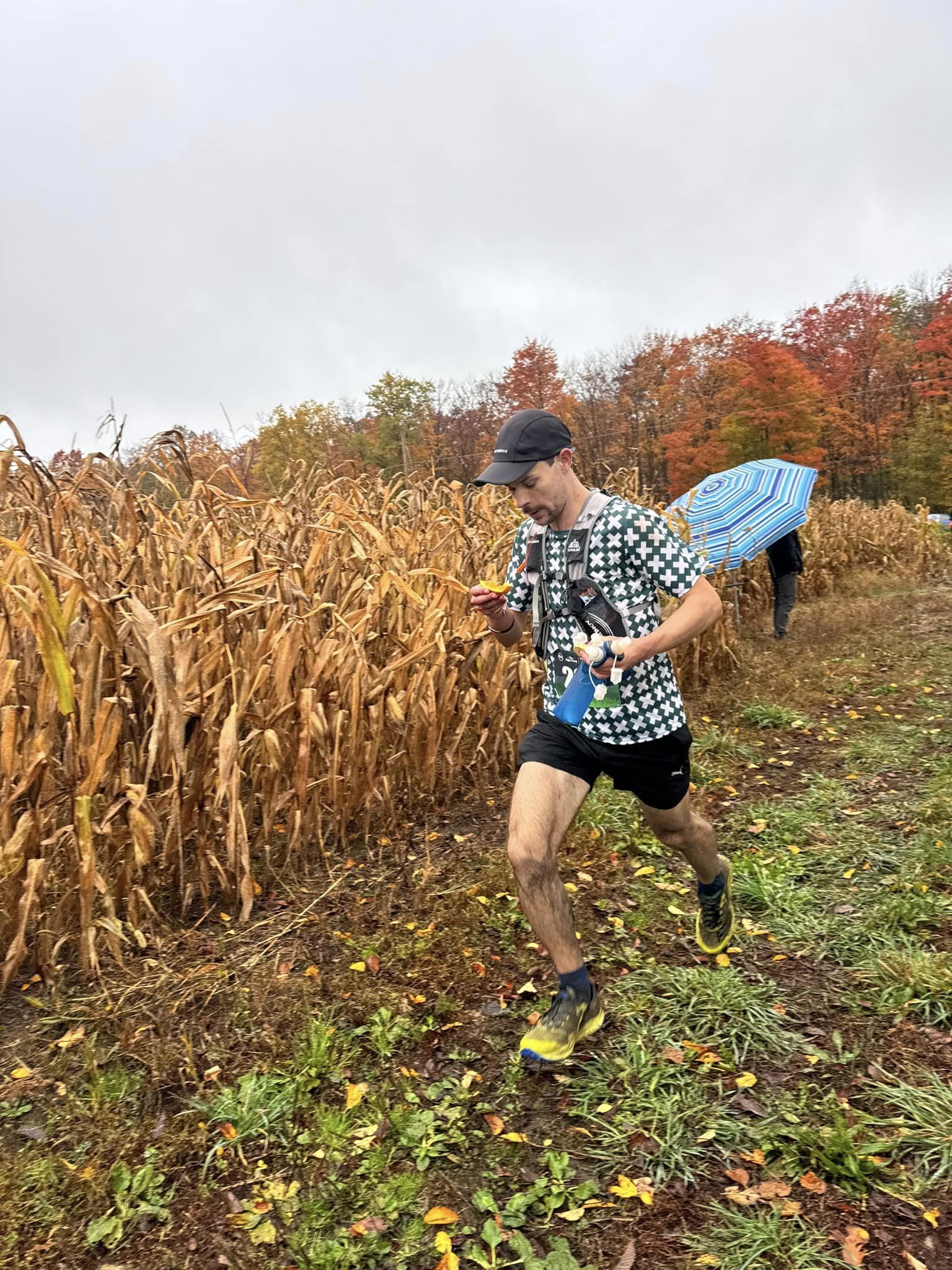
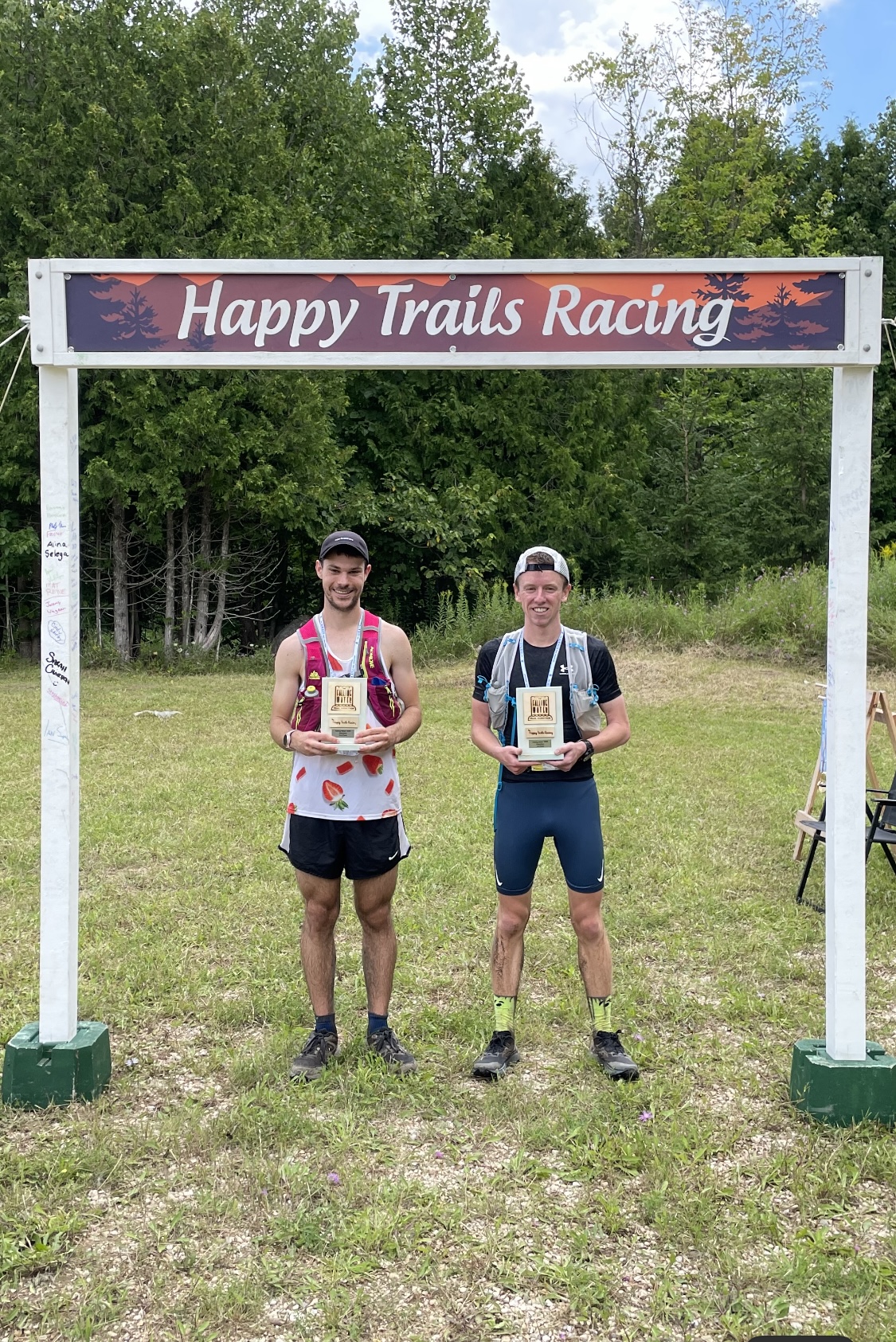
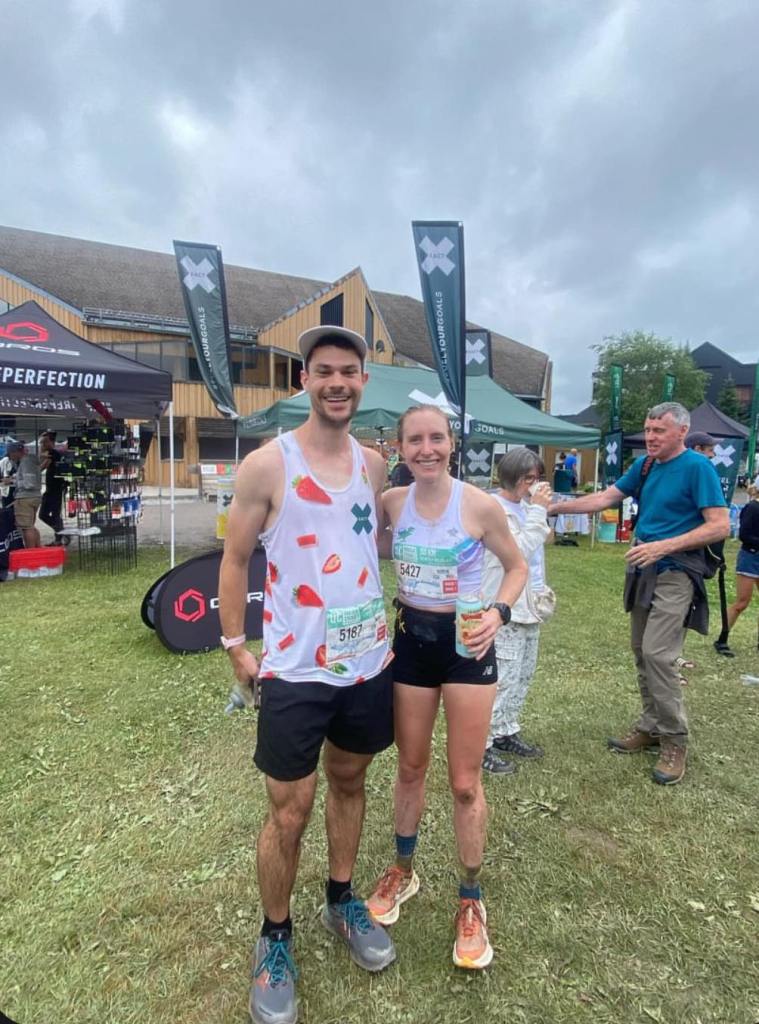
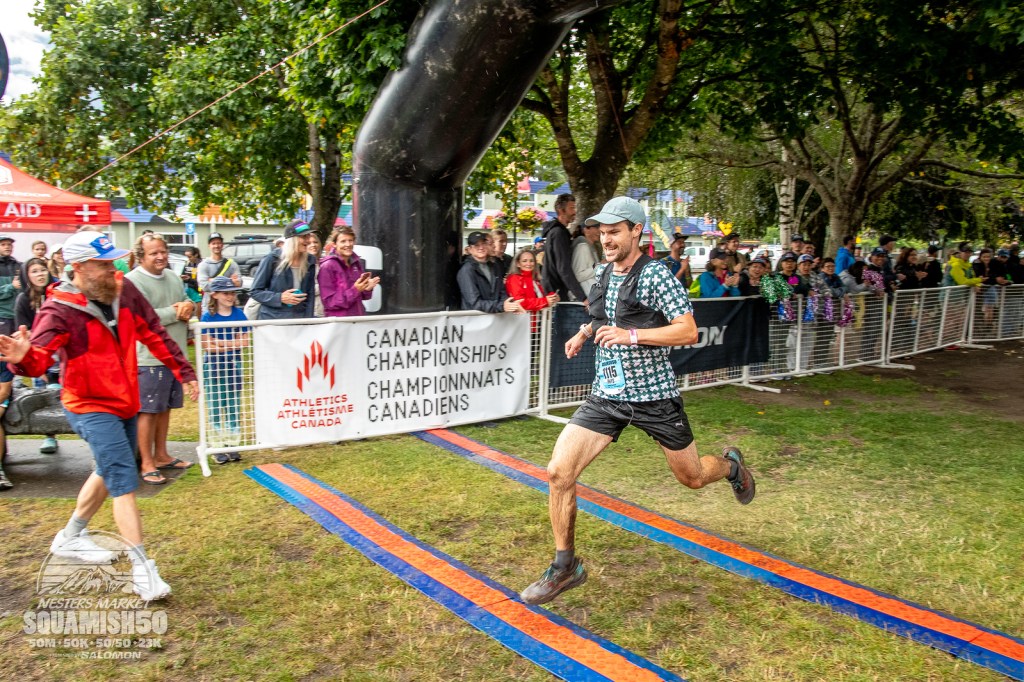
The strawberry singlet is evidently my fashionable favourite (even Eric Lipuma approved), but the checkered X’s in either singlet or shirt form are both ideal for races and made out of sweet sweet lightweight material.
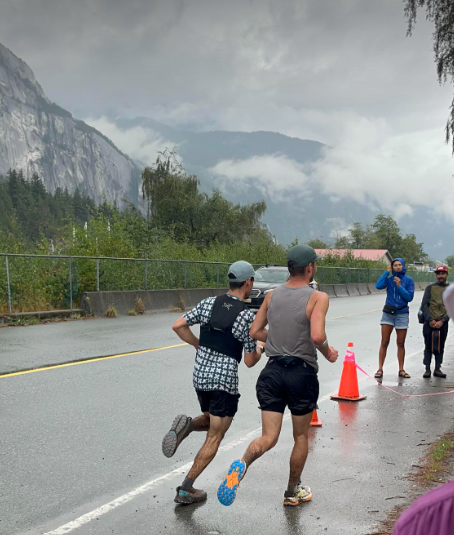
On the very top I’ll also do a hat. It’s sun protection, sweat out of the eyes, and fashion, segments, content. I like the lightness behind the XACT hats, which are made in partnership with Ciele Athletics. At Squamish, I joked with Tanis that we were in the middle of a Ciele commercial. Everyone and their newborn baby was sporting a Ciele hat. For the hat, it’s really just important to wear something light and breathable, hence why so many Canadians wear Ciele.
There’s a growing contingency in the American ultra scene that wear bucket hats in the hotter races to try and stay even cooler (and look even cooler too, obviously). If XACT made one, I’d definitely sport it. The one thing about a bucket hat is that it can sometimes get in the way of your vision, making it more difficult to navigate technical terrain. I’m sure that Jim Walmsley had no issue seeing at Western States. I just think you need to find one with the right design. The right design would be one that basically just sits on the head, without much need for strap adjustments, and is specifically designed for athletic performance. Until I find exactly that, I’ll be sticking with my lightweight caps.
CLOTHING – CANADIAN WINTER
The exciting part to running this winter will now be exploring running tights with pockets at the back. That said, you tend not to need it quite as much when you’re also wearing a jacket with pockets.
For temperatures between 0 to 5°C, I’ll double layer with a short or long-sleeve shirt, lightweight running jacket, and running tights.
For temperatures between 0 to -5°C, I’ll double layer it with a hoodie/sweater to jacket combination. Running tights remain a must. What are you doing wearing shorts – you mid-forties British goalkeeper coach.
For temperatures colder than -5°C, I’ll run on a treadmill.
Occasionally, on those days, I’ll triple layer it with a shirt, hoodie and jacket all-in-one combo, if opting for the outdoors.
In all of these temperature differences, I’ll do a pair of gloves, a toque (Canadian word for it’s cold outside and I need a hat), and an XACT buff around my neck.
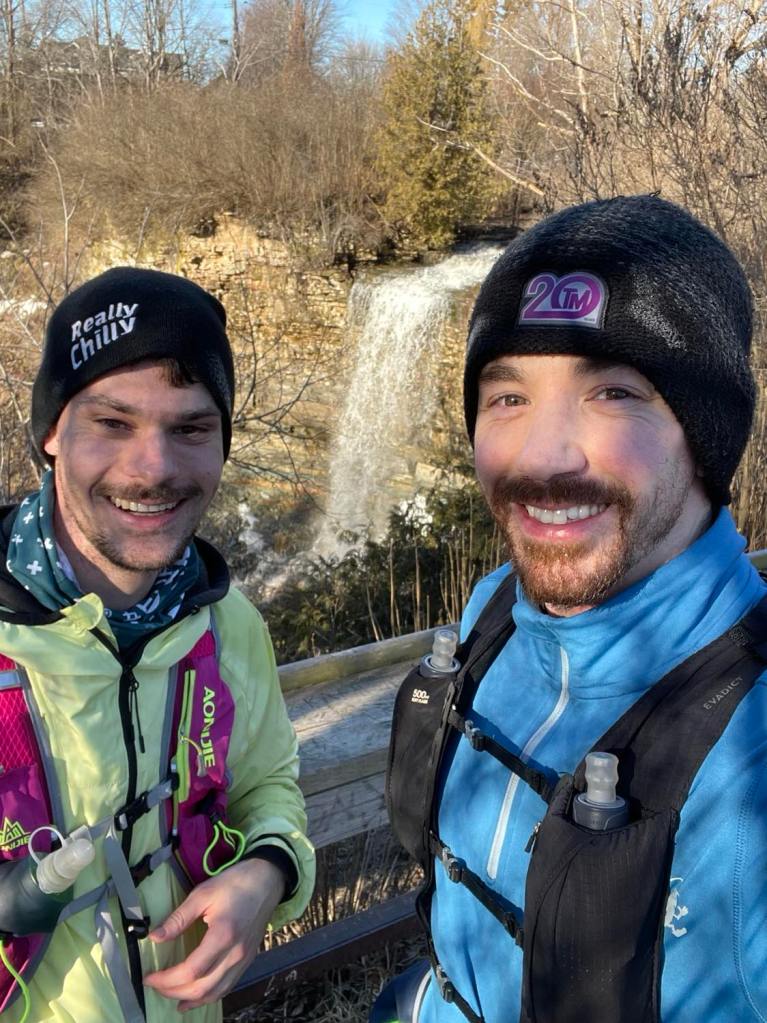

The only other thing that changes is that I’ll often wear my best technical trail shoes for the snow rather than adding another pair to the rotation. Merrell makes some great stuff, since their science is built around hiking boots and tougher conditions.
So that is how I dress to impress myself, and the coyotes (obviously) that I train with out on the trails. If you have any tips that you want to share I’d love to hear from you on social media or in the comments. Thanks for reading and see you soon!




 Rhys Desmond