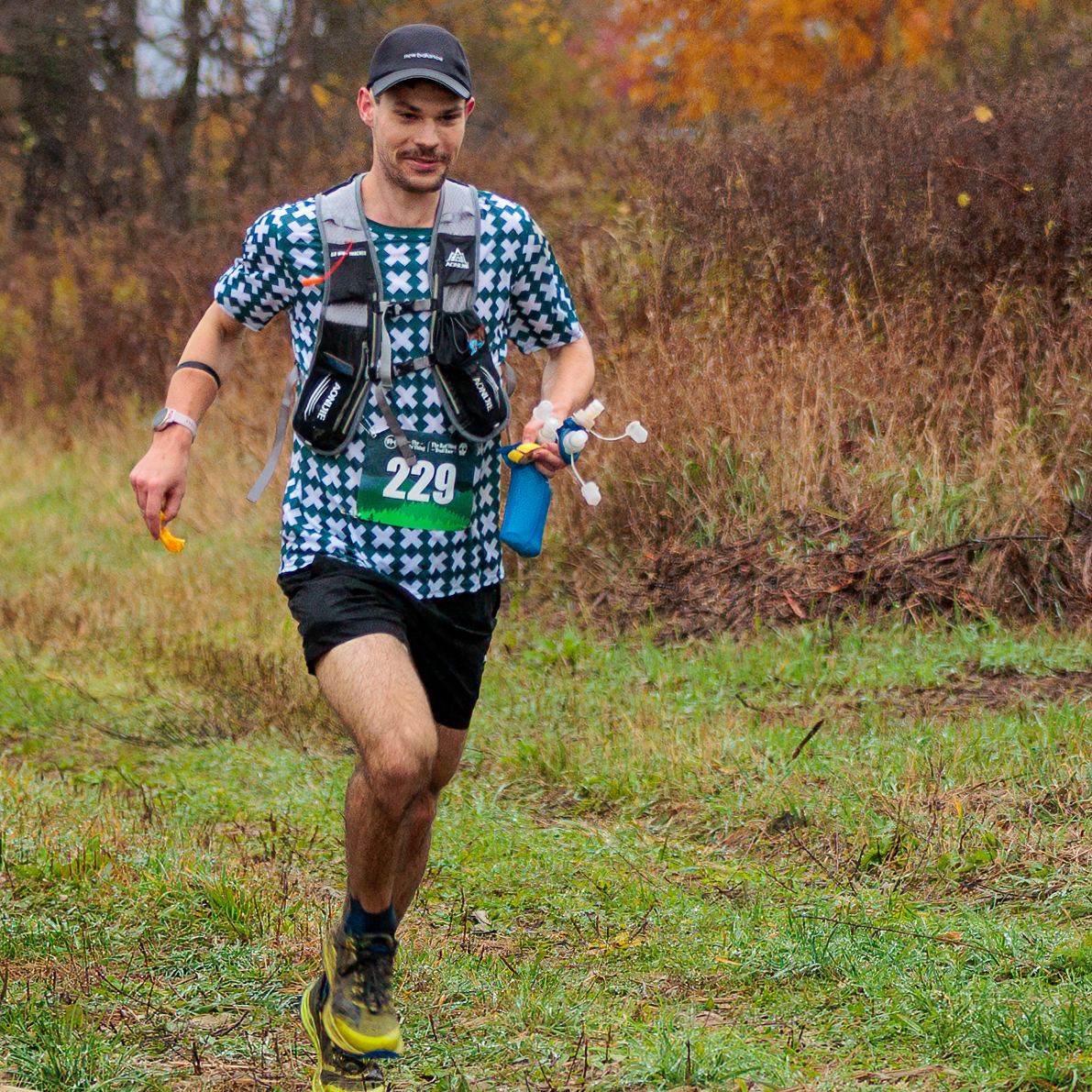
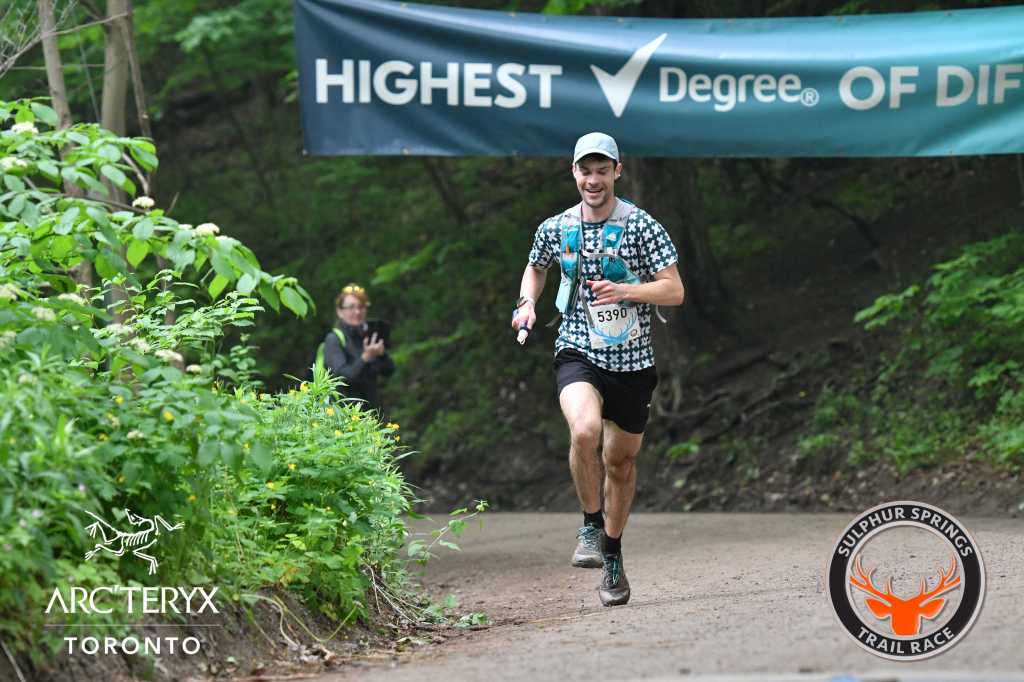
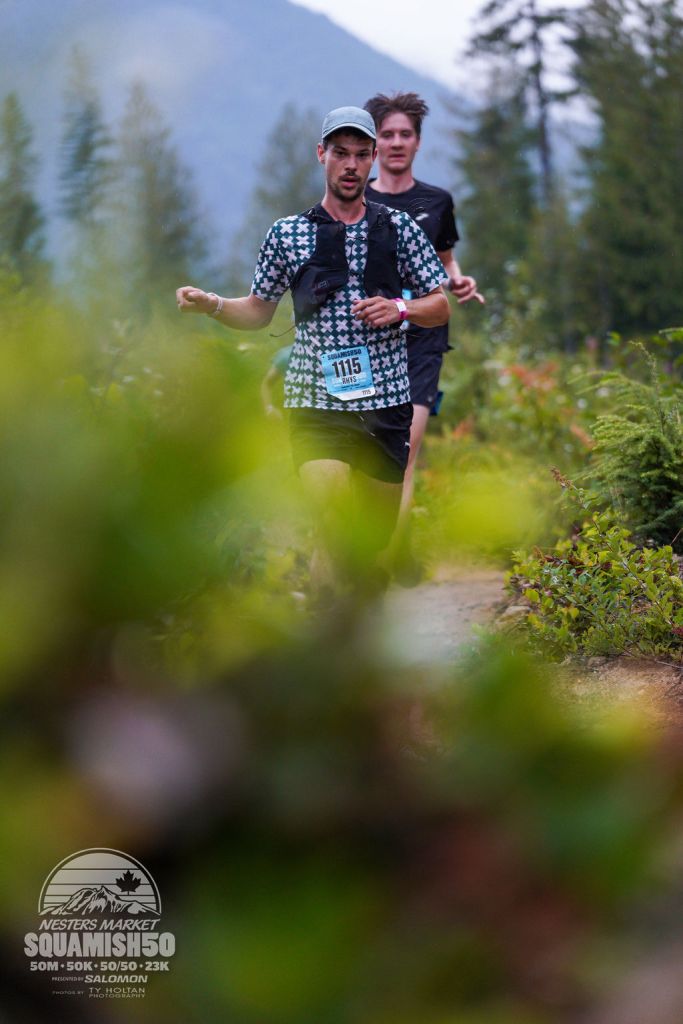
Two weeks ago, I finished as the top Ontario athlete at the Canadian National Championships – Squamish 50K, behind a host of names from Quebec, BC and Alberta. Of the top twenty-one finishers, Steph and I are the only Ontario outliers.
One of the reasons why it’s such a rarity to see any athletes outside one of those three provinces is because of the stunning lack of one key element. Mountains.
Trail running and outdoor time in general are prioritized more outside of Ontario, and while the terrain is beautiful, it’s quite different.
Luckily for me, there is enough that I can play around with and explore when training for these Quebec and BC races.
Most of the time, I don’t even really run. I even joked on a run with Paul Vanoostveen that I ‘don’t like to run’. Realistically, I just love to shuffle. I love to shuffle on rocks. I love to shuffle on steep uphills. I love to storm a downhill, or shuffle side to side on the steepest stuff.
Growing up right near a reasonably technical trail and coming from a background playing hockey and soccer, my body was made for slow, powerful running.
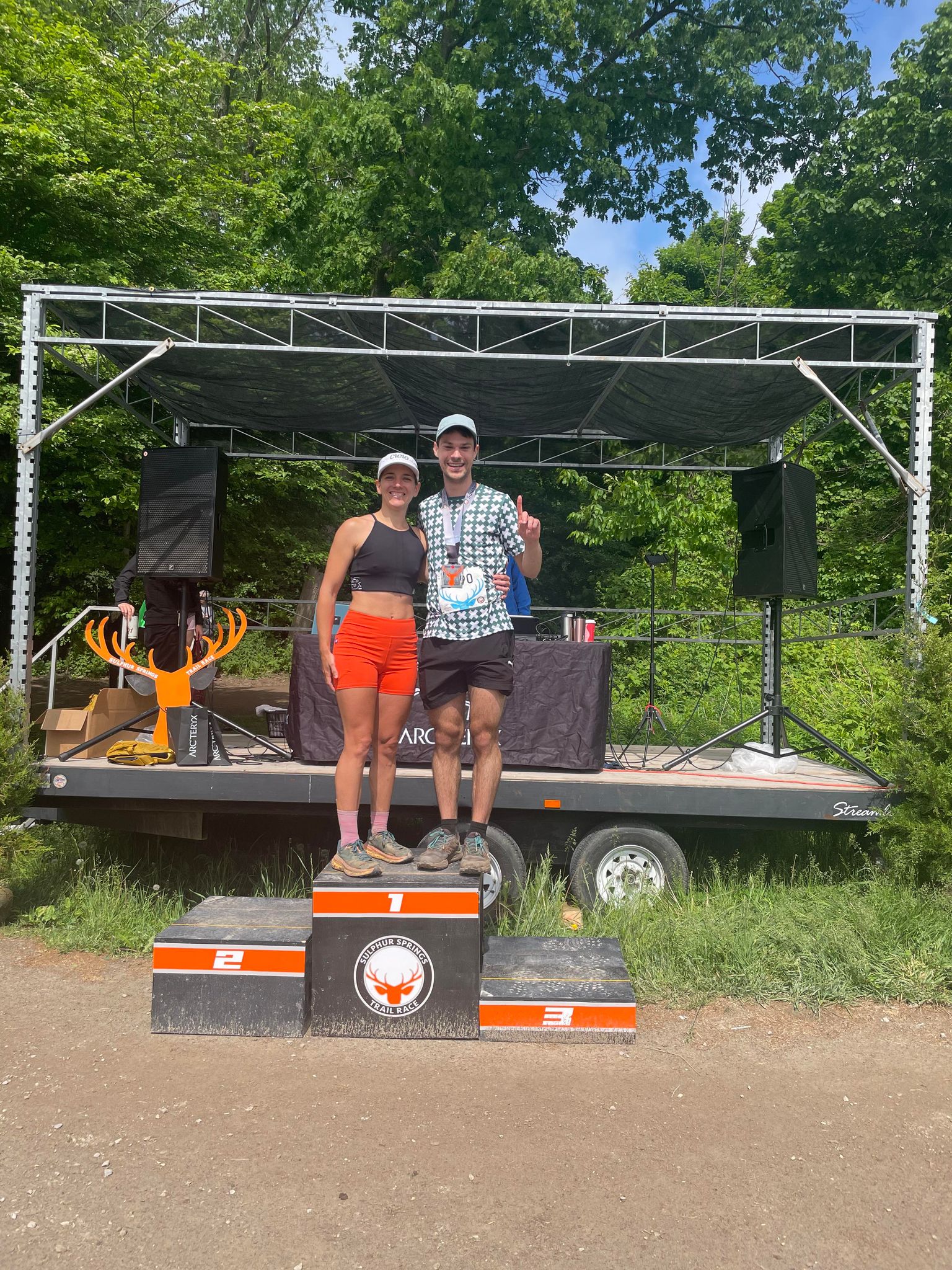
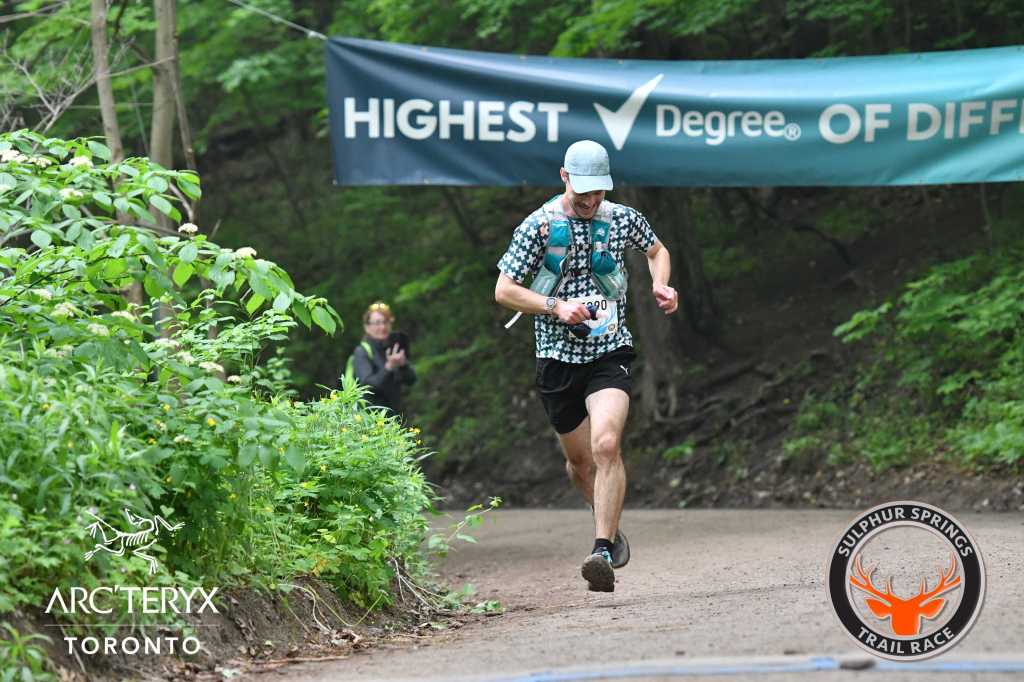
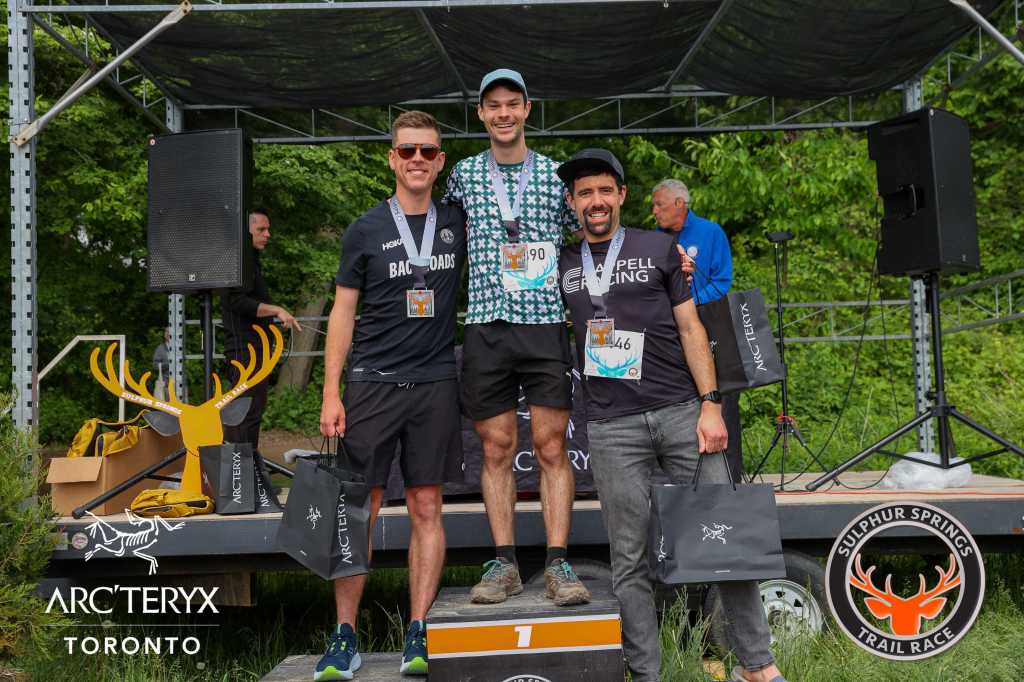
This is all fine and good, but Ontario has very few technical trail races. Summit 700 is the most mountainous, and Falling Water is the most fantastic. You can get good competition at Sulphur Springs, but even there, the expectation is that you finish first or second.
I’m more or less motivated by the ability to challenge not only my own limits, but to see how those limits stack up against others. I like seeing how I can perform on the grandest of stages, against the best in the business. It doesn’t deter me knowing that the highest end of the sport have so much more to offer. I’ll still thoroughly enjoy playing in the sandbox even if they’ve already made it across the monkey bars.
I selected my goal races this year intentionally, ensuring I would get stern competition at three of North America’s best 50K’s. But truth be told, in order to properly prepare for the demands of a mountainous 50K, the ideal scenario would be to do so in a mountain.
I don’t know if anyone’s told you yet, but Ontario does not have any mountains. We have a few good ski areas like Blue Mountain, and many sections of the Bruce Trail as a premier playground. BUT, it’s not like the access that many of my competitors have in their backyards.
With that, I’ve been relatively strategic with my training. To be clear, athletes like Paul and my old U-Waterloo teammate Steph Ryall have proven that you don’t need to do this type of training to compete at the top level in a mountainous 50K. BUT, this is the type of training that I enjoy the most, and from my perspective, the best way to prepare a body like mine for the demands of a mountainous race.
DESIGNING HILLY LOOPS & ROUTES
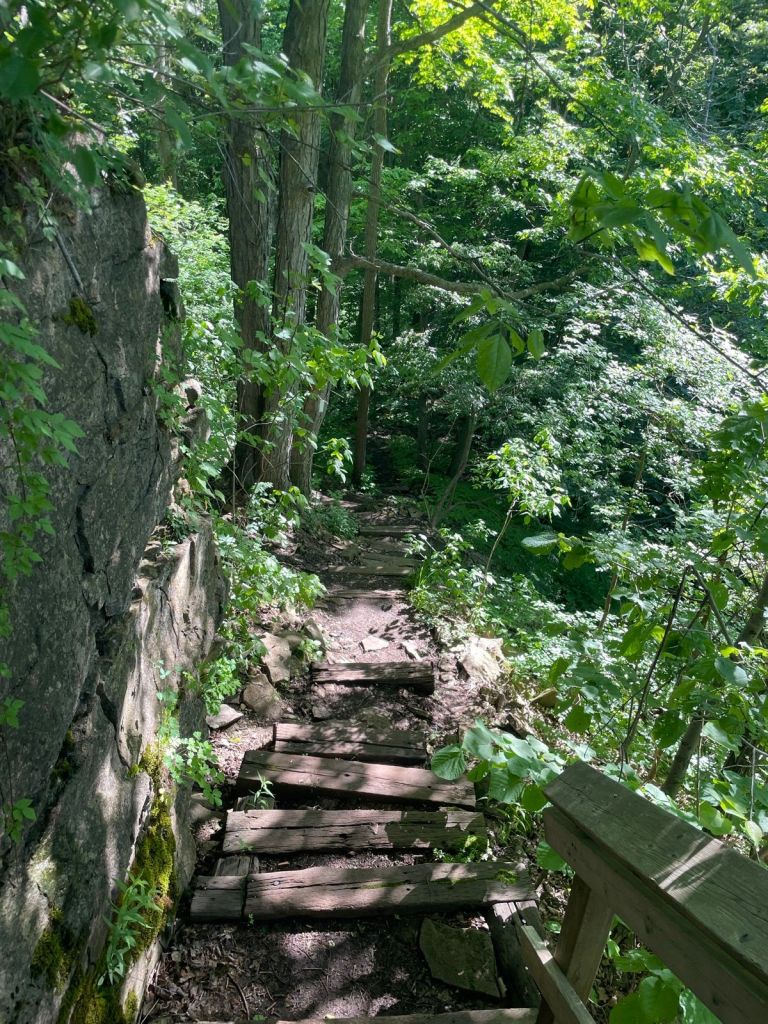
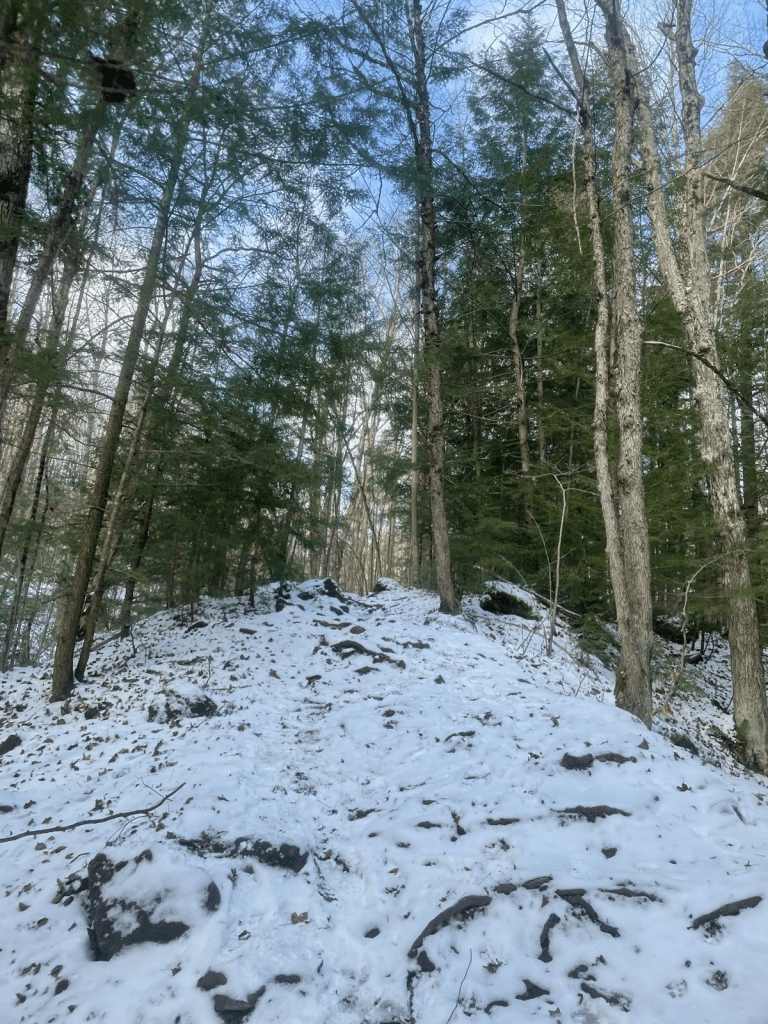
After my first year of exploring the best spots within a 2-hour drive from Cambridge, I started to Strava-tize the best ways to maximize elevation gain. I designed routes like this one in Pretty River Provincial Park, where I could ascend almost continuously for about 25-minutes, and then descend back the other way down Victoria’s Secret.
I segmented the best paths for continuous and sustained climbs, like this one in Boyne Valley. I even created a loop around Borer’s Falls that swings like a pendulum up and down super steep, technical terrain. I did these routes on repeat.
Most of my training, including many of my workouts, worked to maximize elevation. My favourite was a lung-buster of a 4×90-second hills, followed by a rolling hill tempo, and a finisher of 4 more 90-second hills. My other workouts were meant to simulate a hard up-down stimulus, working on that quick turnover of storming up and then being able to maintain the same effort back down.
After Gorge, I self-coached myself to QMT and Squamish, so I had the luxury of designing workouts that I knew I’d enjoy.
The intention now is to become coached again, helping me work on my evident weaknesses in the sport. While I won a runnable 20K in May, I could still see a sizable difference in smoothness at Squamish any time Jade, Élisa and I hit a road or flat section.
But in best preparing myself for the demands of all those downhills, and creating my climbing engine, my prioritization on vert through specific Strava creations helped me thrive.
UPHILL TREADMILL & STRENGTH
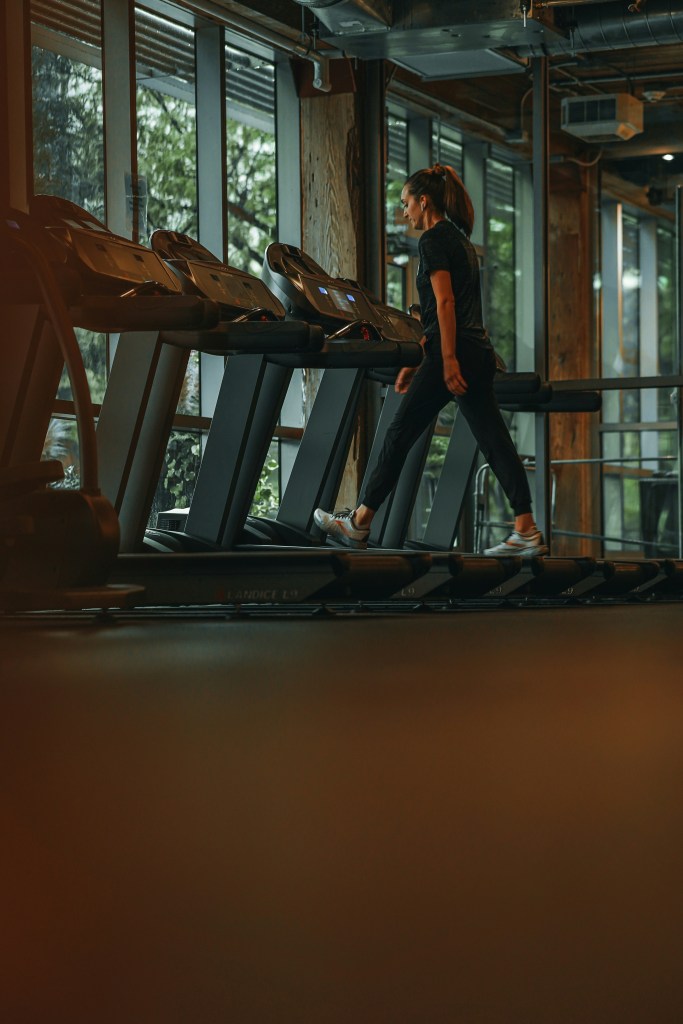
It’s not for everyone, but I love the uphill treadmill. It was one of the only things I cared about when leaving Cambridge. Through injury, the snow-covered Canadian winter, and the encouragement from Brett Hornig to use the treadmill as a tool to develop speed, I’ve spent tons of time treading this year.
It’s been great for uphill hiking in races – both power and efficiency. Even, oddly enough, heat training.
But I credit it as the #1 reason why I can climb for long, long periods of time at the same pace and effort, while keeping my heart-rate relatively low.
This is something that I witnessed first-hand from the best in the Canadian scene in Jade Belzberg and Élisa Morin. On our climb up Galactic, I worked through different muscle groups and hiked every fifth or sixth step. Jade and Élisa just ran the entire time. Both super steady. Both super efficient.
Developing this skill of sustained uphill running is pretty impossible in Ontario. The only places that I’ve discovered to really do it are Blue Mountain (The Grind & Village Way), Pretty River (River to Highest Point), and Boyne Valley (Primrose to Top). Anything else is either too steep (i.e. hiking), not steep enough (i.e. road climbs), or not long enough (albeit, still valuable). To compete with a mountain climb, you essentially need a hill that can ascend for at least 12-minutes (ideally double).
If you don’t have access to anything like that closer than 90-minutes away (like me), and you’re ready for me to sound like an infomercial, why not take advantage of the uphill treadmill?? I know my days of long uphill running at 15% helped, because it’s the exact same pace and the exact same motion I’ve used in three races now to run without any worries.
Strength work also goes a long way. Prior to QMT, I studied the course to identify the exact movement patterns worth practicing. Step-down and step-up motions were plentiful, and hiking on a treadmill could only resemble so much before switching to stairs for a bigger step.
RELATED: How to train for a mountain race without any mountains
I do leg strength work one-two times per week based on the Roche’s ‘Speed Legs’ and ‘Mountain Legs’ routines. When something is hurting, I’ll add different strength exercises into the mix to ensure nothing is falling by the wayside.
The development of your own mountain legs needs to be a conscious effort. While I think you can perform like Steph Ryall on relatively limited climbing, the best way to stop a blow-up is to be prepared for the demands that hard downhill (especially) & hard uphill running (also) can do to the body.
There’s a great David Roche article on Outside Magazine, where he points to all the research illustrating the importance of downhill preparation as the key factor behind winning or losing races.
In total, everything I did for both QMT and Squamish was intended to be as race-specific as possible, practicing the demands of the race as closely as possible. Without actually living in the mountains that these races take place, it then needs to be about as much race-specific simulation as possible.
Next year, I am however excited to do it all over again, and one way or another, take a completely different approach. Either I’ll be living in the mountains, working with a coach that wants to help me with my speed, or both. Either way, I can’t wait to see what I’m like in a year’s time at our next National Championships – the QMT 50K in July.
Thanks for reading and see you soon!



 Rhys Desmond