Once, I was a child.
Around that time (that very vague timeline), I played in a soccer tournament in Strathroy, Ontario. During one of the matches, I can remember my teammates and I having a laugh at the other coach. A coach who seemingly had nothing else in his vocabulary except one key phrase.
“Patience is a virtue.”
That sounds too peaceful. It was more like “PATIENCE IS. A VIRTUE!!!”, spit flying out of his mouth and everything.
In working with kids, I actually find that patience is persistently the greatest development area across most ages.
In trail and ultra running, patience is a virtue. Or rather, PATIENCE IS. A VIRTUE!!!
It comes from knowing your body. Knowing your strengths. Playing to those strengths at exactly the right moment.
It comes from remaining silent when others have chosen to be loud.
It comes from hot-doggin’ it when you feel good in the early miles, so that you can fire up the grill later on.
Patience is probably one of the greatest skillsets you can possess as an ultra runner. Especially if you can accurately calculate how and when to use that patience to overcome the odds within the bounds of your own body.
I know many runners who love to race from the front. Sometimes it works. But often times, you can blow up from pushing too hard. It’s a way better feeling to stay cool and climb from fourth to first, than to push the limit and go from first to fourth.
Better yet, it’s more fun to win a race in the final kilometre, than to win comfortably from leading for 50K. Way. More. Fun.
So if this is already the smarter approach, and it feels better when it’s over, why not race your way up a field? Why not remain patient until your moment to strike?
This, I think, has been my biggest revelation in trail running this year. When you’re racing on the roads or cross country, you can kind of just go full gas. Tactics are ever-present and ever-important. But whoever is the fittest and fastest will often win.
On trails, the smartest, best fueller, can often overcome the fittest, fastest person in the field. Add in a layer of preparation on the race-course and game-realistic training, and you can make yourself unstoppable.
I intended on racing this way at Gorge Waterfalls, but wasn’t prepared for the demands of the race (or the pace I pushed at the start), even though I thought I was executing my plan of being in the back-half of the top-ten and then working my way up.
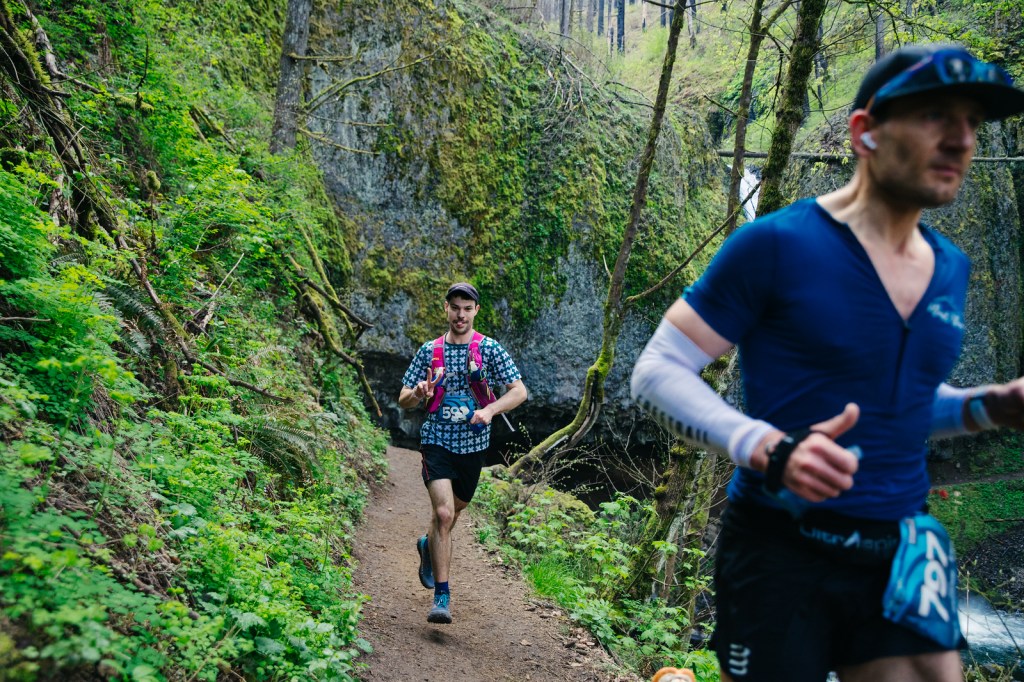
I’ve said this over and over like a broken horse, but I would have enjoyed a smarter, faster race had I stayed with leading lady Sarah Biehl at the start, and moved up the field all the way into fifth overall (like her) by the end of the day. Instead, I pushed my heart-rate too far for too long and hit the brakes in ways I never imagined. Instead, I watched Sarah jog past me, and fell from sixth to twelfth overall and ninth male.
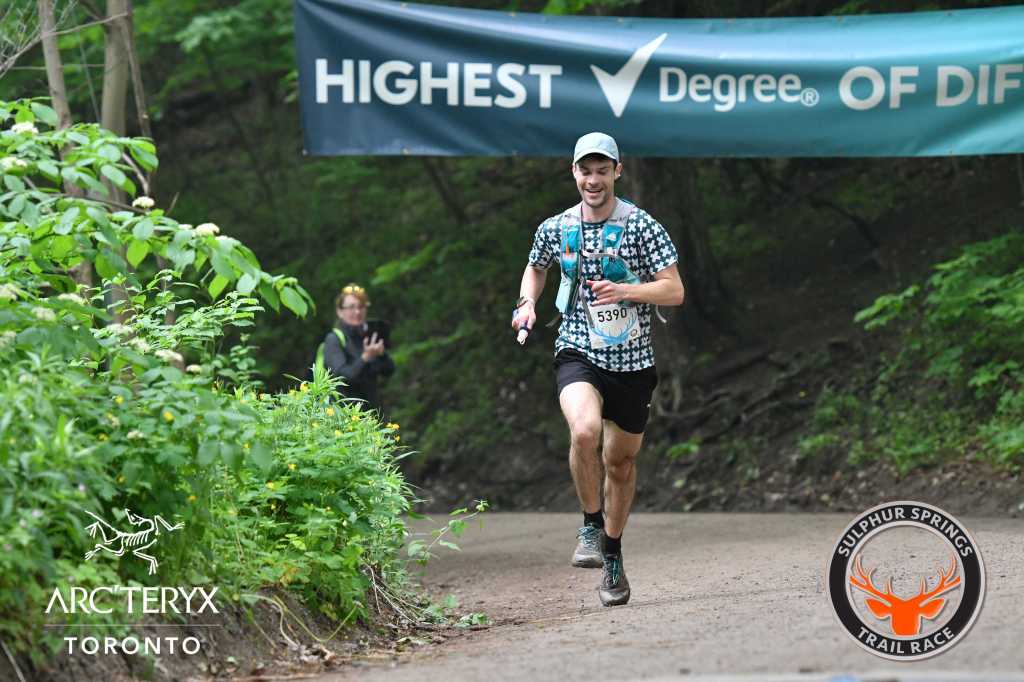
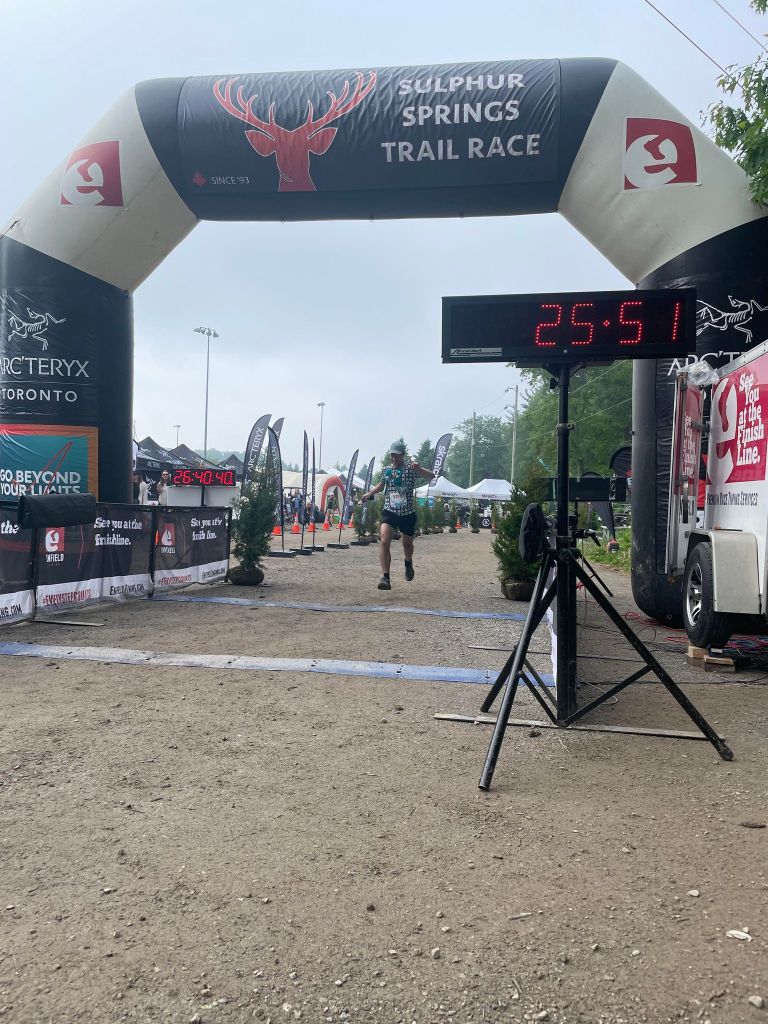
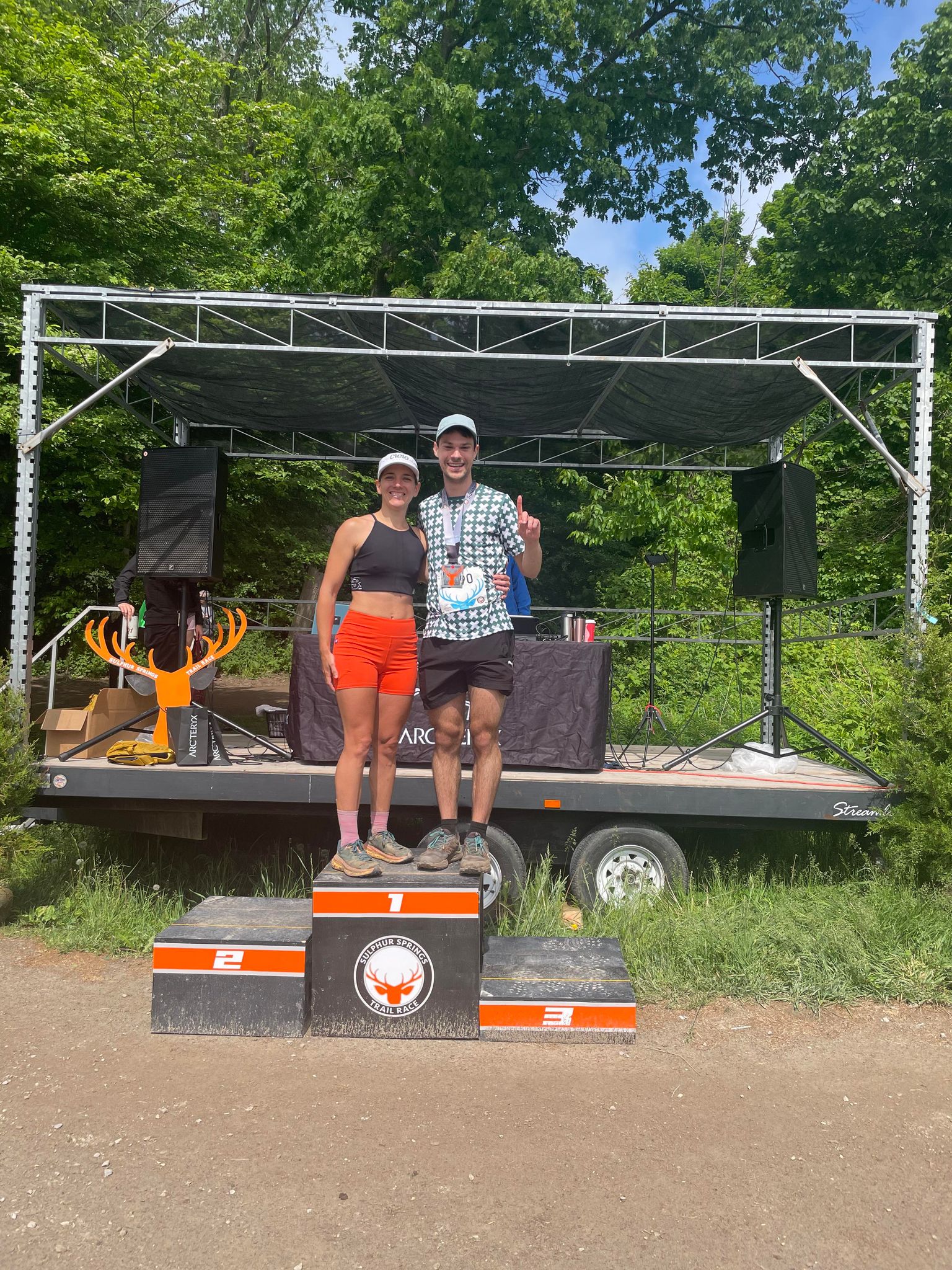
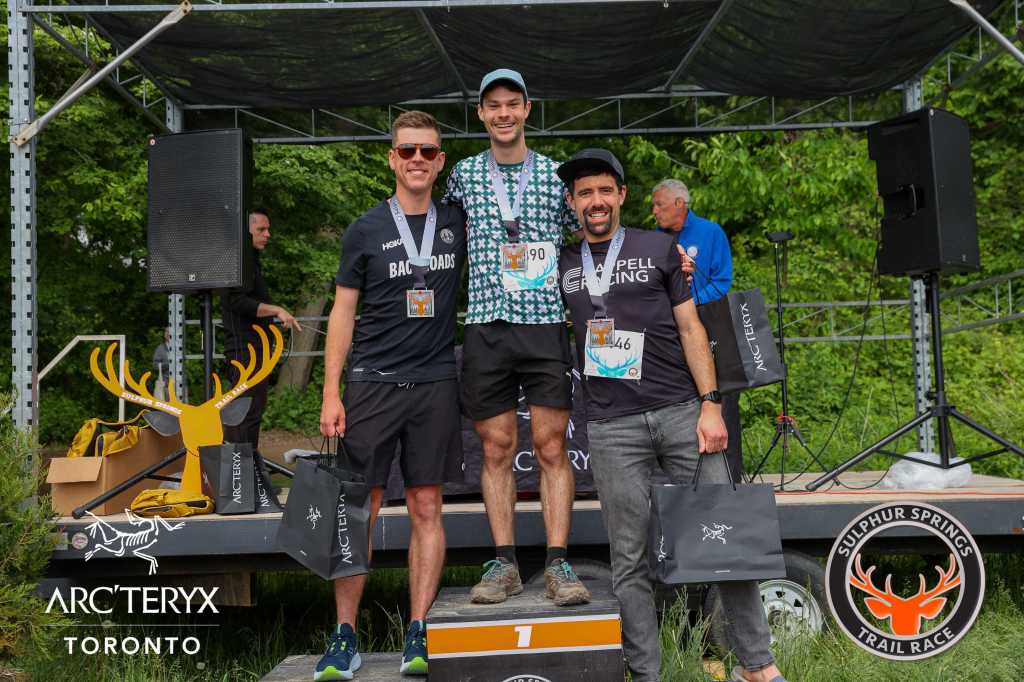
Following that act, I cruised the first half of the Sulphur Springs 20K, stayed just in front of my friend Tanis Bolton for the first third, in third, and then hammered the final few kilometres to take the lead at exactly the right moment.
I played my cards similarly in Quebec, moving from 11th to 7th in the final 10K after taking most of the race conservatively (…battling an injury).
I could have shaved off significant time had I risked it earlier, but I spent most of the race thinking about how I didn’t want to blow up like I did at Gorge. How I wanted to cruise through the 36k mark rather than death-marching toward it. How I wanted to run the final 10K fast rather than slow from pushing the envelope too early.
Even within the first part of that final 10K, Cedrik Gagnon made a move to pass me. He clearly didn’t spend enough time spewing himself with coca-cola at the aid station (like me), and closed a minute gap on me to then completely throw down.
Quebec Mega Trail 50K Recap – We all fall down
But the race between us was far from over. I stayed cool, continuing to do my own race. I knew that I was moving better than most, and waited until 47K to really go for it. That’s when I passed all four of those guys, including Cedrik. He made a move with 10K to go but couldn’t sustain that same pace. I made a move closer to the finish line, knowing that I would be able to sustain that pace to the 52K mark. By the time it was over, I had made a minute gap on Cedrik (who seriously had a great race don’t get me wrong), and two minutes on Mathieu (who led me the entire second half).
Watching Marathon du Mont Blanc for the tenth time in a row (genuinely I think this year’s race is the most entertaining trail race I’ve seen), this is the key takeaway.
In the men’s race, Rémi Bonnet consistently stayed calm with all the noise happening around him. Roberto De Lorenzi made a move on the first uphill, putting in a gap over the field. Rémi stayed calm, and reclaimed the lead on the very next uphill.
Proceed to the second half of the race, and Rémi makes a few mistakes. He drops bottles at both aid station hand-offs, and both times, Elhousine Elazzaoui surges ahead. But instead of panicking, he simply stops and smiles. He calmly takes the bottle, and sprints ahead of Elhousine to reclaim his lead. Baller.
In another sheer example of grit and patience, it was actually Elhousine that ended up winning the race.
Elhousine is one of my favourite tacticians. He knows his body. He knows his strengths. And he often uses those strengths at exactly the right moment. There was nothing Remi could have done differently on the day to win. Elhousine was just better on one single downhill toward the finish to claim victory and a new course record.
In the women’s race, similar events played out. My two faves Judith Wyder and Madalina Florea had a battle at the front all day, trading places back and forth. In the closing stages, Madalina made a massive move to drop Judith and Sophia Laukli on the final climb. Judith knew she could not follow. If she followed, she’d risk blowing up before being able to execute her own insane strength – being one of the best downhill runners in the entire world, despite being a stroke survivor.
On the final downhill, Judith made up that 45-second gap and more, cruising to the finish two minutes faster than the Romanian.
All four of these runners demonstrated that racing for the win is all about knowing your body and remaining patient toward your moment to shine in the sun. No one did that better than Elhousine and Judith, and it’s exactly why they won.
What I now need to discover is exactly how to play that balancing act for my own body. I need to discover how hard I can truly push in the opening stages of a race, while still having plenty of gas left in the tank to crank up the heat and finish strong.
The balancing act became easy to execute in a 20K (on a course I knew inside out). But a 50K is a different animal. A 20K is like a squirrel hopped up on caffeine. A 50K is like a wildebeest that is prone to cramps and needs significant amounts of salt.
Now with Squamish 50K being what it is, and so many national team runners entering the frame, I’ll need to figure out exactly when I can make my move toward the top ten, and how far I want to let others racing for the top five get out of reach before being able to claw my way back.
This will be the one big balancing act I want to discover in this next build toward Squamish, mastering the art of remaining patient until the right moment, without being too patient that the goal is gone.
Thanks for reading and see you soon!



 Rhys Desmond