Truth be told, there are millions of checklist items that help to form a successful coach, mentor, or leader. But at the bare bones of it all, successful leadership ultimately comes down to a focus on social relationships.
This is the focus of this article, where I detail the essential traits of an effective coach, mentor or leader. But before you begin to scroll straight to the list that I’ve created based on my experiences, research, and training alongside organizations like HIGH FIVE, here is what you need to get right in any context that you work with people.
- Focus on the social corner. That is, focus on creating and taking opportunities to build relationships with your participants; and opportunities for participants to build relationships with one another.
- Create an over-arching environment where it is clear that you care about your participants on an individual level, including their enjoyment, development and success.
It’s all about the environment you create, and the way that you show your participants that you care about them on an individual level. If you can check these two boxes, just about everything else will fall into place.
Here’s something that I always say to my Coaching & Leadership class:
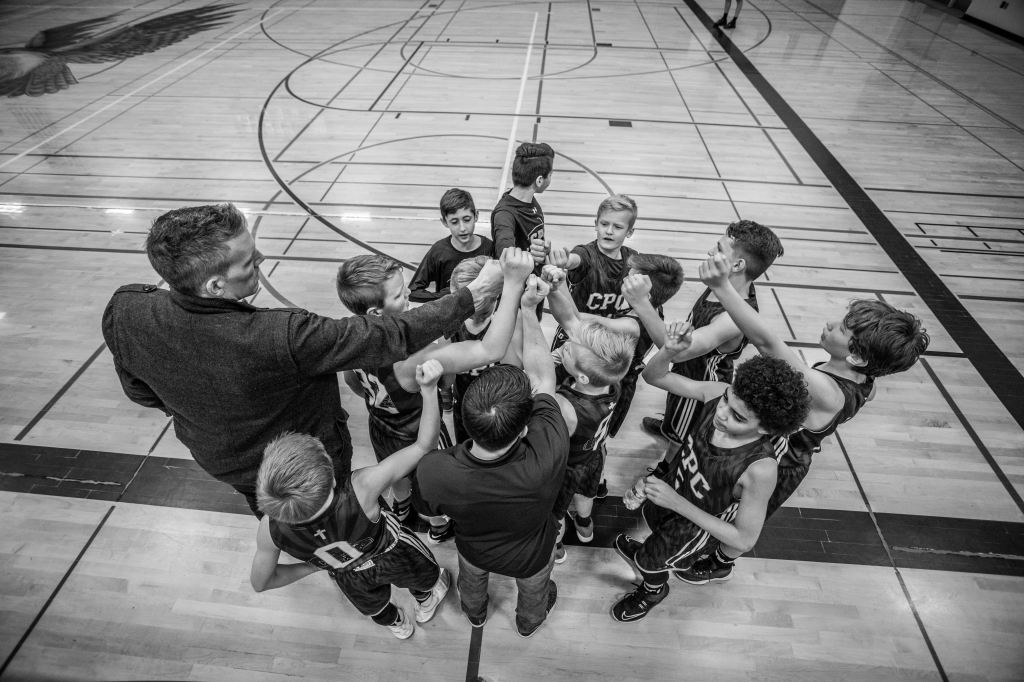
You can get by with holes in your session plan (i.e. program plan, development plan for an athlete, etc.), if you focus on building individual relationships and get the social corner spot on.
On the contrary, if you have holes in your ability to connect with and relate to your participants on an individual level, even a great plan will ultimately fail.
It’s why some of the smartest coaches in the world fail their athletes, lose dressing rooms, and end up sacked. It’s why some of the smartest professors in the world actually make for terrible professors. They lack the human component to what they are doing. They forget that their athletes or students are humans first, and athletes or students second. The best teachers, the best coaches, the best mentors, and the best leaders, all have one thing in common:
They are excellent at building interpersonal relationships with those that they serve.
Think back to your experiences in school, in sports, or even in work settings. Which classes did you like the most? Which sporting environments kept you thriving and playing for years? Which work settings kept you wanting to come back?
Chances are, it’s the ones where the leader created an environment for you to excel. They created an environment where you felt like you belonged. Where you were valued. Where you were heard.
Any time I’ve messed up as a coach or leader, it’s because I failed to show the person that I cared about them on a human level. Any time I quit a sport before the age of 13 like 70% of our children today, it was because the coach created an environment that I did not enjoy.
So think about that and re-centre what’s really important to you as a coach. Being successful is not about winning matches, or turning athletes pro. Being a good teacher is not about challenging your students beyond their capacity. It’s about creating an environment where those in your wake feel confident and competent with their ability to succeed. Once again, if you focus on that social side of your leadership, winning matches and turning athletes pro might just happen. But if you get that part wrong, more often than not, athletes find a way out of sports before they even have the chance of doing better, let alone turning pro.
It is with these philosophies that I developed a list of the essential traits of successful coaches and leaders for the Kinesiology class that I teach at Western University – Coaching & Leadership. The list is built off my experiences working in community recreation and coaching settings alongside HIGH FIVE, an Ontario-based organization that spearheads quality control of sporting and recreation programs across the province.
LEADER-PARTICIPANT INTERACTIONS
| CATEGORY | EXAMPLES |
| Personality | Letting your unique personality show, humour, warmth, enthusiasm, welcoming environment. |
| Command | Clear communication, confidence, volume, tone. |
| Individualized Approach | Use of names, tailoring advice & feedback to individual athletes. Showing athletes that you care. |
| Positive Leadership | Role modelling of behaviours, putting athletes’ needs above your own, allowing for athlete autonomy. |
| Involvement & Interest | Level of feedback given and interest shown in participants |
Again, showing interest, asking questions, and tailoring your feedback on an individual level are all essential toward showing others that you care about them and want them to succeed. This automatically creates an environment where they can feel valued. But I also want to shed more light on the very first category in the list.
The best coaches or leaders that I’ve seen in any setting are an amplified version of themselves when leading. They’re at their most eccentric, enthusiastic, wildest point. They’re not like that when engaging in typical everyday conversations. But as soon as they hit the field or whatever that equates to for you, they’re putting on a very authentic, natural “performance”. They’re becoming that 2.0 version of themselves. They’re becoming the best version of themselves.
In doing so, they show others that it’s okay and completely safe to do the same. To be themselves. To be silly. To be enthusiastic. To motivate others. They’re role modelling all the behaviours they want to see within their team, or within those that they work with on an individual scale.
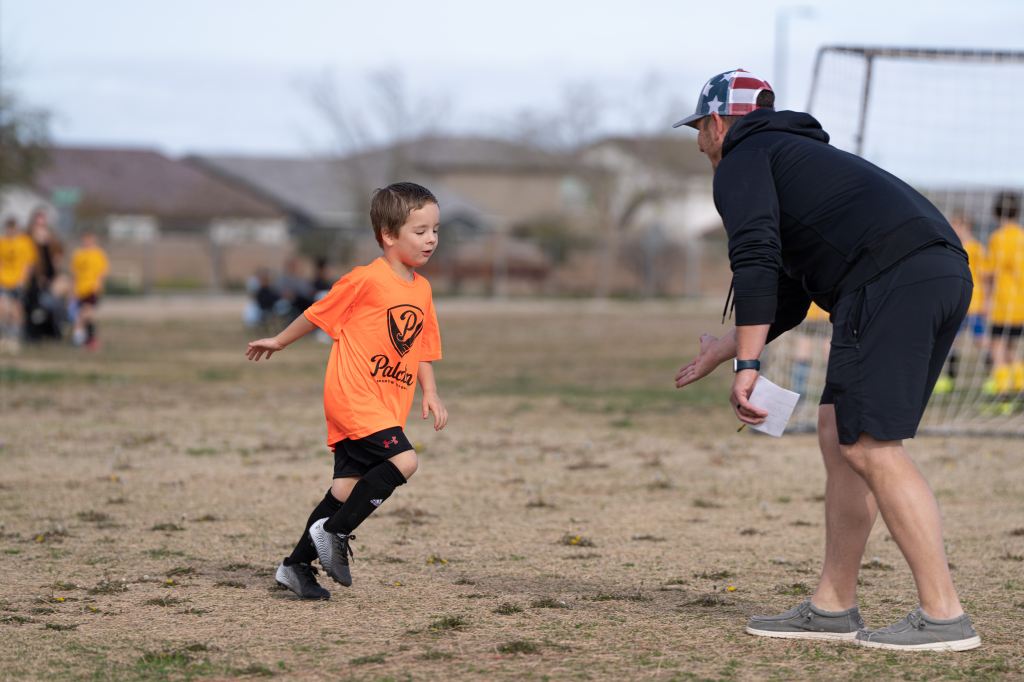
The hallmark of my success working in recreation, coaching, and even now with teaching, has been my unrelenting desire to be myself. To feel okay being wacky, silly, and authentically me. I find that this works so well, because it allows others to feel comfortable doing the same. And what does being wacky and silly automatically equate to? Fun.
Don’t get me wrong. Challenge, competition, and innovation within the design of what you are doing also lead to similar levels of fun. But the leader is still responsible for creating an environment where participants can feel safe, comfortable, and having the time of their lives within the structures that are created, whether it be challenge, competition, or innovative design.
With that, you always need to start with an emphasis on relationships. It might not be the most natural thing in the world for everyone to feel comfortable sharing their true personality, and being vocal to a commanding level in front of a group. Leaders that possess those two characteristics tend to stand out. But the path to effective leadership is far from over for those that feel less comfortable hitting those heights.
Why? Because it’s all about individual relationships. You don’t have to be the best at commanding the room if you’re excellent at building relationships on an individual level with participants. Leaders can have their voice heard in different ways. What’s important is that they’re willing to let their voice be heard, and accepting of the ability for others to do the same.
Again, if a coach/leader can hit those high notes, the rest will fall into place. Naturally, the coach/leader will be more in-tune to meeting some of the other key elements they should attend to when leading. This includes:
SESSION INVOLVEMENT
| CATEGORY | EXAMPLES |
| Awareness | Awareness of participant needs, adjustments needing to be made, adaptations in the moment, etc. |
| Activity Risk Awareness | Awareness of safety elements, noting risks to participants. |
| Demonstrations | Demonstrations done with participants in the positions they will be playing in, playing through the important rules. |
| Interventions | Individualized or team-wide feedback based on live events, allowing participants/athletes to rehearse before restarting. |
| Coaching Collaboration & Team Effort | Collaboration and communication with other members of the leadership/coaching team about important issues, allowing all voices on the team to be heard without under or over-stepping roles. Delegating; and finding a place for everyone on the leadership team to have autonomy in their tasks. |
| Key Facilitation Skills | Implementation of the plan including modifications based on athlete behaviours. Use of equipment & playing area, pacing, balance. Allowing for peer to peer interactions within the structural design. |
| Reflection | Reflecting in the moment on what worked well and what could improve, including key notes on where to improve from previous sessions and learning experiences. |
This is where you constantly assess and re-assess what’s happening in the moment to adjust, and get the most out of your participants. The ability to know how to adjust is not a skill that can be acquired overnight. But the ability to assess the moment and identify if any possible modifications might need to be made is most certainly a skill that most have already acquired. With more and more experience, you get better at knowing what you’re looking for, and adjusting accordingly. You can then get creative with your reward systems, interventions, and even activity design on a whole, building better programs for your participants to excel.
Speaking of the activity design, this is the final piece to the puzzle. As mentioned right off the top, you can get by without the best plan in the world if you can nail the leader-participant interactions, allow space for participant-participant interactions, and then stay aware of how to adjust in the moment.
But a meticulously designed plan taking into account all that could go right and wrong is often a necessary step in also allowing for better program enjoyment of your participants. This includes:
SESSION DESIGN
| CATEGORY | EXAMPLES |
| Session Flow & Periodization | Logical flow of activities from one stage to the next in the over-arching frame of the session/program. |
| Game-Realism & Maximum Participation | Especially for sporting contexts: Activities incorporate the sport-specific equipment and the key elements of the real game. |
| Session Topic Integration | Session topic, themes and learning outcomes are clearly integrated throughout the structural design of each activity, and brought out in creative ways through use of rewards or additional intricacies. |
| Completeness & Attention to Detail | All sections of the plan are filled out with enough detail to set the team up for success. This includes the division of tasks between different leaders. |
| Uniqueness & Creativity | Finding ways to stand out from the norm, such as the typical activities that can be found anywhere else. In sports, these are often coach-dictated “drills” (i.e. old school coaching methodologies that don’t allow for athlete autonomy or enjoyment. This includes punishments, non-specific training, waiting in lines, elimination games, etc.). |
In creating plans for my participants, I always strive to be different with my design – producing what I call “innovative play-based experiences”. In doing so, I’m creating expansive opportunities for my participants to learn about themselves, to challenge themselves, to try new things that they’ve never tried before. That’s where the magic often happens in development, and where they can stumble upon something new that they enjoy. It’s the kind of learning (i.e. teamwork, problem solving, decision making, etc.) and self-efficacy that can never fully come out in a game like ‘Cross-Canada’ or ‘Duck-Duck-Goose’.
Then within the structured design of activities, there’s always opportunities for free-choice, and discovery. Participants, athletes, students, etc., always get opportunities to influence their experience, whether it be through strategic team huddles, expressing their own creativity in ways that suit them, and/or above all, being put into situations where they can make decisions on their own. They can feel comfortable and safe doing so because of the over-arching environment created by the leader – usually through constant and positive communication with those they serve.
So as a coach or leader, remember that it’s not ultimately your job to win matches or even create highly successful people. But if you focus on social relationships, those checklist items will naturally fall into place, and people will get there all on their own.
Thanks for reading and see you soon!
YOU MIGHT ALSO ENJOY…

Weekly Newsletter – Le Fun vs. Le Duh
It’s so hard to tell ourselves to stop in the moment, especially because humans are very, very bad at changing their own minds once they’ve set their mind to something. Now imagine how bad RUNNERS are at changing their own minds. You have to prioritize Le Fun. There’s no other way. But it must always…

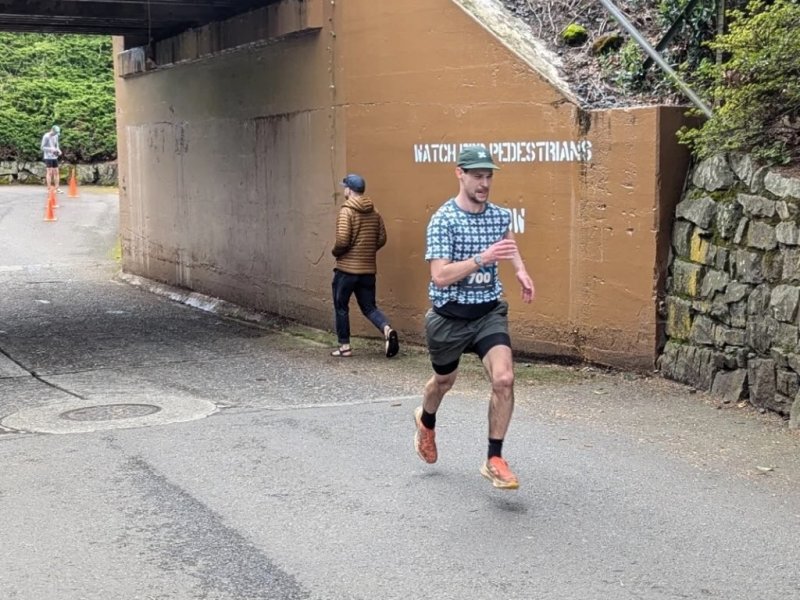
The changes to my training in 2025
2025 has been a year of growth so far as I recover from an injury. It’s also been a year of newness, as I train in new trails in a new province under the guidance of a new coach.
We’ve focused more on running efficiency – touching more roads already in April than all…

You are not the imposter
For the past two years, I’ve existed in my sport as a professional athlete. The term is loosely defined in a sport like mine. For one, because there’s no clear-cut definition. For another, you can so clearly compare your results to others, thus never feeling good enough. For a double ‘nother, because of Imposter Syndrome.…
Get in touch!
I currently have space for road, trail and ultra runners working toward their goals — whether you’re a busy mom, a part-time professional, or brand new to the sport. Contact me today to get started!





 Rhys Desmond