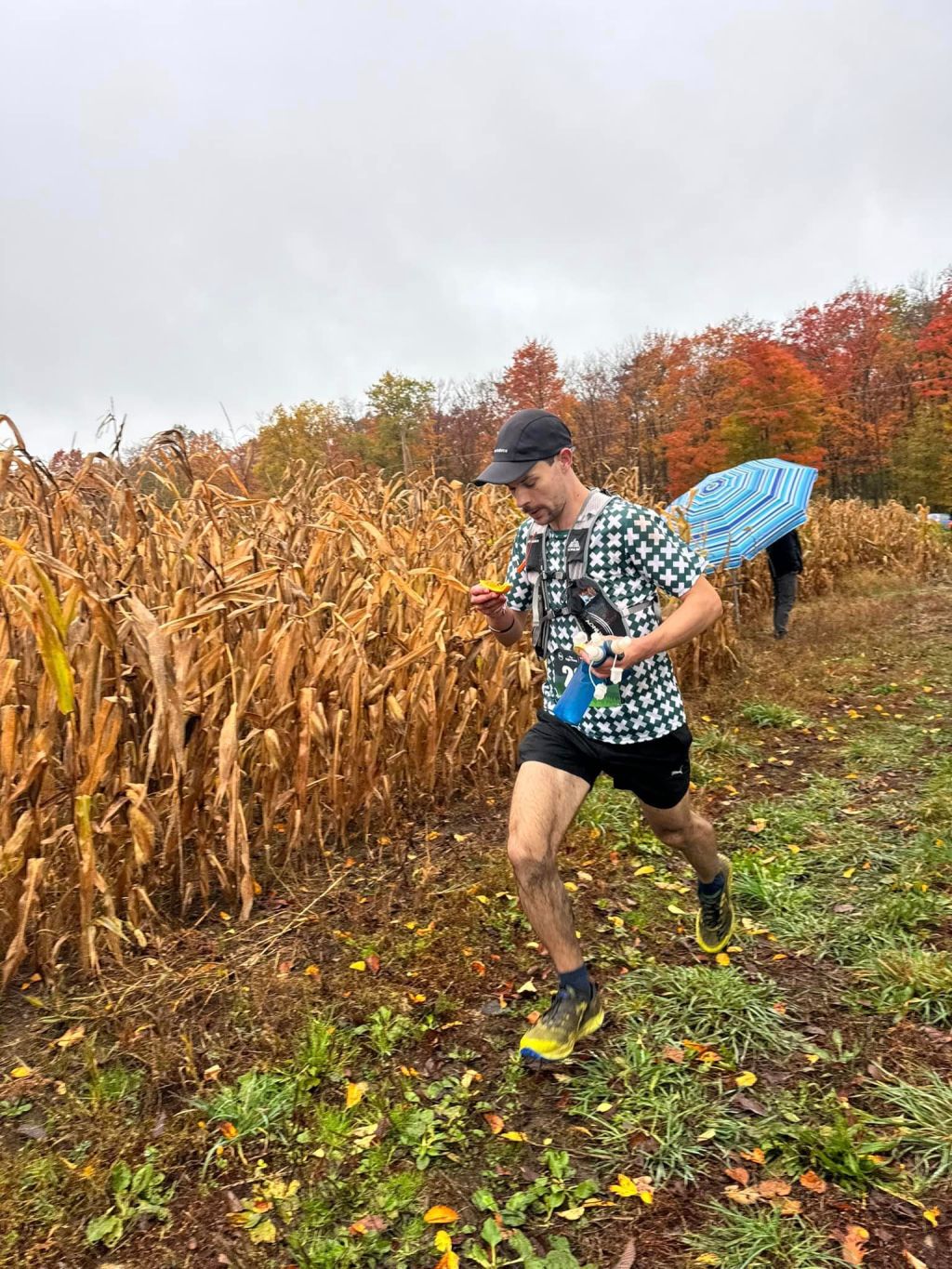
The Bad Thing 50K is one of the most difficult trail races in Ontario. No runner on the men’s side has ever run under 4 hours, and none in the women’s field have run under 5 hours. Here are a few reasons why the race makes for such a difficult day.
1. HEADLAMP, EARLY START
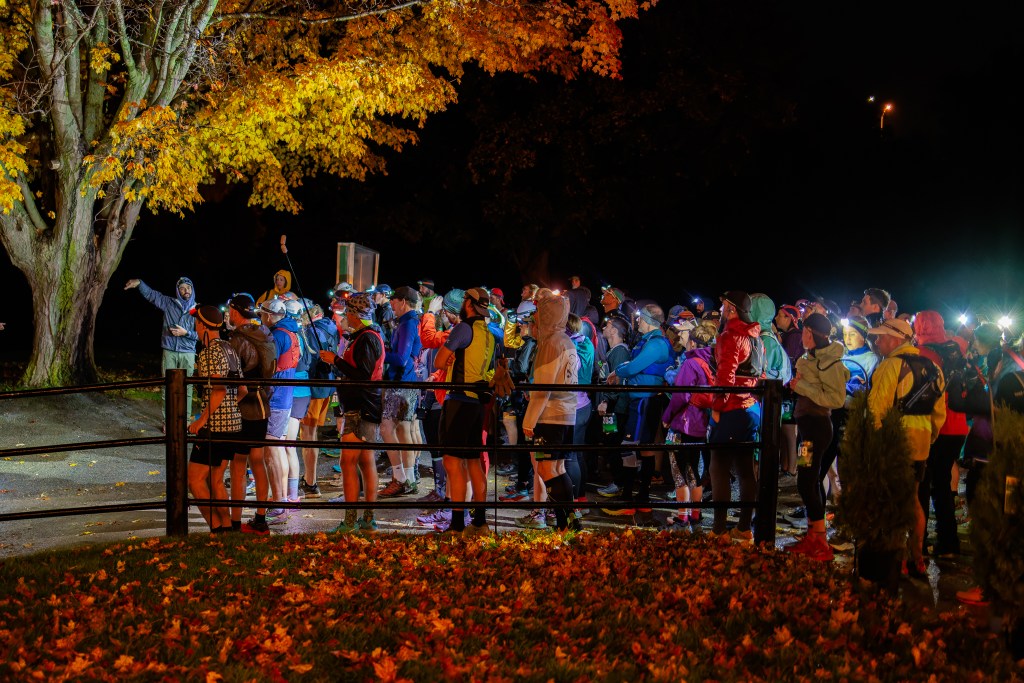
The Bad Thing 50K has a check-in time of 6AM, to ensure that all runners are ready to board the bus for 6:15AM and head to the start line for 7AM.
Now while 7AM might not sound like an early start time, it’s the sheer fact that runners are often coming in from out of town into Auburn, ON in order to arrive for 6AM + the fact that the sun does not rise in late October until around 8AM. This means two things:
- A lack of sleep before the race is common (I got 6 hours ahead of my 3:30AM wake-up call).
- A headlamp is required to be worn through the dark trails for around the first hour.
Inherently, this means that the trails are also quite difficult to see and navigate in the first 5-10km. Early on in the race, I thought a pink flag was pointing me to the left (since it was at an impasse and placed on the left side of the trail), but I was actually meant to go right. In broad daylight, I probably would have seen this more clearly. But in the dark, it was an easy mistake to make.
2. LACK OF CREW ACCESS
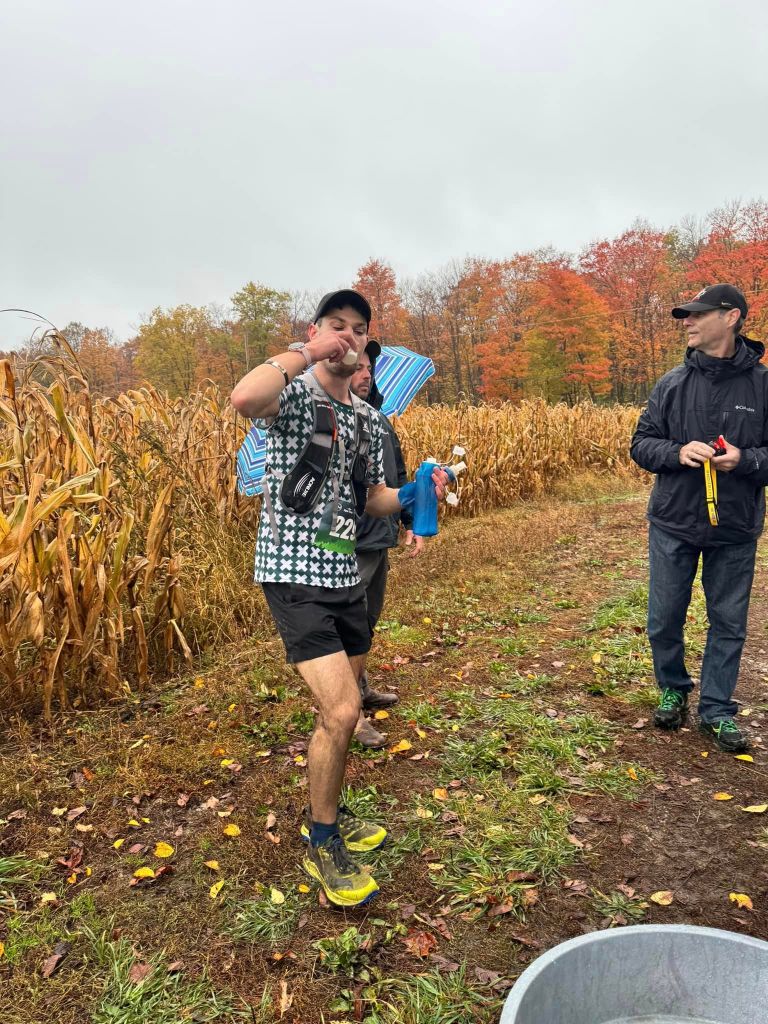
The Bad Thing 50K discourages crew and spectators. Crew are only allowed at the 30K aid station at Sharpes Creek Line. At this aid station, there were no electrolyte options (nothing with substantial carbohydrates was my bigger concern). But the task to give “crew” any bottles before the race to disseminate at this aid station was also more difficult, because of that 6AM check-in time.
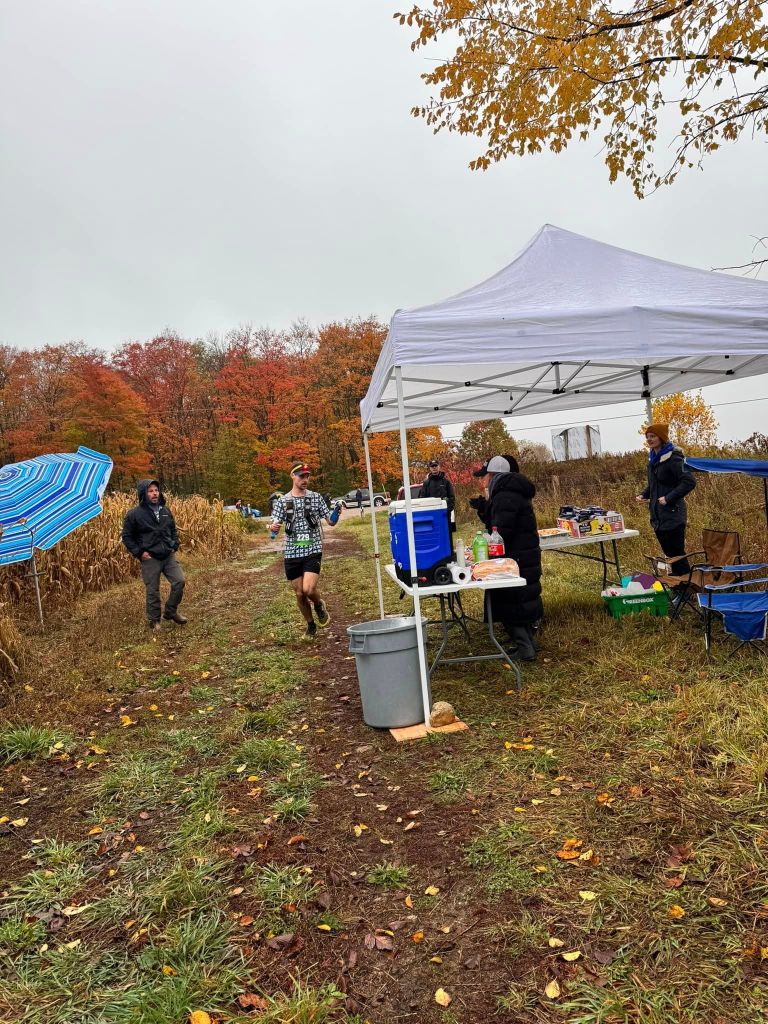
The race organizers have legitimate reasons why they don’t allow much in the way of crew or spectators. Genuinely, it makes the race more “Bad”. But had the aid stations been something I could have gamed more seriously, I think Matt’s course record becomes broken.
3. TECHNICAL TERRAIN

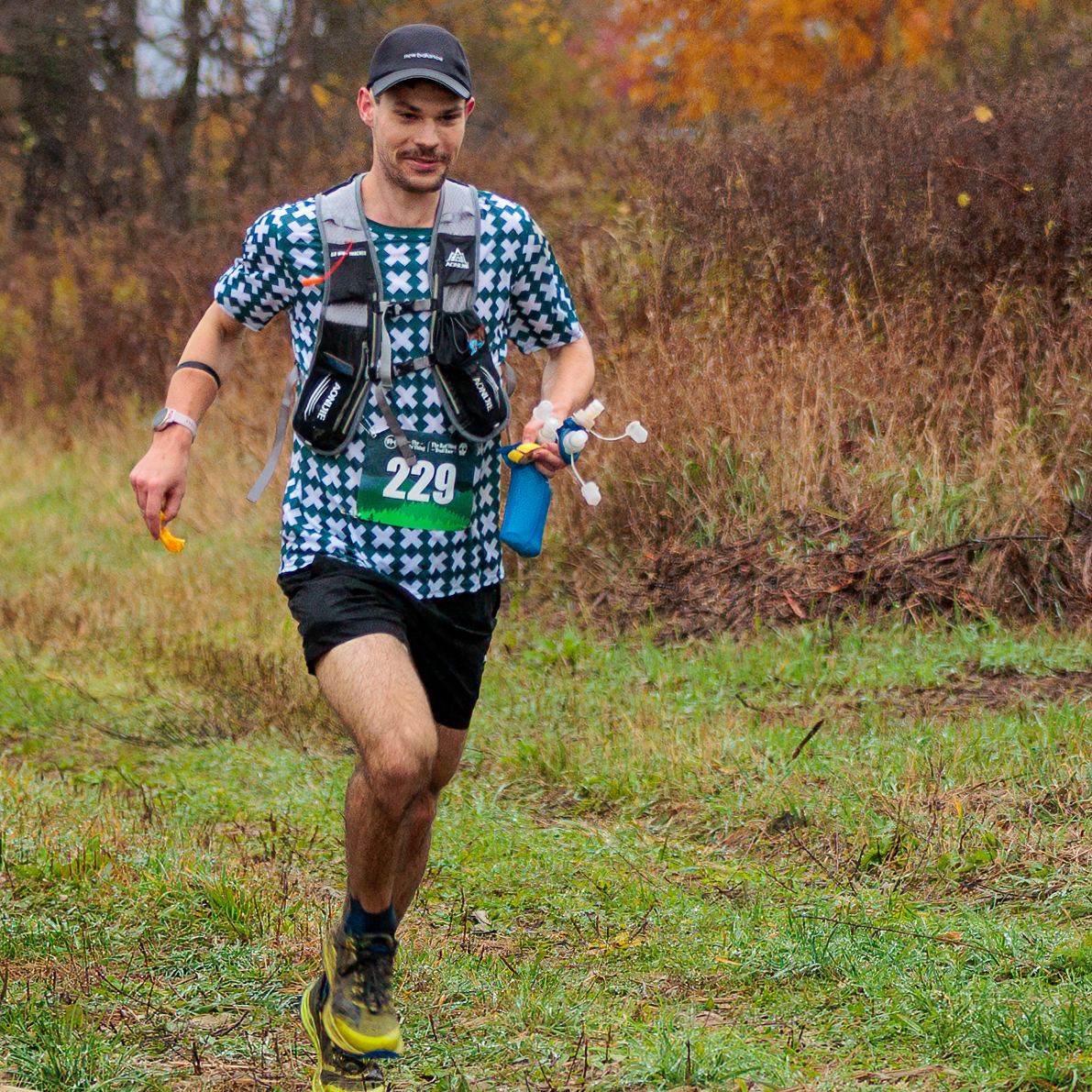
Much of the race takes place on runnable terrain, such as road, grass and nice-flowing trail. However, the difficult sections are extremely difficult. Tight turns, several stair stepping downhills, muddy and wet trails, un-runnable bridges, river crossings, and most notably, leaf-covered trails. It all makes for a difficult day and some slower kilometres.
It becomes difficult to know what pace to run in order to break those barriers. For example, had I gone faster on the initial road sections, I might have come closer to the 4-hour mark. But had I gone faster on the technical sections, I might have been doing something dangerous. Yet you can only pinpoint those sections as the ones to improve upon looking back, because they were slower, and you don’t want to blow your body up early on.
Being extremely comfortable on technical terrain, I should have likely pushed more on the difficult and dangerous sections. But again, you can’t always see where to plant your feet, let alone where to turn, given the fact that the leaves cover the entire trail.
With all this in mind, it’s easy to see why The Bad Thing 50K makes for such slow times in comparison to other ultras across the province. The amount of elevation gain is not substantial, and the amount of road is substantial. So it’s confusing. But anyone that experiences this race understands. The Bad Thing is pretty bad, and these are some of the top reasons why.
Thanks for reading & see you soon!
Strava Profile | Rhys Desmond
YOU MIGHT ALSO ENJOY…
Newsletter: How much trail time do you really need for trail races?
In any sport, I’ve long been a proponent of “game-realistic training”. The notion is that you need to prepare for the specific demands of what the game actually looks like. When it comes to endurance sports, this becomes more complex. What we need to develop as athletes is a well-rounded skillset.

Run Ridge Run 25K – Recap
I’ve never been so close to not starting a race. Had it been the day earlier, or the two or three prior, I might not have. But I’m so glad I started this race, as it was one of my best in years.
Newsletter – Making the treadmill more fun!
The treadmill simply can’t compare to the thrill of running outdoors, enjoying nature, and the fun challenge of varying terrain. I enjoy treadmill workouts, but I don’t think I’d be alone in saying that I enjoy an outdoor workout ten times more in ideal conditions. With that, here are some of my top tips to…



 Rhys Desmond