While coaching ideologies can generally apply across a myriad of ages and abilities, there are a few distinct differences. This includes:
- A greater attention to detail at the high-performance level.
- A greater attention to position-specific training.
- More complexity when adapting activities to add challenge/intensity.
Let’s break this down!
1. GREATER ATTENTION TO DETAIL

At the high-performance level, you can spend more of a dedicated focus on the deeper details behind all five corners (i.e. tactical, technical, physical, psychological and social elements).
This might mean I focus more on team-wide tactics that I want to implement for one specific team. Those team-wide tactics might be completely different based on my personnel in another team. I’m working to bring out the best in my athletes in all five corners at any level, but the amount of detail I can delve into within each of those five corners is simply more complex.

One of the ways that I like to do this is through game-realistic activities to help players recognize patterns and make quicker decisions. We call these ‘automatisms’ – as we’re looking to simplify decision making by making it more automatic. We do this by positioning players in the exact scenarios they will encounter in games so that they can more readily recognize and perceive BOTS (ball, opposition, teammates, space), or whatever sport-specific elements apply to the specific sport.

But I can also work with players in the deeper minutiae of their technical or physical capabilities than I would in a recreational, sport-for-all atmospheres, or with children below U11. For example, I can focus on all the biomechanics behind a shot (angle of hips, amount of lean, where they strike the ball, etc.), rather than the basics – like what part of the foot they should use in different moments.
Where many coaches go wrong is treating those recreational, sport-for-all, U4-U11 atmospheres like the athletes are already pros. They’re not, and we should be looking to simplify as much as possible for these athletes rather than over-complicate with the detail we add.
2. POSITION-SPECIFIC TRAINING

As mentioned in the first section, I like to create sessions that incorporate automatisms and put players in their specific positions. This allows players to immediately know a myriad of possible correct decisions they can make in any situation they encounter on the field.
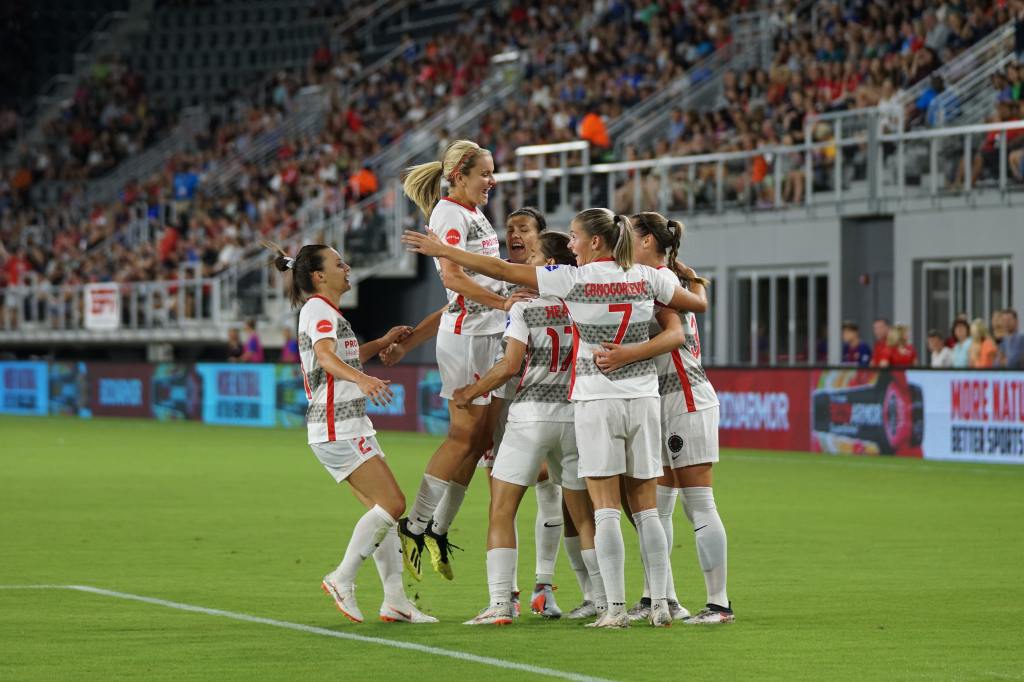
We want to develop as much repetition as possible for the actions we want our athletes to nail down and refine, and the best way to do that is through game-realistic training. For example, I’ll often set my activities up on only one half of the field, with one team defending the actual net, and the other team defending mini goals. The aim is to have a scoring method and/or a method of restart that brings out the session topic for that day.

For example, in sessions guided around pressing from the front and playing out from the back, this design (with restarts at the goalkeeper) allows for plenty of repetition for the specific players involved (and the whole team as a collective) in the exact area of the field they will encounter these phases in the game itself. At the amateur or youth level, I’m not necessarily pigeon-holding one player to one position, or picking a set of starters that I want to prioritize. So I will still move players around to different positions within this training style, and get them to develop repetition in many different positions. But I will still have my players develop chemistry and tactical awareness in the exact positions they most like to play.
Again, on an individual level, the technical and physical details can also be more detailed, and related to that player’s specific position on the field.
You can do position-specific training in sport-for-all environments too, but the focus should be more on teaching principles and developing a love for the game, rather than focusing to this much detail on what every player will do in every moment of the game.
3. greater COMPLEXITY WHEN ADAPTING ACTIVITIES

I always like to adapt as things unfold in anything that I do, but especially when it comes to my activities. I’ll often integrate different rules and reward systems that promote my session topic and/or desired behaviours. I’ll often do this as situations arise and players need extra motivation to nail certain principles. I talked about this in Newsletter #1 – Building Logical Session Flow & Rewards.
The complexity to which I can adapt is simply more in a high-performance environment. Just as a quick example, I will tend to focus on rewards rather than restrictions in sport-for-all atmospheres or when working with young players. That is, ‘if you complete three passes and score, you get three points’ RATHER THAN ‘you must pass three times before you can score. One is more game-realistic and one is also more encouraging toward optimal decision-making and athlete autonomy.
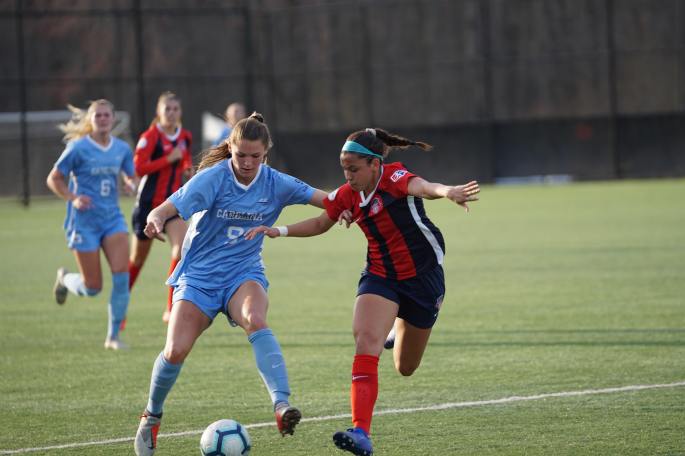
But I will incorporate restrictions in some cases when athletes are ready for a certain challenge within their ability. For example, a possession activity with a one or two-touch restriction naturally puts players under immense pressure and increases the intensity of the activity. They now have to think fast, and they now have to already know their next action before they receive. They now have to focus on their movement off the ball as receivers to ensure players on the ball always have options. Now when they go into real games or future training activities without touch restrictions, they’re already focused on making quick (correct) decisions and knowing their next act before they receive (because we’ve developed repetition around this).
There would be no point in forcing my U8 team to play on a one-touch in a training activity. They aren’t ready for that from a technical, tactical or psychological perspective, and haven’t even fully learned how to adequately share with others at that age. But with my U12s who became so intelligent with their decision making that it consistently blew me away, I would do a one-touch possession activity frequently. I saw this translate into their decision making under pressure in games through and through.
Q&A – STRUCTURING WARM-UPS

Q:
In your sessions, you start with a warm-up that gets players moving and thinking with the sport-specific elements, then break that up with dynamic movements (lunges, open the gates, etc.). They then continue with the warm-up that correlates to the session topic. Why do you break it up this way? – Eyad
A:
This is such a good question! I do that dynamic break-up to incorporate some social elements with and between my athletes, and to allow for greater intensity and activation after the dynamics. Without that separation, my athletes might continue at the same low intensity we started with until I incorporate another type of challenge. So it’s less about the dynamics themselves, and more about what you are doing to progress.
Within the flow of your session and what you have time for, the key is that your athletes are fully warmed up in as many of the five corners as possible in relation to your sport (not just muscularly but also some brain activation, social elements, etc.) The more corners you hit the better your warm-up will be. So it might not be dynamics that you incorporate, but something that activates the brain or a social element, etc.
Thanks for reading this week’s newsletter! Make sure to check out last week’s issue.
-> Coaching Craft – Newsletter #1 – Building Logical Session Flow & Rewards
YOU MIGHT ALSO ENJOY…

Newsletter: How much trail time do you really need for trail races?
In any sport, I’ve long been a proponent of “game-realistic training”. The notion is that you need to prepare for the specific demands of what the game actually looks like. When it comes to endurance sports, this becomes more complex. What we need to develop as athletes is a well-rounded skillset.

Run Ridge Run 25K – Recap
I’ve never been so close to not starting a race. Had it been the day earlier, or the two or three prior, I might not have. But I’m so glad I started this race, as it was one of my best in years.
Newsletter – Making the treadmill more fun!
The treadmill simply can’t compare to the thrill of running outdoors, enjoying nature, and the fun challenge of varying terrain. I enjoy treadmill workouts, but I don’t think I’d be alone in saying that I enjoy an outdoor workout ten times more in ideal conditions. With that, here are some of my top tips to…
Get in touch!
I currently have space for road, trail and ultra runners working toward their goals — whether you’re a busy mom, a part-time professional, or brand new to the sport. Contact me today to get started!






 Rhys Desmond